





 English
  Francês
  Alemão
  Italiano
  Japonês
  Norueguês
  Portuguese
  Spanish
  4 min of reading
  0 comments


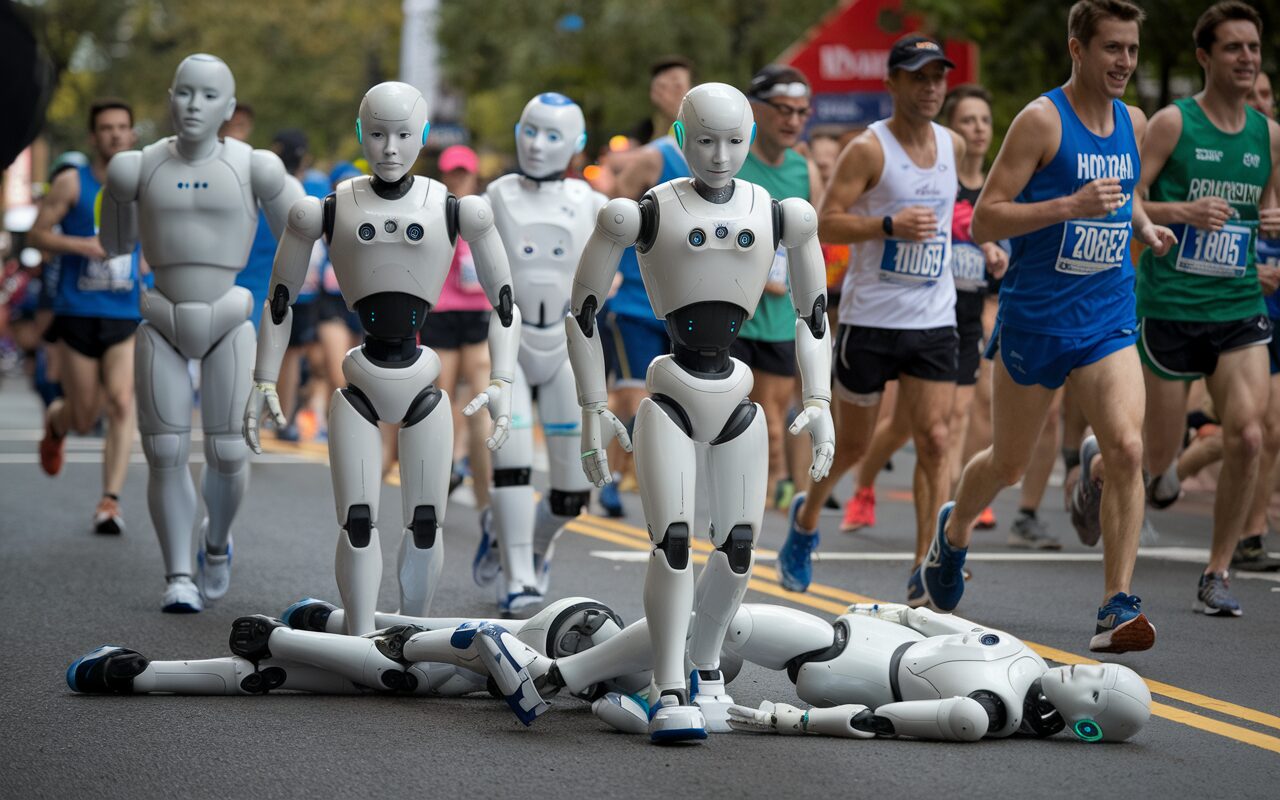
Despite Advanced Technology, Humanoid Robots Faced Physical Limitations and Fell Behind Human Runners in Pioneering Experiment That Tested Endurance and Coordination in 21 Km Race.
For the first time in history, humanoid robots officially participated in a half marathon alongside humans. The event took place last Saturday (19) in Beijing, China, featuring 21 robots programmed to cover 21 kilometers on a track parallel to that of the 12,000 human participants. Despite recent advances in robotics, the robots could not match human performance, demonstrating that there is still a long way to go to surpass the natural physical capabilities of athletes.
The event served as a scientific experiment and also as a showcase for Chinese technological advancements in the robotics sector. It was organized by universities and technology companies in China and took place alongside the city’s traditional half marathon.
Humanoid Robots Ran Alongside 12,000 Humans in Beijing
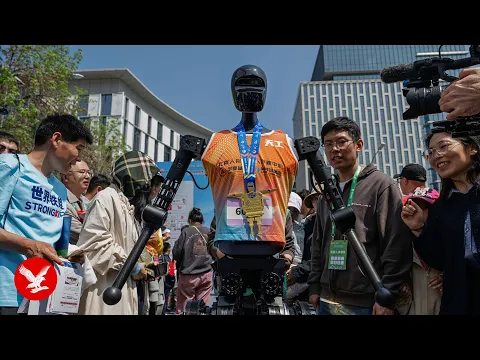

The robot half marathon was contested in an exclusive lane, specially created to ensure the safety of human participants and avoid collisions. The parallel track was equipped with sensors and signals that helped the machines maintain direction and monitor distance.
-
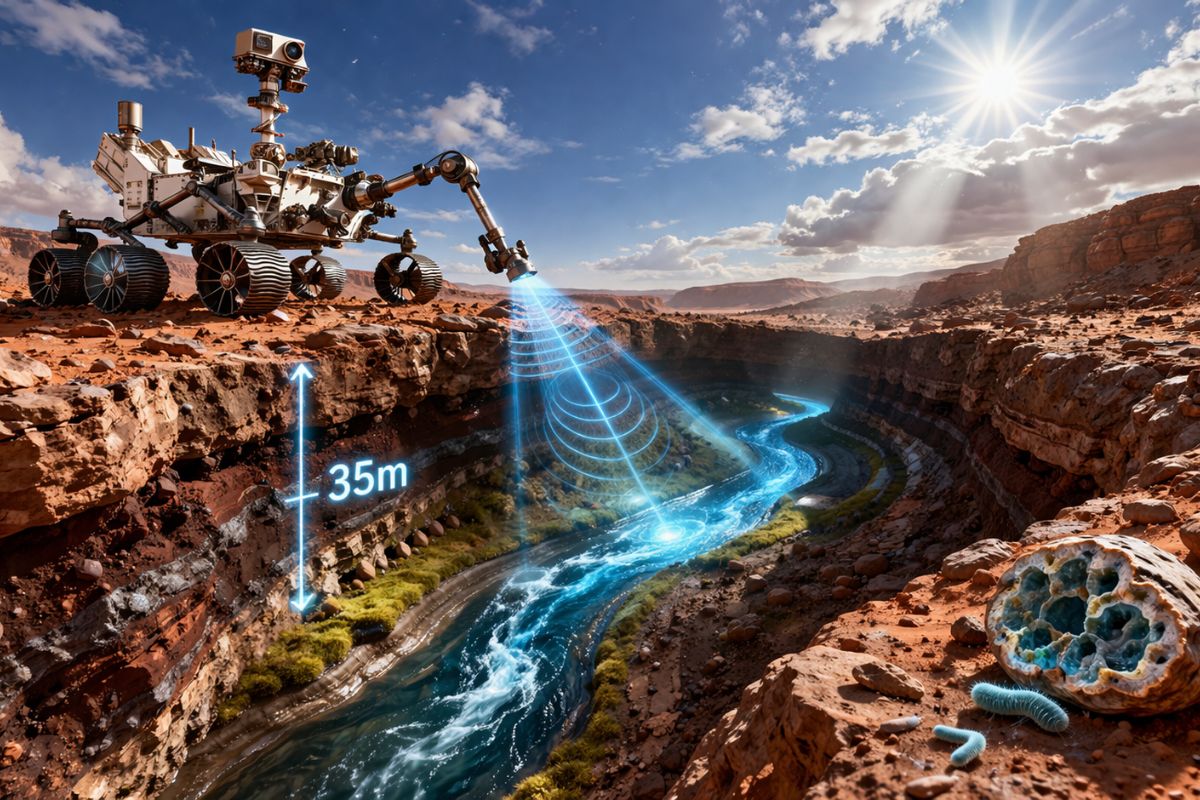
The Perseverance rover’s radar reveals a river buried 35 meters beneath Mars, pushing the presence of liquid water back to 4.2 billion years and increasing the chances of signs of life on the planet.
-
The climate in 2026 may surprise with extremes even more intense than in 2025, with heatwaves, out-of-season cold, and irregular rainfall in Brazil.

-
Astronomers identify 45 rocky planets that could harbor life, and one of them is just 4.2 light-years from Earth, making it the closest neighbor with the potential to have liquid water on its surface.

-
Archaeologists discover 43,000 ostraca in Egypt with tax lists, drawings, religious texts, and everyday notes that reveal what life was like in ancient Athribis before Cleopatra.


The humanoid robots were developed by different Chinese research institutions, each with its own unique movement and control characteristics. The androids could have their batteries changed during the race, unlike humans, who relied only on traditional hydration points along the route.
Tiankong Ultra Robot Was the First to Cross the Finish Line
Among the 21 robots that participated, the Tiankong Ultra, developed by the Beijing Humanoid Robot Innovation Center, was the first to complete the course. The robot, standing 1.80 meters tall, took two hours and forty minutes to finish the 21 kilometers. In comparison, the winner of the men’s race finished the half marathon in 1 hour and 2 minutes.
The superior performance of the Tiankong Ultra compared to other robots was attributed to its motion control algorithm and physical structure with longer legs, which provided it with greater efficiency in its strides. Still, the robot required human assistance on sections with light declines that posed significant challenges for machines with a high center of gravity.
Humanoid Robot Technology Still Faces Physical Limitations
Although humanoid robots demonstrated remarkable autonomous movement capabilities, the race results highlighted the current technological limitations of these systems compared to the human body. Uneven terrain, inclines, and even fine balance adjustments still require external interventions in many cases.
Another obstacle observed was the energy endurance: the robots required multiple battery swaps during the course. While human athletes rely on biological energy reserves and metabolic control, machines still depend on external components and technical stops.
Humanoid Robot Race Draws Global Attention to Chinese Advancements
The performance of humanoid robots in the race caught the attention of robotics experts in Europe, the United States, and Japan, regions that also heavily invest in the development of androids. The Chinese initiative was praised as a practical and realistic way to test robots in environments with real physical challenges, which rarely occurs in controlled laboratories.
In recent years, China has intensified its efforts to become a global leader in the robotics sector, with public and private initiatives focused on the application of humanoid robots in areas such as logistics, security, health, and education. Hosting events like this serves as a practical demonstration of what these machines are already capable of doing — and how far they still need to evolve.
Robots Have Already Gained Attention with Acrobatics and Martial Arts
The race occurred after months in which videos of Chinese humanoid robots went viral on social media, showcasing machines performing acrobatics, martial arts moves, and even tricks on bicycles. These records show that androids have been refining their locomotion, balance, and motor control systems.
The half marathon was, therefore, a way to put these advancements to the test in an activity that requires prolonged endurance, dynamic movement adjustment, and response to multiple external conditions — including temperature, incline, and terrain.
Humanoids Have Not Yet Surpassed Humans, But Show Constant Progress
The difference between the times of robots and human athletes shows that robotic systems still have significant performance limitations, especially in long-duration events. However, the fact that they completed the 21 kilometers is already considered a milestone in the field of robotics applied to bipedal mobility.
According to the organizers, the goal was not to compete with humans, but rather to create a new metric for evaluating progress in the field of autonomous robots. The expectation is that similar events will occur annually, with continuous improvements in the performance of androids.
China Wants to Lead the Global Robotics Industry
Robotics technology in China is part of a broader strategic plan for the country to lead emerging sectors, including artificial intelligence, industrial automation, and advanced manufacturing. Humanoid robots play a central role in this plan, with tax incentives, partnerships between universities and startups, and support from the central government.
According to data from China’s Ministry of Industry, the country already accounts for over 50% of global industrial robot production, and is now looking to advance in civil-use robots and service robotics.







Seja o primeiro a reagir!