





 Portuguese
  English
  Spanish
  3 min of reading
  0 comments



Trained With A Database Of 150 Million Plants, The Large-Scale Plant Model Presented By An American Startup Begins To Operate Agricultural Robots Capable Of Identifying Crops And Weeds, Learning Continuously In The Field And Executing Laser Weeding In Different Productive Environments
The American startup Carbon Robotics presented the first Large-Scale Plant Model, trained with 150 million plants, to operate LaserWeeder robots, identify weeds, and perform laser weeding across different crops, with continuous adaptation in the field.
Large-Scale Plant Model Trained With 150 Million Plants
Carbon Robotics claims to have developed the world’s first Large-Scale Plant Model, based on artificial intelligence and trained with a dataset of 150 million labeled plants. The system was created to transform the way agricultural crops are managed on a large scale.
The model feeds the LaserWeeder robots, enabling them to identify and remove weeds using lasers in virtually any crop or field. According to the company, recognition occurs within minutes, regardless of the type of crop or environment.
-
The sugar-energy sector advances with agricultural technology, but agricultural productivity still raises concerns.

-
The eggshell that almost everyone throws away is made up of about 95% calcium carbonate and can help enrich the soil when crushed, slowly releasing nutrients and being reused in home gardens and vegetable patches.

-
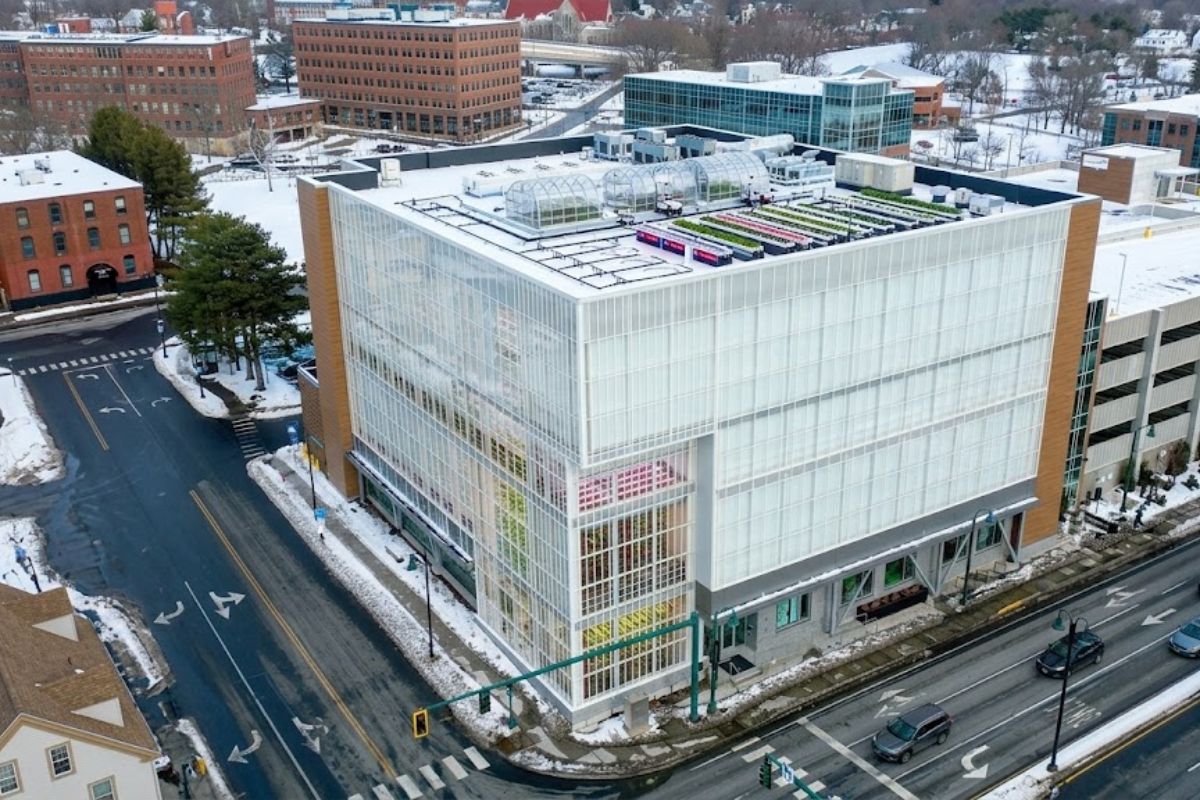
This farm in the United States does not use sunlight, does not use soil, and produces 500 times more food per square meter than traditional agriculture: the secret lies in 42,000 LEDs, hydroponics, and a system that recycles even the heat from the lamps.
-
The water that almost everyone throws away after cooking potatoes carries nutrients released during the preparation and can be reused to help in the development of plants when used correctly at the base of gardens and pots, at no additional cost and without changing the routine.


Continuously learning from data collected by a global fleet of machines, the Large-Scale Plant Model adjusts its performance in real time. This approach allows the system to evolve with each new operation performed in different regions and agricultural conditions.
System Learns From Global Fleet And Shares Improvements
The Large-Scale Plant Model was designed to continuously improve from real-world data.
Each deployment of the LaserWeeder sends new images of plants to the central system, expanding detection and classification capabilities across multiple scenarios.
This feedback loop creates a cumulative data effect, in which performance improvements are shared across the fleet. Thus, advances do not remain restricted to individual machines, as described by the company to Quantum News.
Carbon Robotics emphasizes that the model does not function as a static system. It acts as the core of Carbon AI, a framework that supports both the LaserWeeder and the Autonomous Tractor Kit, integrating real-time operational decisions in the field.
Cost Reduction And Less Dependence On Herbicides
According to the Seattle-based company, using the Large-Scale Plant Model can help farmers reduce labor costs, decrease the application of chemical herbicides, and maintain or increase crop productivity.
The combination of precise identification and laser removal aims to reduce the need for manual weeding and chemical inputs. The company claims that automation allows for operational gains without compromising the quality of agricultural management across different crops.
“When our robots can immediately recognize any plant in any field and adapt their behavior in real time, farmers get the most value from the machines,” said Paul Mikesell, founder and CEO of the company, in a statement.
Plant Profiles Allow Quick Personalization In The Field
In addition to the Large-Scale Plant Model, Carbon Robotics introduced Plant Profiles, a feature that allows for the rapid customization of the LaserWeeder’s operation according to specific crops, weeds, and field conditions.
Available across the entire LaserWeeder line, the tool uses a tablet interface. By selecting two or three representative images via an iPad app, operators can immediately adjust the system’s behavior.
The company states that this real-time personalization reduces the need for prolonged setups or complex reprogramming. Compared to other AI-based agricultural systems, the feature was designed for speed and operational simplicity.
Adjustments That Once Took Months Now Take Minutes
According to Carbon Robotics, adaptations that would typically take weeks or months can now be completed in just a few minutes. This reduces machine downtime and simplifies field operation while maintaining precision in different environments.
By facilitating personalization, the system aims to allow farmers to derive value from autonomous weeding technology more quickly.
The Large-Scale Plant Model remains the foundation for these rapid and continuous adaptations.
“We use plant profiles in seed beds, transplants, and directly sown onions. This has revolutionized our work,” stated a manager from Bland Farms, highlighting the platform’s simplicity and real-time performance in the field.









-

-

3 pessoas reagiram a isso.