





 Portuguese
  English
  Spanish
  6 min of reading
  0 comments


Robots That “Eat” Other Robots To Grow: Columbia University Scientists Create Machines With “Robotic Metabolism” Capable Of Absorbing Parts Around Them To Repair And Evolve
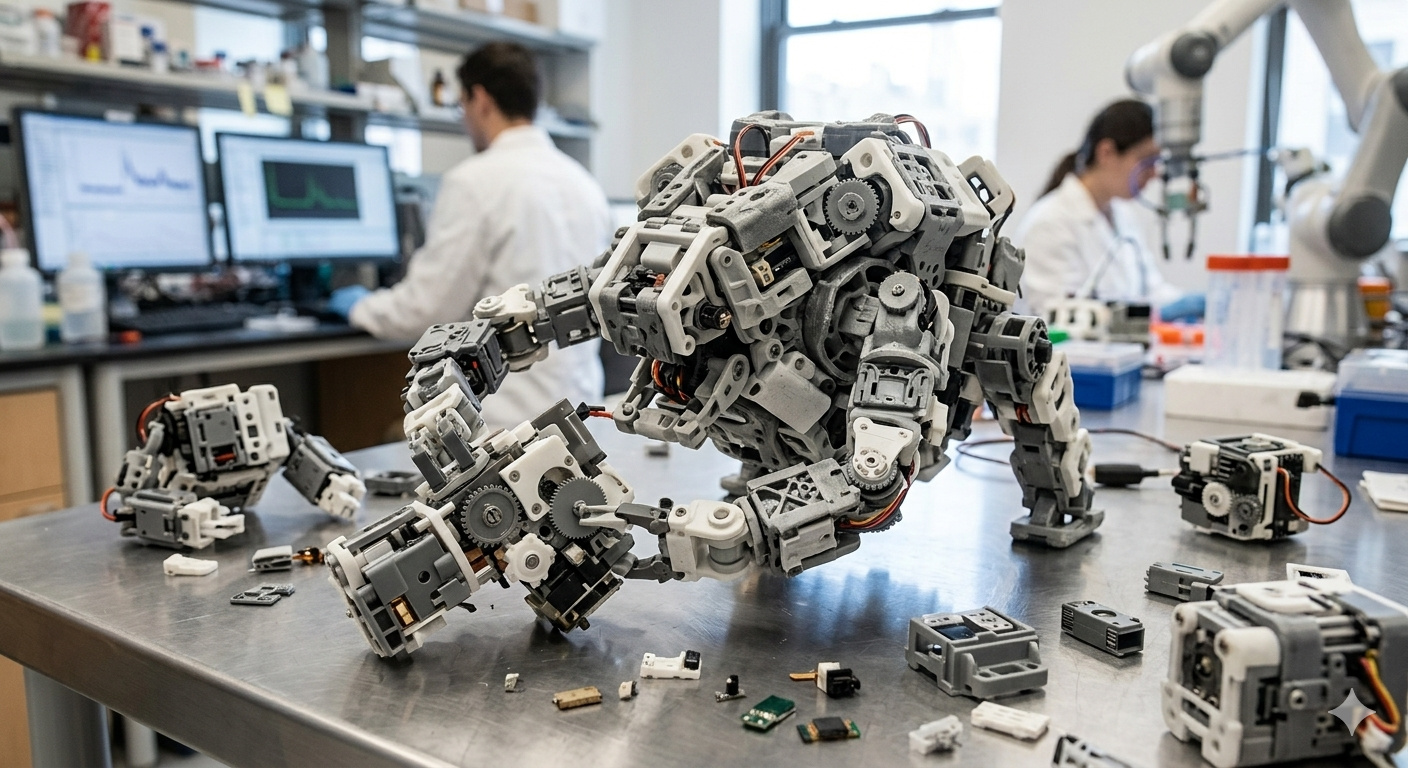
A team of researchers from Columbia University in the United States presented a concept that until a few years ago seemed limited to science fiction: robots capable of growing by absorbing parts from other nearby robots. The phenomenon was described by the scientists themselves as “robotic metabolism”, a process in which machines can incorporate external parts to expand, improve their performance, or replace damaged components. The research was led by Philippe Martin Wyder and Hod Lipson from the Department of Mechanical Engineering at Columbia University and published on July 16, 2025, in the scientific journal Science Advances. The study proposes a new approach to modular robotics where machines cease to be closed systems and start functioning as structures capable of growing physically over time.
Instead of relying on human maintenance or complete replacement when a part fails, these robots could absorb available components from the environment or from other nearby robots, reorganizing their structure in a way similar to how living organisms metabolize nutrients.
The Concept Of Robotic Metabolism Inspired By Biology
In biology, metabolism is the set of chemical processes that allows organisms to absorb energy and matter from the environment to grow, repair tissues, and maintain their vital functions. The researchers at Columbia used this idea as inspiration to develop machines capable of doing something similar in the engineering world.
-
In a flooded well, archaeologists found a 1,700-year-old Roman egg that still contains clear and yolk intact inside the very thin shell.

-
Something is happening around the Earth: Inside the huge explosion of fireballs in 2026

-
A hot air bubble coming from Argentina expands over Brazil, causing thermometers to exceed 38 degrees with a thermal sensation of 40 degrees in late March, affecting 6 states at once.

-
The radish leaf that almost everyone throws away has more polyphenols, flavonoids, and fiber than the consumed root, and a 2025 study showed that the leaf contains compounds that protect the intestine, combat inflammation, and may inhibit the growth of cancer cells.


In the model proposed in the study, robots are built from simple structural modules that can be connected in various ways. These modules serve as building blocks that can be rearranged or expanded as new parts are incorporated.
When a robot encounters a compatible module—or even parts from another robot—it can integrate that piece into its structure, altering its shape or improving its ability to move. In practical terms, this means that a robot originally small can transform into a larger and more complex structure merely by adding new components.
According to the authors, the goal is to develop machines capable of adapting their own physical structure to the environment, something that has so far been extremely limited in traditional robotics.
How The Modular Robots Developed In The Laboratory Work
The robots used in the experiments are not humanoid or complex machines. They are made up of components called truss links, structural bars that function as basic building elements.
Each module has connectors that allow for linking with other similar bars, forming different geometries. When several of these modules come together, the robot can assume various three-dimensional shapes, creating structures that are ramped up or more efficient for specific tasks.
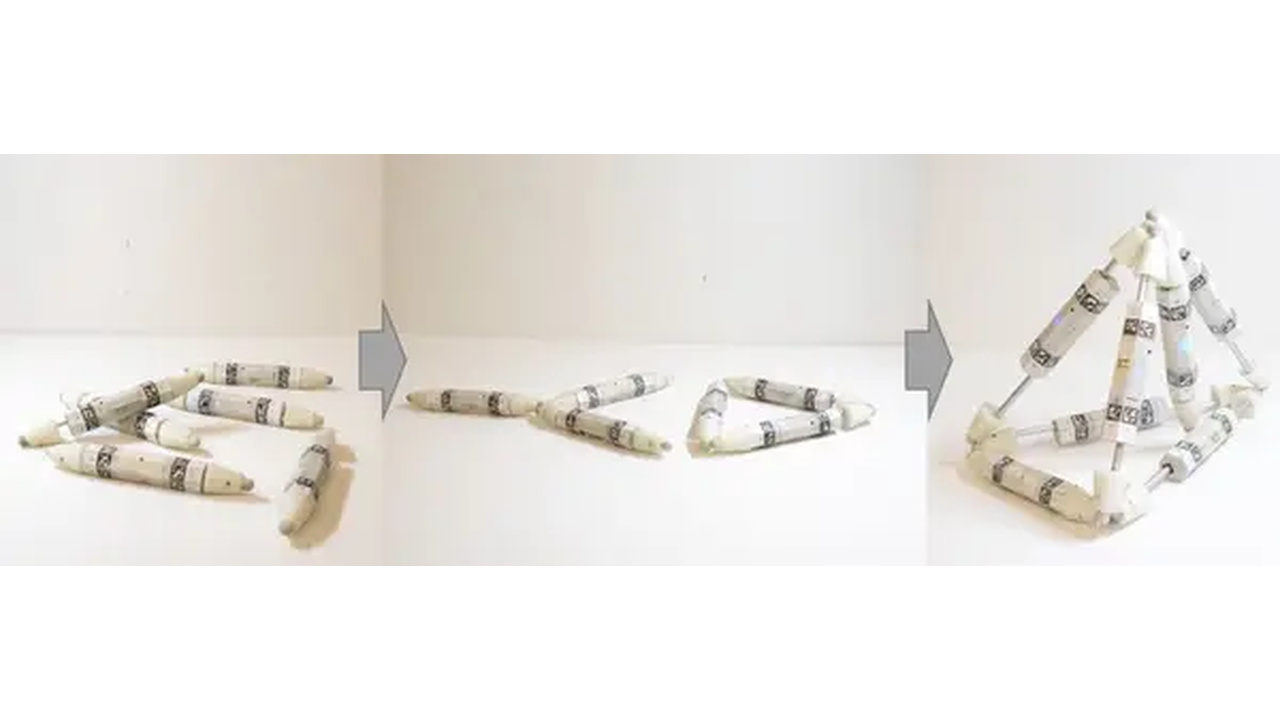
In the experiments described in the scientific article, the researchers demonstrated that simple robots could integrate new modules over time, transforming an initial structure into a more complex system. This structural reorganization alters important properties of the machine, such as stability, range, and mobility.
In one of the demonstrations described in the study, a robot began with a relatively simple configuration, and after incorporating new modules, it became more efficient at moving on an inclined surface.
Structural Growth Can Improve Robot Performance
One of the interesting results observed in the tests was that the addition of new modules can significantly improve the robot’s performance. By altering its physical structure, the machine can find more efficient configurations for specific tasks.
In one of the experiments cited by the researchers, the incorporation of a new part allowed the robot to increase its speed by over 60% when moving on an inclined surface. This occurs because the new structure changes the center of mass and the machine’s movement pattern.
This type of structural adaptation is something common in nature. Many organisms alter their shape or growth to cope with different environmental conditions. The proposal of robotic metabolism is to bring this evolutionary logic into the field of engineering.
Robots Capable Of Repairing Themselves
In addition to the possibility of growth, the concept also paves the way for robots that can repair themselves automatically. If a part of the structure fails or suffers damage, the machine could replace the defective component by incorporating another available piece.
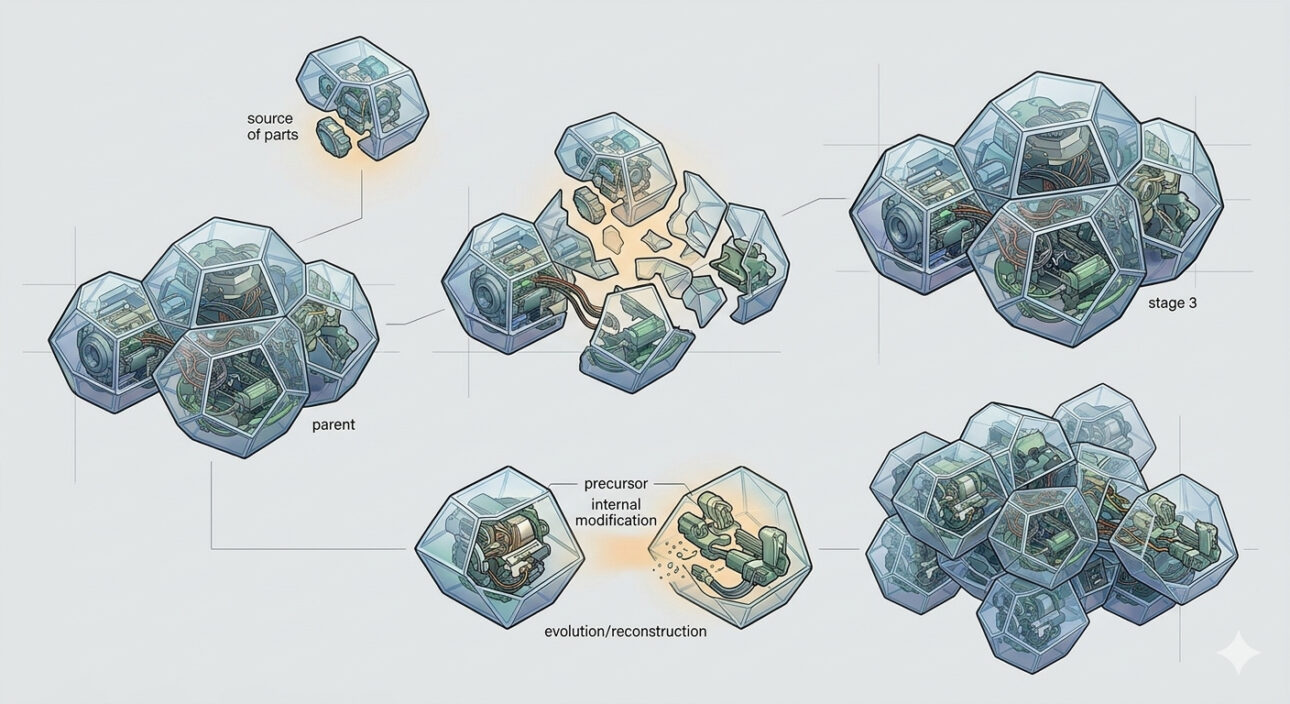
This kind of capability is especially interesting for robots that operate in environments where human maintenance is difficult or impossible, such as:
- space missions
- deep underwater exploration
- operations in contaminated or hazardous environments
In these scenarios, the ability to reconfigure their own structure can drastically increase the durability and autonomy of the machines.
Modular Robotics As A Path To More Adaptable Machines
The research from Columbia is part of a growing area of engineering called modular robotics, which seeks to develop systems composed of multiple independent units that can connect to each other.
Unlike traditional robots, which have a fixed structure, modular systems can be reorganized to perform different tasks. This allows for creating machines that adapt to the environment or operational needs.
In recent years, various laboratories have explored this concept, but the work led by Hod Lipson advances by introducing the idea of robotic metabolism, in which the machine not only reorganizes existing parts but also absorbs new components to evolve physically.
An Initial Step Toward Machines That Evolve Physically
The authors of the study themselves emphasize that the system is still in the experimental stage. The robots used in the tests are relatively simple structures and operate in controlled laboratory environments.
Even so, the concept opens up a new line of research on how machines can evolve physically over time. Instead of being designed once and remaining unchanged, future robots could grow, adapt, and continuously reconfigure.
This type of approach could also influence areas such as automated manufacturing, space exploration, and long-duration autonomous systems.
The Future Of Robotics May Include Machines That Build Themselves
The idea of machines capable of expanding or repairing themselves raises important questions about the future of engineering and artificial intelligence. If robots can modify their own physical structure, they may handle unpredictable environments and complex tasks more effectively.
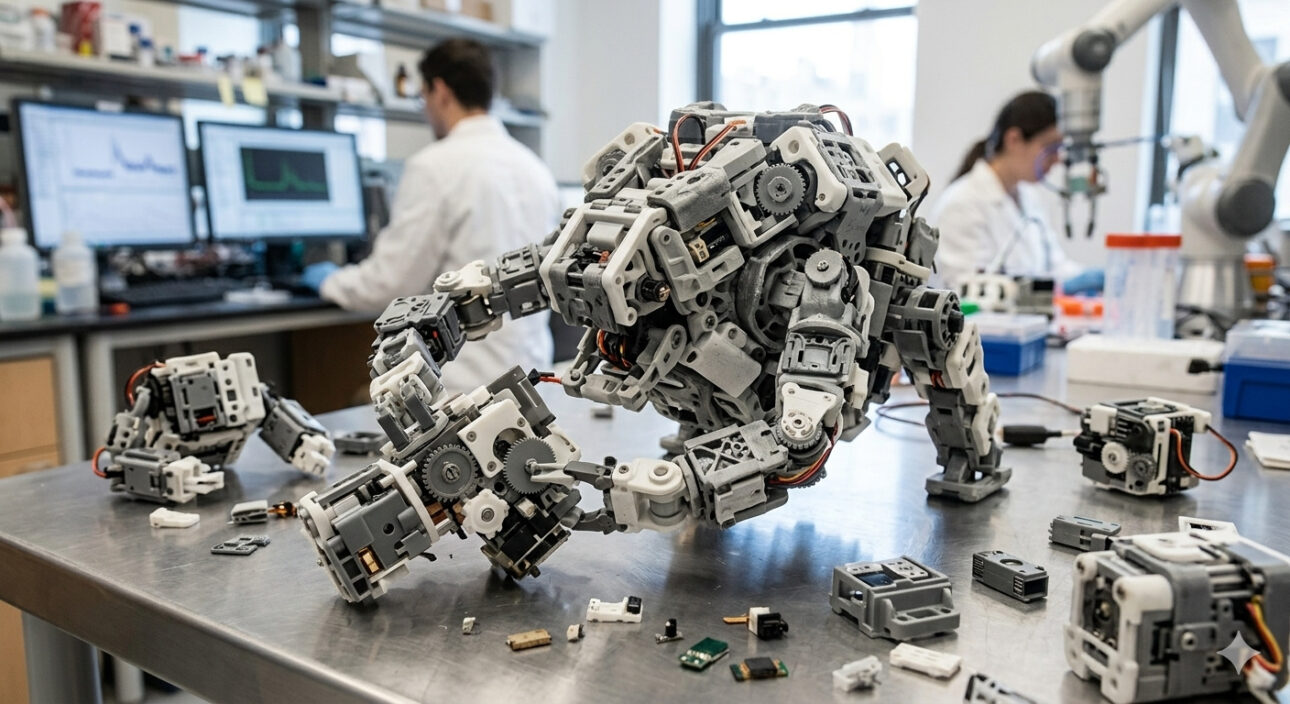
For the researchers at Columbia, robotic metabolism represents only a first step toward systems that can physically develop similarly to living organisms.
Although still far from autonomous machines capable of evolving completely on their own, the study shows that it is already possible to create robots that grow by incorporating new parts, bringing engineering closer to a concept that until recently seemed impossible.
If this line of research advances in the coming decades, the result could be a new generation of machines capable not only of performing tasks but also of adapting their own shape to face unprecedented challenges.









Seja o primeiro a reagir!