





 Portuguese
  English
  Spanish
  5 min of reading
  0 comments


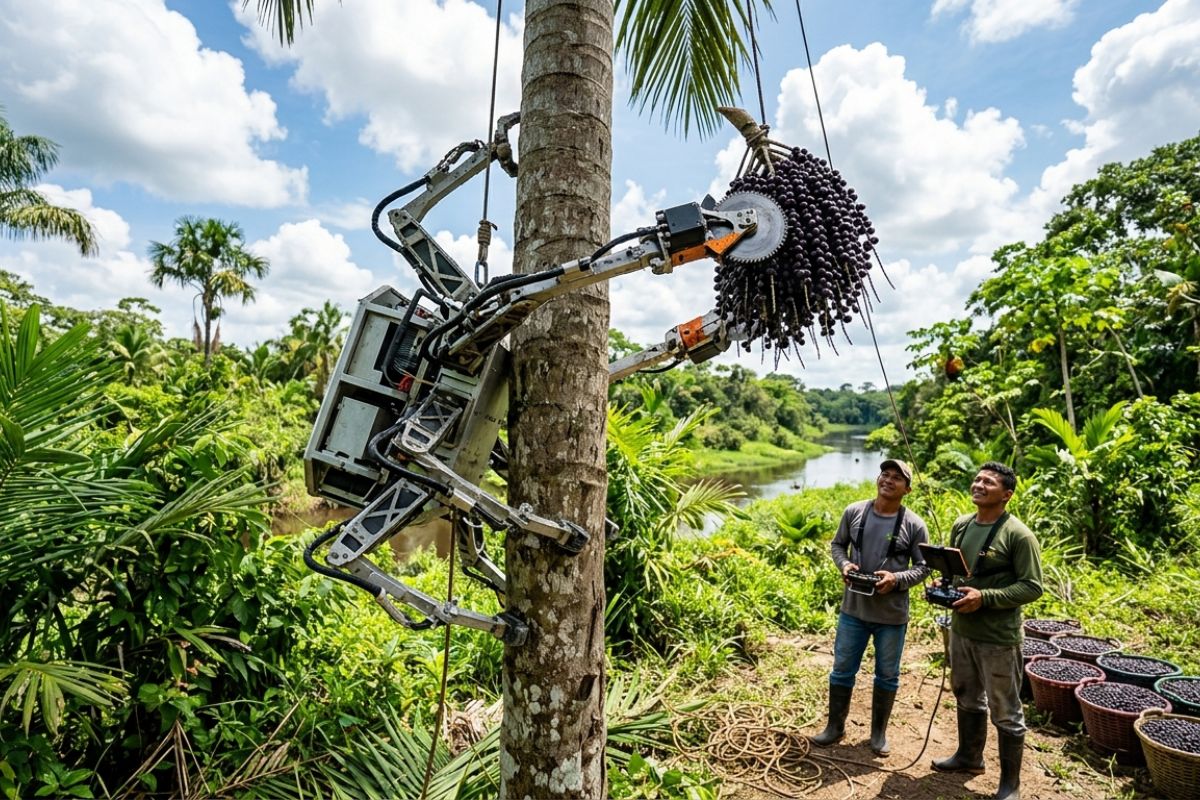
With a robot accessible via PRONAF, açaí gains a safer harvest in the açaí palm and the harvester reduces the risk of accidents.
Have you ever imagined a robot climbing an açaí palm to harvest açaí from the top of the tree? In Pará, this technology is already in use with the Açaí Bolt robot, which automatically scales the palm, locates the bunch, and cuts it with a remote control.
The proposal is straightforward: reduce accidents among harvesters and increase harvesting efficiency. According to the project, the robot can deliver a productivity gain of 10 times, reaching close to 1,000 kg of açaí per day in an extended workday, in addition to having financing pathways for family farmers via PRONAF.
Why climbing the açaí palm is so risky

Traditional harvesting requires skill and endurance. The palms can exceed 15 meters in height, and harvesters often tie their feet to a pecônia made of straw or rope to climb. A machete is carried at the waist to cut the bunch.
-
Scientists have discovered for the first time a gigantic cave hidden beneath a volcano on Venus, nearly a kilometer wide and 375 meters high, using radar images that had been forgotten for over 30 years.

-
They were brilliant! Scientists discover that our ancestors in China were already making super advanced tools 160,000 years ago, changing everything we knew.

-
Scientists unveil 3 million years of climate secrets hidden in the ice of Antarctica.

-
Ancient farmers created “aggressive plants” that changed nature forever.

The harvester is a central figure in the açaí supply chain in Pará, but the activity is described as one of the most dangerous and precarious in the world. According to the project report, 80% of these workers have already suffered some type of accident, whether from falls or cuts related to the machete and the pecônia.
The Açaí Bolt robot and remote cutting

The solution presented comes from the Socioenvironmental Institute of Science and Technology of the Amazon, Isaacta, based in Belém. The Açaí Bolt is a robot that attaches to the palm and climbs in an automated and intuitive manner.
The focus of the robot is to make cutting safer: it climbs, locates the bunch, and performs the harvest with remote control, reducing the risk of falls and injuries during the operation. Still, the proposal is not to “work alone.” The robot needs an operator, and the idea is that the harvest is done with a joystick, without the harvester needing to climb using the traditional method.
10 times more productivity and a goal of up to 1,000 kg per day
The productivity gain is one of the strongest points of the project. In the traditional method, a harvester collects, on average, 100, 130, or 150 kg of açaí during the morning, which is usually the working period.
With the robot, the cited differential is the possibility of extending the workday: operating four hours in the morning, leaving the equipment charging during lunch, and returning for another four hours in the afternoon. In this scenario, the project indicates that the robot can reach close to 1,000 kg of açaí per day, which represents ten times more than the traditional method, in addition to reducing the risk of accidents.
A robot designed for the reality of the forest

The Açaí Bolt has been tested in real conditions in the Amazon, facing intense heat, frequent rains, high humidity, and logistical challenges. The robot has shown efficiency gains in this environment, which is often the biggest obstacle for any technology that depends on the field and forest.
The motivation of the project also addresses social issues related to harvesting, such as the risk of death, unpaid labor of some women involved, and the presence of child labor reported in the context of the activity. The proposal of the robot is to be accessible to riverside communities, family farmers, quilombolas, and indigenous people, focusing on safety and organization of the supply chain.
Evolution of the equipment, materials, and weight of the robot
The development of the robot began in 2022. The first prototype was handmade and weighed about 14 kg. The eighth prototype was completed in June 2025 and was considered ideal, weighing 8 kg.
The equipment is made of injected plastic, with 30% carbon fiber, and uses aluminum cited as a robust material, similar to that used in aircraft. The battery is lithium, seeking a balance between durability and lightness for practical daily use.
Price, PRONAF, and discount for family farmers
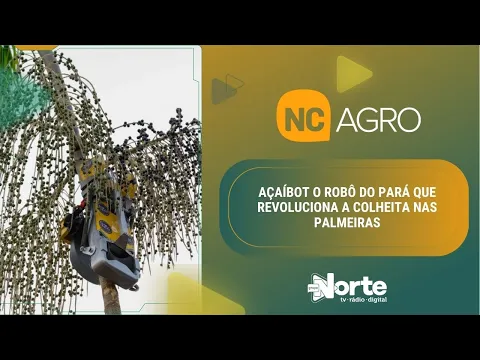

The robot costs around R$ 21,000 and has entered the catalog of agricultural equipment from the MDA, which opened the way for financing through PRONAF B, making access more viable for small producers.
In the described model, the family farmer who pays the installments on time can receive a 40% discount on the equipment’s value. The proposal is for the robot to be a tool for strengthening the activity, not a substitute for the income of riverside dwellers and extractivists.
Production, sales, and the next steps for the robot
The factory located in the Oteiro district of Belém has already sold about 500 units and has the capacity to produce up to 3,000 robots per month. The developers are also working on adapting the technology for the Atlantic Forest, aiming for the harvest of juçara, a palm similar to Amazonian açaí.
In addition to the robot, the project mentions other solutions, such as biodegradable baskets for packaging the fruit and the construction of bioways, structures within the forest to transport açaí in hard-to-reach areas, with the proposal to circulate without cutting down trees.
The impact on the açaí supply chain in Pará
The Federation of Agriculture of Pará evaluates that the project has the potential to boost the açaí production chain in the state, which already accounts for about 90% of the volume produced in the country. The entity also claims to work with technical training for riverside dwellers and small producers, so that the use of the robot occurs successfully.
With safer harvesting, better production pace, and remote operation, the robot represents a concrete attempt to solve an old bottleneck of açaí: harvesting quickly, with less risk, and with more control over the process.
Do you think this robot will become common in açaí harvesting in Pará, or will it still take time to truly reach the routine of small producers?





Seja o primeiro a reagir!