





 Portuguese
  English
  Spanish
 6 min of reading
  90 comments


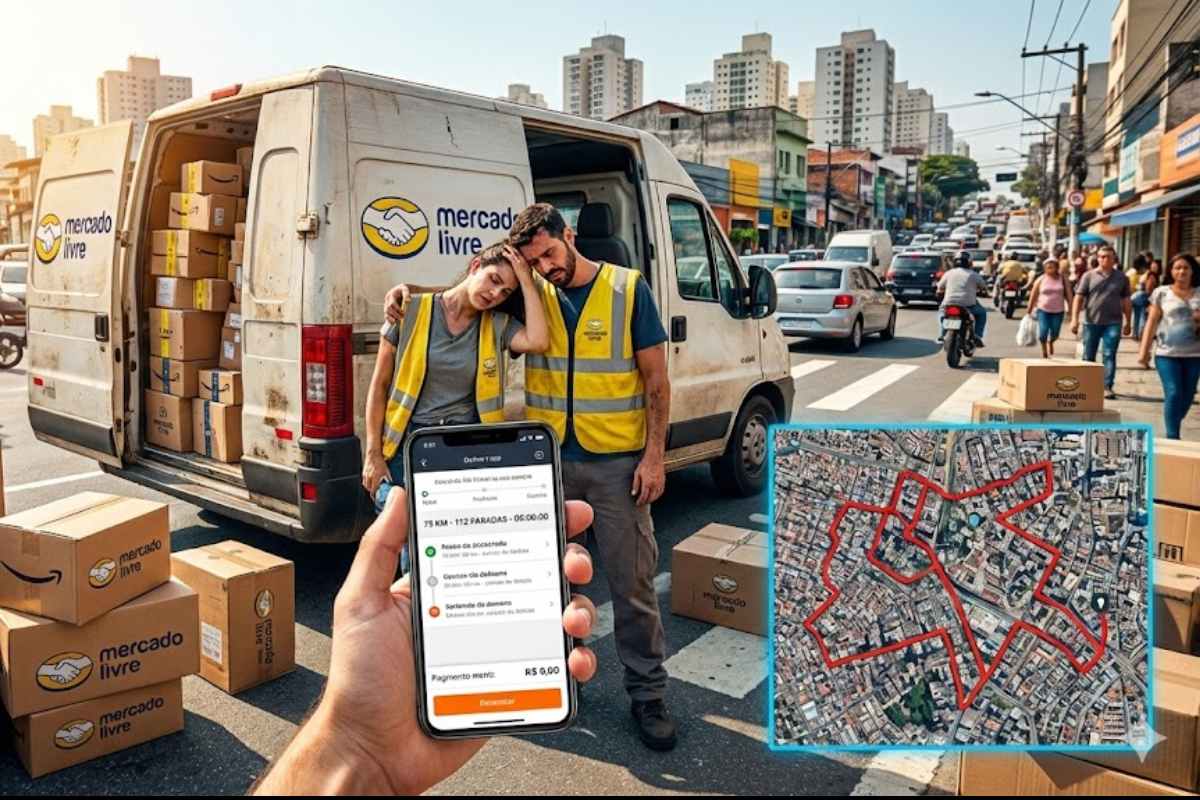


With 149 Packages, 112 Stops and 75 km on a Heavy Route, the Mercado Livre Delivery Person and His Wife Record Every Minute on the Street to Show How Much Mercado Livre Pays on a Mercado Livre Route with Their Own Utility Vehicle in Curitiba Throughout the Entire Morning of Work
The couple left home at 6:36 AM, with the trip zeroed, survival kit on the seat, and one question pounding in their minds: how much can you really earn doing heavy routes for Mercado Livre in a utility vehicle, with over a hundred stops in a single shift. The answer didn’t come in a spreadsheet; it came on the asphalt, in the returns, in the neighborhoods and condominiums where each package requires time, attention, and patience.
Over an entire morning, they covered 75 kilometers, delivered 149 packages, registered 112 stops in the app, and had a gross revenue of 322.20 reais, all shown step by step from the arrival at the hub to the moment of turning off the car in front of their house. The result helps to put concrete numbers on a question many people have but almost no one sees dissected: how much does Mercado Livre pay, and what really remains on a heavy route like this.
From the Kitchen to the Hub: Start of the Route Counts as Work

Before any Mercado Livre package enters the car, the routine starts in the kitchen: brewed coffee, chicken pie, banana, apple, water, sugar, and a small cup.
-
Archaeologists find a colossal 2,000-year-old vessel at the bottom of the sea near Alexandria linked to the elite of Egypt and reveal a pleasure barge from the last dynasty of the pharaohs that the sea has hidden for centuries.

-
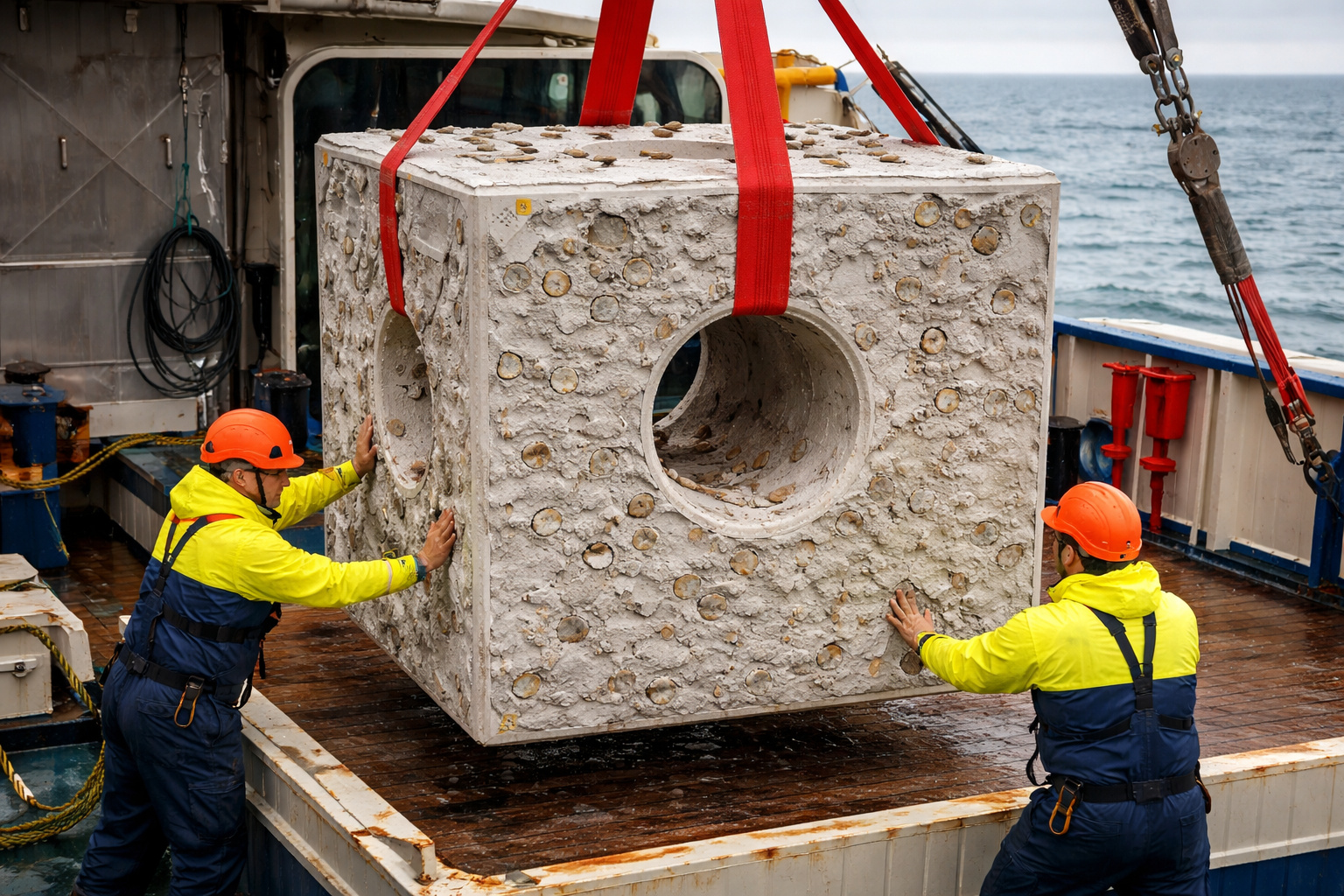
United Kingdom clears 40 tons of shells and concrete into the sea in an innovative project that promises to restore a marine ecosystem lost for over 200 years and improve water quality.
-
With emergency diversion to abandoned mining craters, engineers save villages from a devastating flood that was advancing through the desert and threatening to destroy entire communities in a matter of hours.

-
It seems simple, but it enriches: from R$ 500 to R$ 6,000 per piece and up to 10 days of handcrafted production, how is the couple from Praia Grande making a high income with hyper-realistic miniatures and turning a hobby into a money-making machine?


This is the survival kit for someone who knows they will be spending hours on the street without stopping for a full lunch.
With everything ready, the couple zeroed the odometer at 6:36 AM and headed toward the hub.
This initial movement consumed 17 kilometers, which count for the day but do not increase the route’s value.
When they arrived, the first wave of packages was already coming in, along with an inevitable comparison to their last morning shift: in the previous route, they had received 200 packages; this time, there were 149 packages and 112 stops, yet they still classified this scenario as a heavy route.
Mercado Livre, Boqueirão, and 112 Stops in One Morning

The game plan was clear by 8:10 AM. The system released the area of the moment: Boqueirão and Alto Boqueirão in Curitiba.
A familiar neighborhood, but with typical traffic for a morning route with Mercado Livre, which usually concentrates more stops in the same period.
The day’s breakdown was clear: 149 packages and 112 stops, with the utility vehicle registered in a category that receives 240 reais as a fixed starting fare for the route.
From there, additional payments come per stop, which change depending on the volume: up to 60 stops pay 0.40 reais each, from 61 to 90 stops the amount rises to 1.30 reais, and from 91 onwards, up to the 112 stops of the day, each address adds another 0.50 reais to the total.
To keep up with this pace, they started organizing the trunk.
Labeled bags by stop ranges, one with packages in the 90s, another in the 80s, to keep track of the app’s map without “searching” for a lost box at the bottom of the car.
This fine organization makes a difference when the map shows that, for example, stop 81 is close to 1, while 82 appears isolated near 4: without a logical separation, every misstep turns into wasted minutes.
Returns, Crushed Boxes, and the Time That No One Sees in the Account


During the route, the couple also had to deal with returns, a point that doesn’t show up on the payment banner but weighs on the clock.
Crushed boxes, makeshift tapes, and packages looking like they are on their way back to the sender clearly indicate a return package.
In these cases, the process changes: it’s necessary to read the QR Code, input the return code, check information, all while the counter for the five-hour route continues to run.
Despite this extra friction, their pace was considered good.
By around 10:30 AM, they had already completed 44 deliveries out of 112 stops, crossing commercial streets with fabric stores, residential neighborhoods, and sections where the flow of people helps speed up the confirmation of receipt.
At many addresses, the customer only needed to appear quickly at the gate for the package to be scanned, delivered, and the route to move on.
In Vila Pantanal, one of the most striking areas of the route, they made a “cluster” of deliveries.
The app showed a compact group of stops accessible by a single street, and the couple took the opportunity to clean up this area in sequence.
They completed about 11 deliveries in approximately 20 minutes, entering and returning to the main route efficiently, the type of micro-strategy that makes a heavy route less tiring.
5 Hours of Route, 75 km Driven, and 322.20 Reais Gross
As the clock advanced, the number of packages in the utility vehicle decreased. By around 12:36 PM, they had completed 93 deliveries, and the trunk visually indicated the end of the line.
As noon approached, each stop was made with one eye on the app and the other on the improvised lunch, in a kind of split lunch between deliveries.
The last deliveries came in condominiums, where the waiting time can easily swallow up the productivity of a route.
This time, however, residents appeared quickly, and the last two stops were divided between the couple to finish the route simultaneously. By 1:30 PM, the route was logged as completed in the system.
Only then came the numbers that matter to those thinking of delivering for Mercado Livre.
Adding the fixed fare of 240 reais for the utility vehicle with the additional payments per stop, the total value for this route of 112 stops and 149 packages reached 322.20 reais gross, covering 75 kilometers that day to complete the route, including the trip from home to the hub and back.
In calculating fuel costs, the driver was straightforward: in the utility vehicle used by the couple, which is considered economical, the estimate is between 40 and 50 reais in fuel for this route, including the trip to the hub, executing the route, and returning home.
This shows that even on a heavy route, a large portion of the gross revenue disappears before any net value is left for the pocket.
App, Payment Table, and What Changes with Greater Distance
Besides the practical record, the couple opened the payment table applied by Mercado Livre that day.
For utility vehicles, routes between 100 and 150 kilometers raise the base pay to 260 reais, and routes from 151 to 200 kilometers jump to 278 reais, not counting stop extras, which are also included in the total based on the number of addresses.
In the specific route shown in the video, however, the distance was 75 kilometers, with a typical Curitiba scenario, without any long “travel” to a distant city. This helps to understand the pattern for those who operate more within the urban perimeter: an average of 70 to 80 kilometers per route, with total payments around the amount shown that day, varying based on the number of stops and the type of registered vehicle.
After finishing lunch at home, the dispatch sent a message offering a new route at 3 PM, this time with 50 stops, considered by them a lighter route, half the weight of the morning.
The second shift didn’t make it to the recording, precisely because the goal of the video was to lock in the complete numbers from a single heavy route for Mercado Livre, without confusing the calculation.
At The End of The Day, Is the Mercado Livre Route Worth It For You?
When closing the logbook, the summary for that shift looked like this: 5 hours of route, 75 kilometers driven, 112 stops, 149 packages delivered, and 322.20 reais gross received from Mercado Livre, with an estimated cost of up to 50 reais in fuel just to keep the utility vehicle running.
In this, there are still wear and tear on the vehicle, maintenance, travel time to the hub, package organization, and the mental energy to deal with returns, entrances, narrow streets, and unexpected delays.
For those who only see the final value of the route on a screen, everything may seem simple.
But, when each package gains an address, schedule, and story, the real price of living off routes for Mercado Livre becomes clearer, especially on days with 112 stops that offer no relief to the body or the clock.
And you, looking at these 75 kilometers, 5 hours on the street, and 322.20 reais gross, do you think this heavy Mercado Livre route is worth it or doesn’t fit into your work calculation?







Tão ganhando mais que a maioria dos CLTs e tb mais do que muitos servidores públicos (mesmo tirando gastos de combustivel, depreciação e manutenção)
Agora, tudo nesta vida tem vantagem e desvantagem. Eles não tem 13º e nem férias remuneradas. Mas se forem inteligentes e tiverem ao menos o MEI, eles estão inclusive segurados pelo INSS.
Nas vantagens esta: Ganhar mais, não ouvir encheção de saco de chefe. Podem organizar a própria rotina, tendo menos rigidez nesse sentido do que o CLT e o servidor comum.
Escravidão moderna… Trabalham que nem animais e ainda se sentem autônomos. Ficou doente, não tem renda,pneu furou, não tem renda,decidiu tirar um dia de folga… Não tem descanso remunerado.
Aqui em pouso alegre MG, os carros encostam no hub as 7:00 e é dificial sair antes das 11:00 e quem nao vai ficar na cidade ainda tem que pegar estrada dependendo pra onde vai roda 150km ou mais pra chegar na cidade que vai fazer as entregas, saem com 110 entregas, as fiorinos saem lotadas, muitos terminam a noite e ainda tem que enfrentar a estrada pra chegar em casa.