





 Portuguese
  English
  Spanish
  6 min of reading
  0 comments



Rogfast Will Be the Largest Submarine Tunnel in the World and Promises to Transform the E39 Highway and European Infrastructure.
Norway has begun the execution of one of the most ambitious engineering projects today: the Rogfast, a submarine tunnel that will connect strategic cities in the west of the country, such as Stavanger, Haugesund, and Bergen.
Expected to be completed in 2033, the project is part of the modernization of the E39 highway, crossing fjords at depths of up to 400 meters and aiming to eliminate the use of ferries, drastically reduce travel time, and establish a new benchmark for European infrastructure.
What is the Rogfast and Why is It So Strategic
The Rogfast was conceived as a continuous road tunnel, excavated directly into solid rock beneath the Norwegian fjords.
-
The lack of welders, electricians, and operators becomes a structural threat in 2025, with the construction industry and manufacturing already suffering from delays, cost pressures, and labor shortages in Brazil.

-
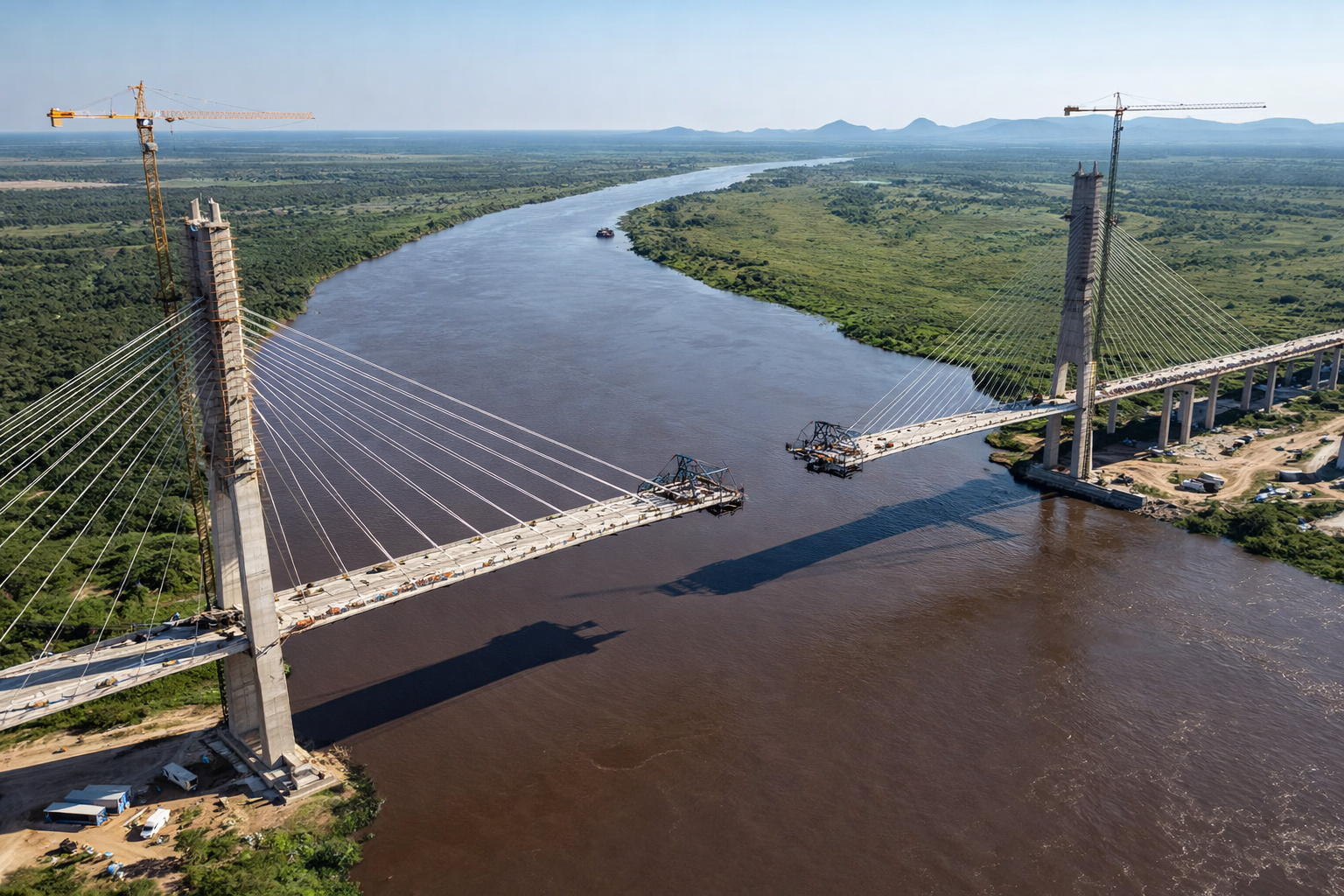
Brazil and Paraguay are just 46 meters away from a historic union on the bioceanic bridge that promises to revolutionize trade between the Atlantic and the Pacific.
-
With 55 km over the sea, a cost of US$ 20 billion, and enough steel to build 60 Eiffel Towers, China’s largest project has connected Hong Kong, Zhuhai, and Macau in a colossal bridge that defies the logic of engineering.

-
A trick with joint compound transforms a Styrofoam ceiling into a plaster-like ceiling: leveled panels, wires and mesh at the joints, sand, paint, and change the environment while spending little today.


With nearly 27 kilometers in length, it will become the longest and deepest submarine tunnel in the world when it becomes operational.
Beyond its physical magnitude, the project has strategic relevance for Norway.
By connecting regions currently separated by maritime crossings, the tunnel creates an uninterrupted land connection, reducing historical mobility bottlenecks.
Therefore, Rogfast is not just an engineering work but a key piece for territorial and economic integration.
The E39 Highway and the Elimination of Ferries
The tunnel is part of a larger plan to modernize the E39 highway, which runs approximately 1,100 kilometers along Norway’s west coast, linking Trondheim in the north to Kristiansand in the south.
Currently, this route relies on various maritime ferries.
With the construction of submarine tunnels and bridges, the Norwegian government aims to eliminate these interruptions.
This way, the expectation is to reduce the total travel time by half, increasing logistical predictability and the efficiency of regional transport.
Direct Impacts on Mobility and the Regional Economy
The scale of the Rogfast will allow a reduction of about 40 minutes in the travel time between Stavanger and Bergen, two of the main cities in western Norway.
This time gain is likely to profoundly alter the dynamics of work, tourism, and logistics.
Additionally, transport companies and local production chains should benefit from lower costs and greater delivery regularity.
Meanwhile, workers will have more daily commuting options, broadening the regional job market.
Thus, the tunnel establishes itself as a structural axis of modern European infrastructure.
Extreme Engineering in a Submarine Environment
The construction of the Rogfast submarine tunnel will be carried out through direct drilling into solid rock, a technique widely mastered by Norwegian engineering.
The country has experience with over 40 submarine tunnels already in operation.
This expertise explains Norway’s preference for tunnels over bridges in certain regions.
Unlike bridges, tunnels are protected from extreme winds, storms, and severe weather variations that are common on the Norwegian coast.
Furthermore, the underground solution reduces visual and environmental impacts on the landscape of the fjords.
A New Standard for European Infrastructure
When completed, the Rogfast will set a new technical standard for underwater works on a global scale.
The project demonstrates how European infrastructure can evolve towards more resilient, efficient, and integrated solutions.
On the other hand, the tunnel also symbolizes a paradigm shift in road planning, prioritizing continuity, safety, and reducing indirect emissions caused by long ferry waits.
Thus, the E39 highway comes to represent not just a coastal road, but a strategic logistics corridor for national development.
A Historic Milestone for Norway
More than just impressive numbers, the Rogfast reflects Norway’s long-term vision for transport infrastructure.
By investing in large-scale underground solutions, the country anticipates future demands for mobility and economic growth.
Therefore, the submarine tunnel will not only be the largest in the world but a symbol of innovation, planning, and engineering applied to the public interest.
With completion expected in 2033, Rogfast is already consolidating itself as one of the most relevant works of the century for European infrastructure.
Norway has begun the execution of one of the most ambitious engineering projects today: the Rogfast, a submarine tunnel that will connect strategic cities in the west of the country, such as Stavanger, Haugesund, and Bergen.
Expected to be completed in 2033, the project is part of the modernization of the E39 highway, crossing fjords at depths of up to 400 meters and aiming to eliminate the use of ferries, drastically reduce travel time, and establish a new benchmark for European infrastructure.
What is the Rogfast and Why is It So Strategic
The Rogfast was conceived as a continuous road tunnel, excavated directly into solid rock beneath the Norwegian fjords.
With nearly 27 kilometers in length, it will become the submarine tunnel longest and deepest in the world when it becomes operational.
Beyond its physical magnitude, the project has strategic relevance for Norway.
By connecting regions currently separated by maritime crossings, the tunnel creates an uninterrupted land connection, reducing historical mobility bottlenecks.
Therefore, Rogfast is not just an engineering work but a key piece for territorial and economic integration.
The E39 Highway and the Elimination of Ferries
The tunnel is part of a larger plan to modernize the E39 highway, which runs approximately 1,100 kilometers along Norway’s west coast, linking Trondheim in the north to Kristiansand, in the south.
Currently, this route relies on various maritime ferries.
With the construction of submarine tunnels and bridges, the Norwegian government aims to eliminate these interruptions.
This way, the expectation is to reduce the total travel time by half, increasing logistical predictability and the efficiency of regional transport.
Direct Impacts on Mobility and the Regional Economy
The scale of the Rogfast will allow a reduction of about 40 minutes in the travel time between Stavanger and Bergen, two of the main cities in western Norway.
This time gain is likely to profoundly alter the dynamics of work, tourism, and logistics.
Additionally, transport companies and local production chains should benefit from lower costs and greater delivery regularity.
Meanwhile, workers will have more daily commuting options, broadening the regional job market.
Thus, the tunnel establishes itself as a structural axis of modern European infrastructure.
Extreme Engineering in a Submarine Environment
The construction of the Rogfast submarine tunnel will be carried out through direct drilling into solid rock, a technique widely mastered by Norwegian engineering.
The country has experience with over 40 submarine tunnels already in operation.
This expertise explains Norway’s preference for tunnels over bridges in certain regions.
Unlike bridges, tunnels are protected from extreme winds, storms, and severe weather variations that are common on the Norwegian coast.
Furthermore, the underground solution reduces visual and environmental impacts on the landscape of the fjords.
A New Standard for European Infrastructure
When completed, the Rogfast will set a new technical standard for underwater works on a global scale.
The project demonstrates how European infrastructure can evolve towards more resilient, efficient, and integrated solutions.
On the other hand, the tunnel also symbolizes a paradigm shift in road planning, prioritizing continuity, safety, and reducing indirect emissions caused by long ferry waits.
Thus, the E39 highway comes to represent not just a coastal road, but a strategic logistics corridor for national development.
A Historic Milestone for Norway
More than just impressive numbers, the Rogfast reflects Norway’s long-term vision for transport infrastructure.
By investing in large-scale underground solutions, the country anticipates future demands for mobility and economic growth.
Therefore, the submarine tunnel will not only be the largest in the world but a symbol of innovation, planning, and engineering applied to the public interest.
With completion expected in 2033, Rogfast is already consolidating itself as one of the most relevant works of the century for European infrastructure.









-

2 pessoas reagiram a isso.