





 Portuguese
  English
  Spanish
  3 min of reading
  0 comments


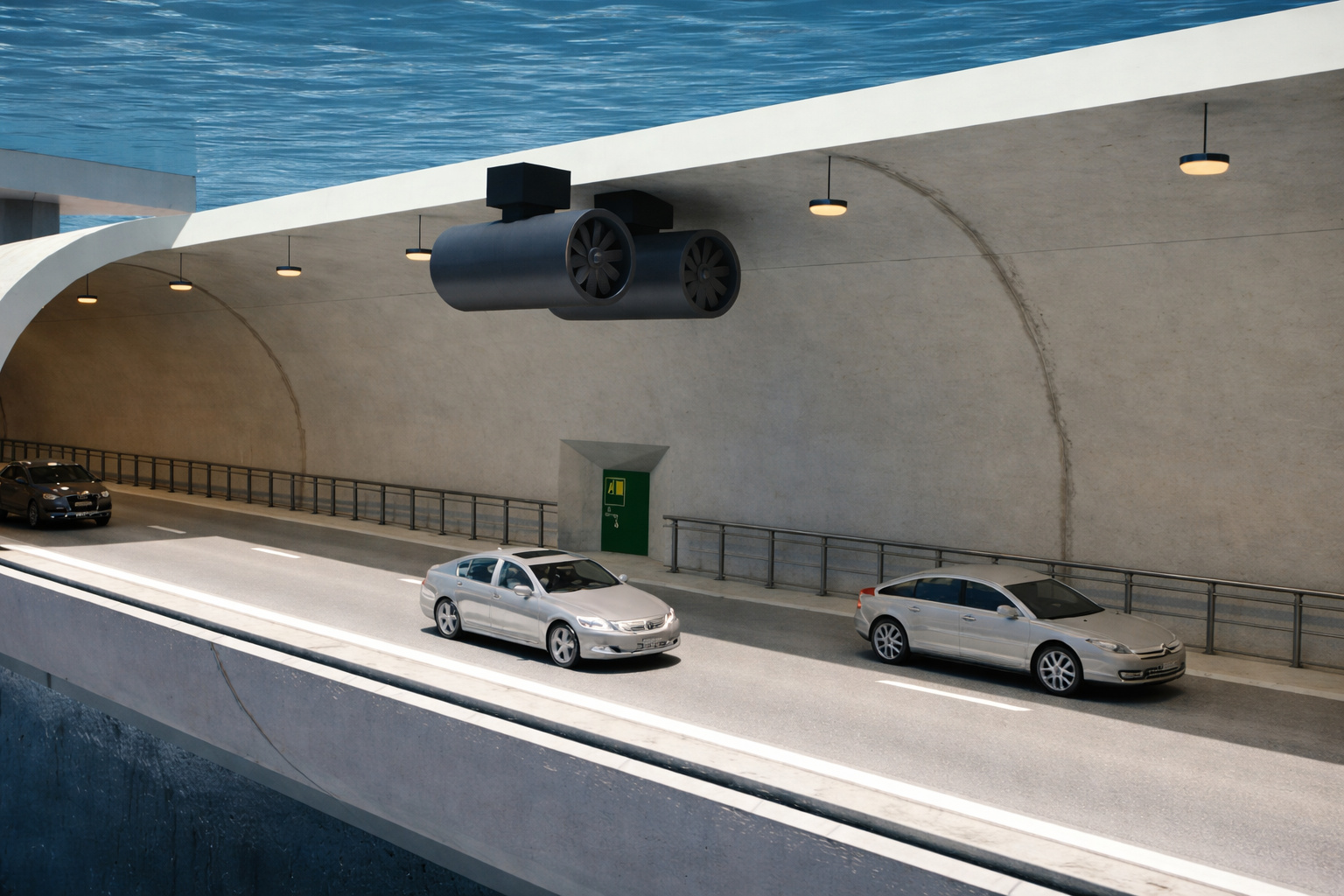
The Largest Subsea Project Ever Planned Connects Strategic Regions, Faces Extreme Ocean Pressure, and Redefines the Limits of Modern Engineering
An unprecedented scale infrastructure project is silently progressing beneath the European ocean floor.
Since 2018, Norway has been executing a project that has begun to attract international attention due to the level of technical complexity involved.
This is the Rogfast, a subsea tunnel designed to become the deepest and longest in the world, reaching 392 meters below sea level and approximately 27 kilometers in length.
This undertaking integrates the European Route E39, a vital axis for transportation along the Norwegian west coast.
Currently, however, this route still relies on ferries to cross fjords, which results in frequent delays, operational interruptions, and low logistical predictability.
As a result, the tunnel was conceived to eliminate this historical bottleneck, enabling continuous traffic, regardless of weather conditions.
Technical Project Reveals Structural Change in Coastal Mobility
The Rogfast was designed to connect directly Stavanger and Bokn, thereby creating a strategic link toward Bergen.
According to technical estimates released in 2023, this new connection could reduce travel time by up to 40 minutes, directly impacting the flow of goods and passengers.
-
While Brazil wants to end the 6×1 work shift, the president of Argentina wants 12 hours for his workers, increasing political tension in the country.

-
The village where two rivers run side by side without mixing in Santarém and Alter do Chão reveals some of the most beautiful freshwater beaches on the planet.
-
Mars is accelerating, and scientists have discovered that the planet’s day is getting shorter, revealing surprising signs of internal activity.

-
Artemis 2 is set to launch on April 1 at 7:24 PM to orbit the Moon with four astronauts, but a class X solar flare and coronal mass ejection could interfere with communications and threaten the launch.

This change reorganizes regional logistics, as it replaces maritime crossings subject to weather with a stable land route.
As a result, transportation gains predictability, regularity, and greater operational efficiency along the entire west coast.
Engineering at Extreme Depths Imposes Unique Challenges
The excavation of the tunnel occurs almost entirely in solid rock, using advanced drilling techniques and controlled explosions.
Nonetheless, the depth imposes severe challenges, as the structure needs to withstand the pressure of hundreds of meters of water above it.
For this reason, the project adopts reinforced concrete linings, combined with permanent geotechnical monitoring.
According to technical information released by the Norwegian Public Roads Administration, this monitoring is carried out continuously to ensure structural stability along the entire route.
Internal Infrastructure Enhances Safety and Operational Capacity
In addition to the main excavation, Rogfast will feature two parallel tunnels, each with two traffic lanes.
One of the most impressive features is the installation of a subterranean roundabout at over 250 meters deep, a rare configuration in roadway projects.
The project also includes high-capacity ventilation systems, escape routes, shelter areas, fire sensors, and constant monitoring of vehicle flow.
These resources were incorporated to maintain high safety standards in an extreme and permanent environment.
Billion-Dollar Investment Forecasts Long-Term Impact
Updated data from 2024 indicates that the investment involves billions of euros, reflecting the technical and financial magnitude of the project.
The official timeline from the Norwegian government indicates completion over the next decade, according to the progress of excavation phases and internal system implementation.
Once finished, Rogfast is expected to become one of the greatest symbols of infrastructure engineering in the 21st century.
At the same time, the project is likely to redefine Norwegian coastal mobility, demonstrating how far modern engineering can advance in environments deemed extreme.
In light of this technological advancement, to what extent can subsea projects like Rogfast become standard in coastal regions with similar geographical challenges?







Seja o primeiro a reagir!