





 Portuguese
  English
  Spanish
  4 min of reading
  0 comments


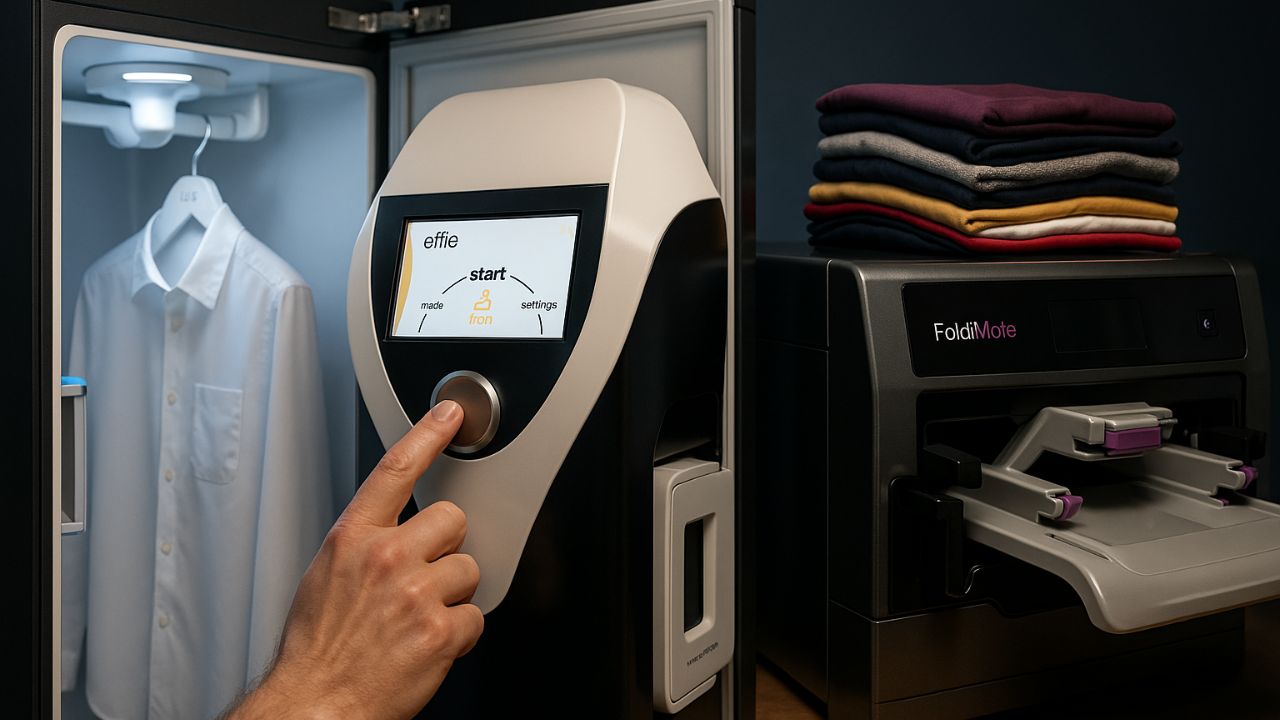
Discover How Automation Is Transforming The Task Of Caring For Clothes, The Devices That Are Coming To Market, And Whether The Investment In This New Technology Is Worth It.
The task of ironing and folding clothes is one of the most time-consuming in domestic routines. However, technology is advancing to solve this problem. Machines that promise to automate the process are becoming a reality. Devices like the FoldiMate and the LG Styler use sensors, robotics, and steam to deliver items ready to be stored. This article explores how this innovation works, the models available in Brazil, their costs, and the advantages over traditional methods.
How Does The Technology Behind Automation Work?
Automatic machines for folding and ironing clothes use sensors and artificial intelligence. They recognize the items to handle them correctly. Many have cameras and algorithms that identify the type and size of clothing. As a result, they adjust the folding method for each item.
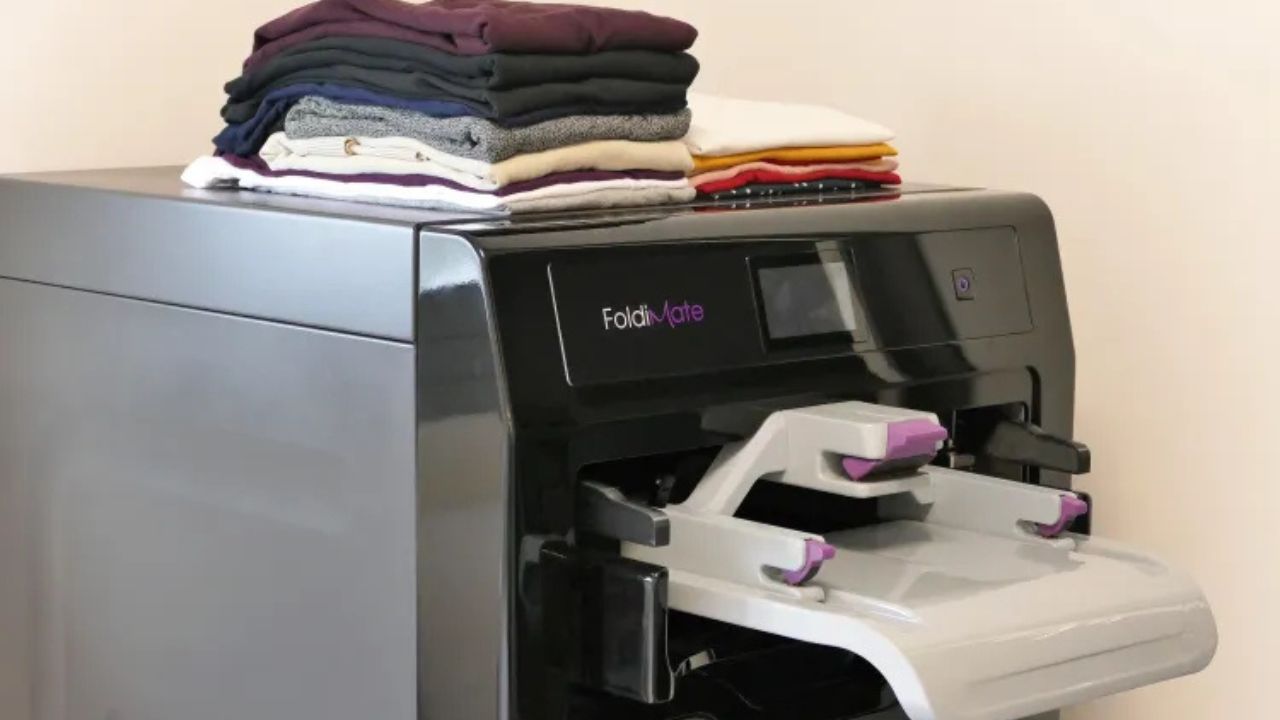
The Japanese robot Laundroid, for example, used an image recognition system and robotic arms. It separated and folded the items by itself. The American machine FoldiMate works differently. The user inserts the clothing into an opening. Alignment sensors and internal claws pull the item. Mechanical plates fold it in seconds.
-
How the terraforming of Mars can transform the planet: artificial aerosols can increase the temperature by up to 35°C in 15 years, creating conditions for liquid water.

-
Scientists drilled nearly 8,000 meters into the ocean floor above the fault that caused the 2011 tsunami in Japan and discovered that a layer of clay 130 million years old was responsible for making the wave much worse than any model had predicted.

-
Thousands of years after causing the largest eruption of the Holocene, one of the world’s largest supervolcanoes is rebuilding itself beneath the sea south of Japan, receiving new magma and alarming scientists with its transformation.

-
China has activated a magnet 700,000 times more powerful than the Earth’s magnetic field that operates for over 200 consecutive hours while consuming little energy, and now the world wants to know what Beijing plans to do with this technology in 2026.

Another fundamental technology is the use of steam. It replaces the traditional iron. The machines steam the clothes to remove wrinkles and creases. This happens without direct contact with heat, avoiding burning delicate fabrics. Humidity and temperature sensors adjust the process for each type of fabric. The FoldiMate, for instance, combines folding with an internal steam system. The smart cabinet LG Styler uses TrueSteam technology and a movable hanger to remove odors and creases, allowing steam to penetrate the fibers.
What Already Exists in Brazil?
Although it is a new technology, some models are already targeting the Brazilian market. The main novelty is the FoldiMate, a robot that folds clothes. Created by a startup in California, it promises to fold and steam about 20 pieces at a time. News indicates that Polishop is interested in distributing the device in Brazil. Technically, it doesn’t wash, but is used after washing to iron and fold.
Another option already available is the LG Styler. It is a smart cabinet that steams and sanitizes clothes. It does not fold the pieces, but removes creases and odors with high-temperature steam. It is ideal for suits, dresses, and formal wear. Its capacity is three hangers and a compartment that creases pants. The LG Styler is already sold in specialized stores in the country.
It is worth mentioning the Laundroid machine. The Japanese project promised to wash, dry, iron, and fold everything by itself. However, the company went bankrupt in 2019, and the product was never sold in Brazil.
How Much Does This Technology Cost?
The price of these machines is still high. The FoldiMate was announced abroad in the range of US$ 700 to US$ 1,000. In Brazil, with taxes and shipping, the final price can be between R$ 5,000 and R$ 7,000. The pre-sale in the U.S. was US$ 980.
The LG Styler belongs to a premium segment. Its price in the Brazilian market varies from R$ 17,000 to R$ 20,000. Major retailers sell it in this range. The price reflects the advanced technology and the fact that it is an imported product.
To purchase, the FoldiMate should be available at Polishop and in online imported stores. The LG Styler can be found in chains like Fast Shop and Leroy Merlin, as well as the official LG Brazil store and major marketplaces.
Advantages And Limitations Compared To Traditional Methods
Automated machines offer great convenience. The main benefit is the time and effort savings. Tedious tasks are delegated to the device. The FoldiMate, for example, folds a load of clothes in about 5 minutes, with professional standardization. The steam also removes germs, which is useful for allergy sufferers. Additionally, there is no risk of burning the clothes.
On the other hand, there are limitations. The initial cost is high. Energy consumption can also be significant. The process is not always quick, as some machines require items to be inserted one by one. Very small items, like socks, or very large ones, like comforters, are not accepted. Delicate pieces may also require traditional handling. Therefore, automation does not completely replace the classic method in all scenarios.
Comparing The Main Smart Machines
When analyzing the devices, the differences become clear. The FoldiMate focuses on folding and steaming. It processes from 20 to 25 pieces per cycle, folding each one quickly, in about 10 to 30 seconds. Its estimated price for Brazil, around R$ 5,000 to R$ 7,000, positions it as a more affordable option for automating the folding task.
In a different segment is the LG Styler. Its function is not to fold, but to sanitize, de-wrinkle, and gently dry clothes using steam. With the capacity for 3 hangers and 1 pair of pants per cycle, it is a smart cabinet focused on the care of formal pieces. It is already available in Brazil, but with a significantly higher cost, in the range of R$ 17,000 to R$ 20,000.
Other ambitious projects have not reached the market. The Laundroid promised a complete cycle of washing, drying, ironing, and folding, but the project was canceled in 2019 before it was marketed. The Effie machine from the UK, which dried and ironed up to 12 pieces on hangers, also remains a prototype with no commercial launch or arrival date in Brazil.








-

-

5 pessoas reagiram a isso.