





 Portuguese
  English
  Spanish
  5 min of reading
  0 comments


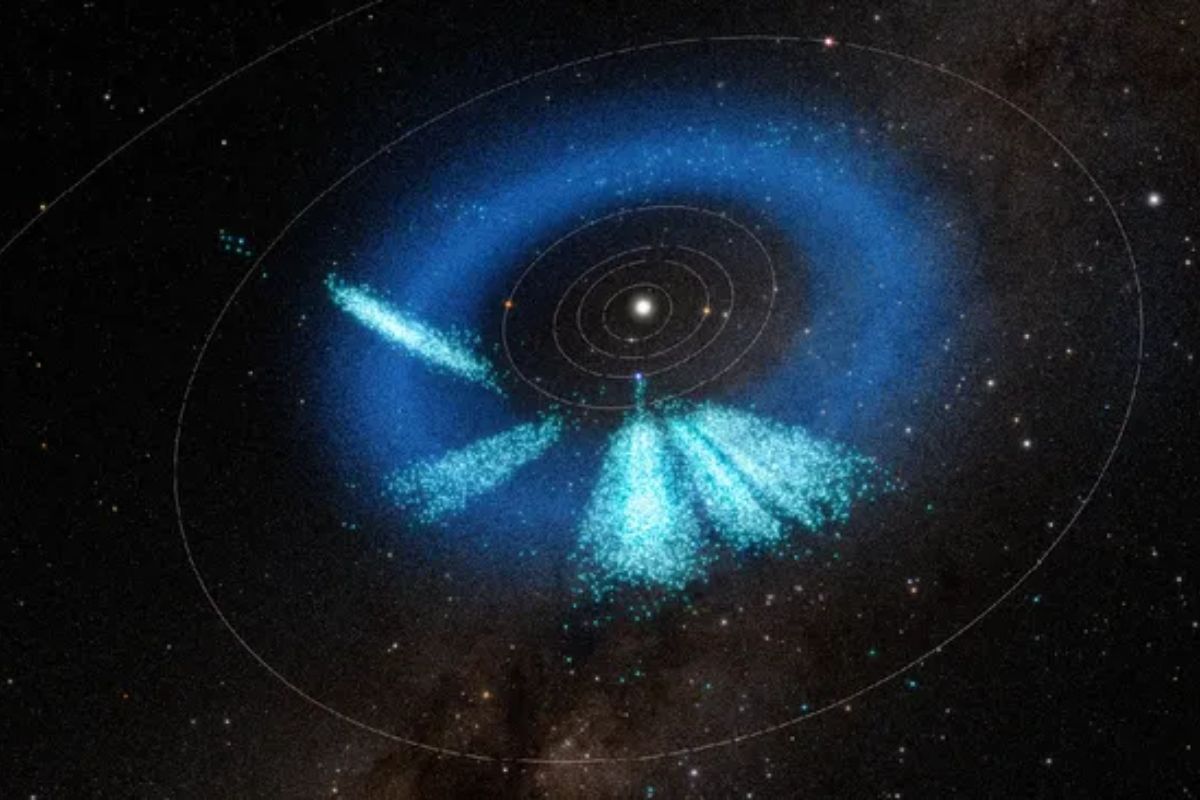
Asteroids have gained a new chapter in astronomy with the first observations from the Vera C. Rubin Observatory, which have already identified more than 11,000 previously unknown objects, in addition to measuring tens of thousands of others in just a few days.
The asteroids detected early in the operations demonstrate the potential of a system capable of scanning the southern sky with unusual speed and depth. Even in preliminary observations, Rubin has already far surpassed the pace of traditional surveys and opened a new phase for mapping the solar system.
The start of the observatory’s activities already provides a preview of the impact it may have over the coming years. With an 8.4-meter mirror and the largest camera ever built for astronomy, Rubin was designed to capture large areas of the sky in sequence, locating faint and moving objects much more efficiently.
This capability changes the game because it not only increases the number of discoveries but also the quality of monitoring. What previously took years or even decades to find could emerge in months, accelerating the inventory of smaller bodies and refining the understanding of the structure of the solar system.
-
Artemis 2 only passed by the Moon and returned: Orion does not land, the module is still not ready, and the Apollo evidence includes 382 kg of rocks, laser mirrors, and photos.

-
NASA observed from orbit a green patch advancing over a reservoir in South Africa, and what seemed harmless revealed a real threat to water, fish, and public health.

-
A YouTuber who was trying to recreate piece by piece the mechanism of the oldest computer in the world ended up helping scientists uncover how it, lost for about 2,000 years, likely measured time with impressive accuracy.
-
Retired airplanes are worth billions: behind the “junkyard,” a strict industrial process dismantles each part, recovers metals and electronics, transforms fuselages into clean raw materials, and returns value to the global industry.

Rubin debuts showing strength right from the first days
The first observations have already revealed more than 11,000 new asteroids, a number that alone is noteworthy. In addition, the observatory has also measured tens of thousands of other objects, reinforcing that this is not an isolated discovery but a change in scale.
This initial performance is significant because it occurred during a preliminary data collection phase. Even with limited observations, Rubin demonstrated the ability to detect thousands of moving objects in a very short time frame, something that points to an important leap in solar system science.
Main belt asteroids lead discoveries

The majority of the new records involve asteroids from the main belt, a region located between Mars and Jupiter that contains most of these known bodies. Today, astronomers know about 1.4 million to 1.5 million asteroids throughout the solar system, and Rubin promises to significantly expand this total.
The expectation is that, over the course of the 10-year survey, the observatory will discover millions of new objects. This means that the southern sky could transform into a dynamic and continuously updated map, with much greater precision regarding the behavior and distribution of these bodies.
Near-Earth objects have also entered the radar
Among the initial discoveries, Rubin identified 33 near-Earth objects, known as NEOs. These bodies attract special attention because their orbits bring them close to the Sun and, consequently, may place them on trajectories of interest for planetary defense.
So far, however, there is no sign of threat. According to the data presented, none of the newly discovered objects pose a risk to Earth. Still, the importance of this monitoring is enormous, as the observatory can enhance the detection of smaller bodies that still evade current surveys.
Rubin also reaches more distant regions of the solar system
The work of the observatory has not been limited to the closest or most common asteroids. The first analyses also located about 380 trans-Neptunian objects, icy bodies that orbit beyond Neptune and help investigate the outer parts of the solar system.
To find these objects, scientists resorted to advanced computational methods, with algorithms capable of analyzing massive data sets.
The system examines millions of faint light sources and tests billions of possible trajectories, trying to identify slow and subtle movements that could go unnoticed in conventional surveys.
New technology changes the pace of astronomy
One of Rubin’s great strengths lies in the combination of hardware and processing. The observatory can capture images of the entire southern sky every few days, making it especially effective for locating fast-moving objects and also very faint bodies.
In practice, the sky ceases to be just a static portrait and begins to function as a dynamically monitored environment, with constant updates of everything that moves.
Planetary defense may gain new momentum
The initial discoveries have scientific value, but they also directly relate to planetary security. Earth’s defense efforts depend on locating and tracking NEOs that may pose some risk in the future, especially the smaller ones, which still remain partly unknown.
Today, many large objects have already been identified, but a significant fraction of the smaller ones has not yet fully entered the catalogs. When Rubin is fully operational, the estimate is that the number of known larger NEOs will rise from 40% to as much as 70%, thanks to continuous monitoring of the sky.
This could improve early warning capabilities and allow for more accurate orbital calculations. The sooner an object is detected, the greater the chance of clearly understanding its trajectory and reducing future uncertainties.
Thousands now, millions later
Current surveys discover tens of thousands of asteroids each year. Rubin, on the other hand, has already shown that it can find thousands in a short interval right at the start of operations. This reinforces the perception that the observatory can profoundly change the speed of astronomical cataloging.
More than just increasing the count, Rubin promises to enhance the understanding of how these bodies form, evolve, and move.
The debut of the observatory represents not just a good start, but the beginning of a new era for solar system observation, with direct effects on scientific research and monitoring of potentially dangerous objects.
Southern sky becomes a central piece in the new phase of science
By frequently revisiting the southern sky, the Rubin Observatory transforms this region into one of the most strategic areas for contemporary astronomy.
What emerges from there is not just a larger list of discoveries, but a much more detailed panorama of Earth’s cosmic neighborhood.
If the initial performance already impresses with 11,000 new records in just a few days, what lies ahead could redefine the scale of astronomical discovery in the coming years.
And for you, is the most impressive part of Rubin’s debut the number of asteroids discovered or the possibility of tracking millions of objects in the southern sky over the coming years?









Seja o primeiro a reagir!