





 Portuguese
  English
  Spanish
  4 min of reading
  0 comments


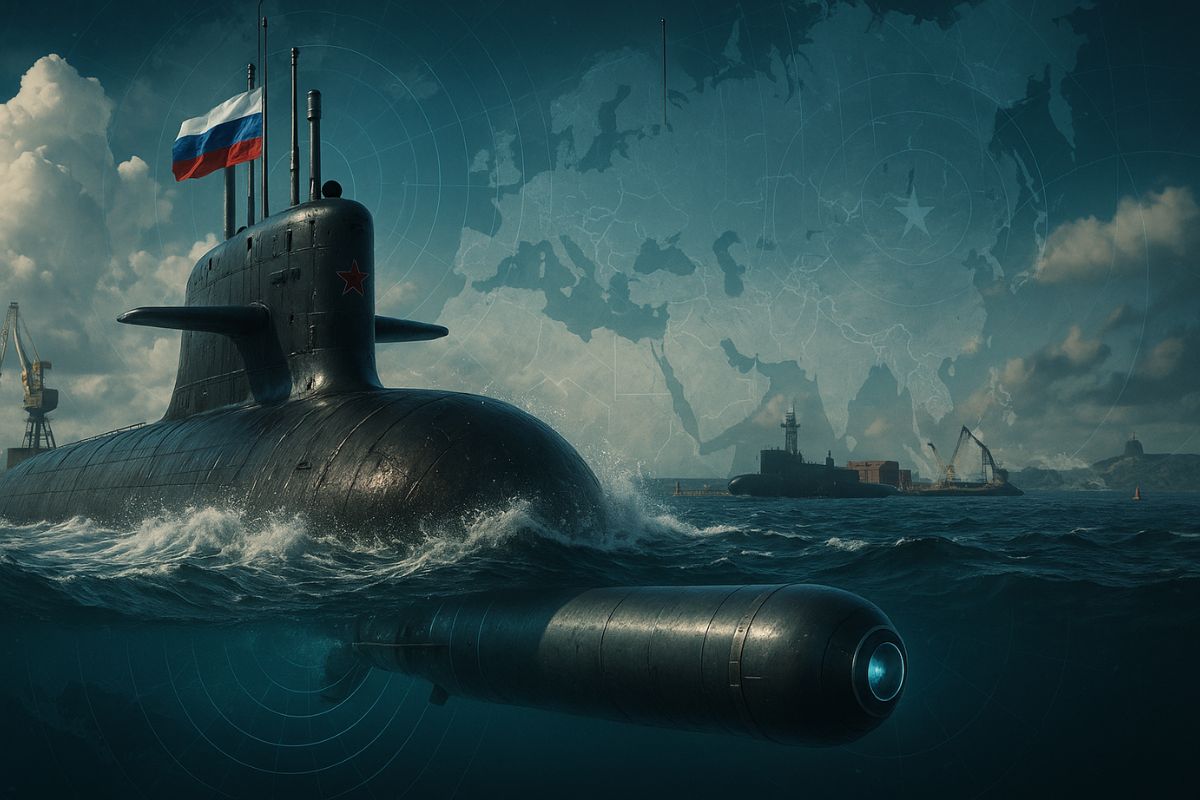
Poseidon Torpedo on Smaller, Stealthy, and Silent Platform; Khabarovsk Promises Autonomous Nuclear Retaliation, Strategic Range, and Changes in Global Submarine Warfare
The launch of the Khabarovsk places the Poseidon Torpedo at the center of a deterrence strategy that relies on a smaller platform, reduced acoustic signature, and autonomous long-range deployment. Russia presents the hull as a compact nuclear cruiser, designed to operate outside the standard of ballistic missile submarines and dedicated to carrying armament that combines its own reactor and high-power warhead.
In practice, the Poseidon Torpedo repositions the role of the submarine on the strategic chessboard by offering a retaliatory vector that can patrol for months and launch surprise attacks against coastal targets. The Khabarovsk is designed to integrate this concept: a more discreet carrier, with lower displacement and focused on special torpedo launchers, cruise missiles, and conventional armament, broadening the range of the Russian General Staff’s options.
Platform and Employment Concept
The Khabarovsk derives from solutions of the Borei class, but without the central segment of ballistic silos, freeing internal volume for the mechanical and logistical integration of the Poseidon Torpedo.
-
Attracting around 250,000 people a year, a lighthouse 200 meters from the sea, on a 60-meter high cliff, on the North Sea coast in Denmark, becomes one of the most impressive examples of how nature can threaten historical buildings.

-
The narrowest house in the world is only 63 centimeters wide, but inside it can accommodate a bathroom, kitchen, bedroom, office, and even two staircases.

-
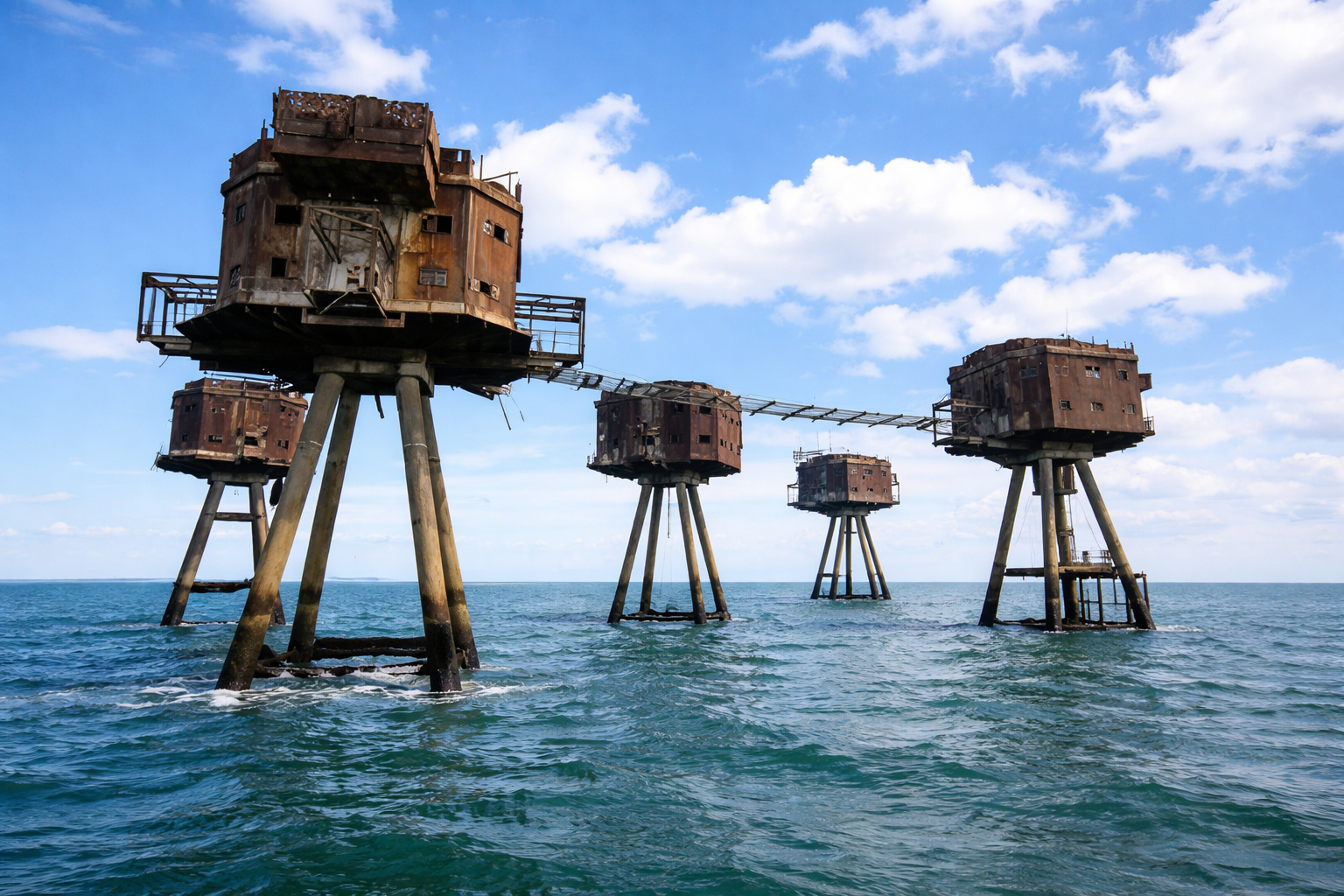
In the middle of the sea, these enormous concrete and steel structures, built by the British Navy to protect strategic maritime routes, look like they came straight out of a Star Wars movie.
-
For years, no one could cross a neighborhood in Tokyo because of the tracks, but an impressive solution changed mobility and completely transformed the local routine.


The result is a shorter and lighter hull, with gains in stealth and operational efficiency, retaining space for conventional torpedoes and anti-ship missiles.
This architecture meets a specific requirement: reduce detection risks and expand the tactical launch window.
By eliminating ballistic missile cells, the design prioritizes corridors, handling systems, and firing interfaces compatible with the Poseidon Torpedo, whose volumetric envelope and mass require dedicated engineering support, cooling, and safety.
How the Poseidon Torpedo Operates
The Poseidon Torpedo is powered by a miniaturized nuclear reactor, providing rare patrol autonomy for an unmanned submersible. The vector combines long-range propulsion and high-energy warhead, with a profile that favors silent approach in deep waters and strategic impact against coastal infrastructure.
Being autonomous, the Poseidon Torpedo relieves the submarine’s exposure after launch, transferring the risk phase to the vector itself.
In the disseminated doctrine, the employment emphasizes second-strike retaliation, ensuring response capability even under severe degradation of surface or land arsenals.
Strategic Implications and Deterrence
The arrival of the Khabarovsk with the Poseidon Torpedo increases the redundancy of the nuclear triad by adding an unconventional underwater arm.
The autonomous vector raises unpredictability regarding the point and timing of impact, increasing the cost of any preventive attack planning.
In terms of signaling, the Khabarovsk-Poseidon pressures area defense architectures and forces adversaries to reassess alert networks, acoustic barriers, and investments in low-frequency sensors.
The mere existence complicates risk calculations and redistributes maritime surveillance resources.
Detection Challenges and Possible Responses
Detecting a compact and silent carrier like the Khabarovsk is already a challenge in itself.
Once launched, the Poseidon Torpedo has a reduced signature, deep cruising regime, and trajectory that does not rely on continuous linking.
This difficulties interception by surface assets, maritime patrols, and traditional ASW barriers.
Responses tend to combine new large aperture sonars, fixed networks of hydrophones in ocean chokepoints, persistent ASW with submersible drones, and data integration from multiple platforms.
Still, the Poseidon Torpedo forces the stretching of the defense perimeter and raises operational costs for patrols.
Timeline, Delays, and Program Maturation
The construction of the Khabarovsk began before the public disclosure of the Poseidon Torpedo, went through delays due to sanctions, pandemic, and budget pressures, and reaches the water with the prospect of an extensive campaign of sea trials.
This trajectory suggests a timeline in maturation phases, with gradual validation of integration, launches, and doctrine.
For the Russian Navy, the priority now is to complete tests, train crews, and standardize safety procedures related to the handling and launching of the Poseidon Torpedo.
From there, the platform is expected to enter the regular rotation of strategic patrols.
What Changes for Global Submarine Warfare
With the Khabarovsk and the Poseidon Torpedo, Russia adds an autonomous axis of denial and retaliation to the underwater scenario.
For alliances that rely on classical anti-submarine warfare, the paradigm shifts to more expensive, distributed, and permanent multi-layered defense, covering everything from straits to wide ocean areas.
In the medium term, the trend is towards a race for more sensitive sensors, pattern detection algorithms, and greater use of unmanned vehicles in escorting critical routes and monitoring coastal approaches.
The balance of deterrence, therefore, incorporates a vector that is hard to track and of asymmetrical cost for the attacker.
The Khabarovsk consolidates the Poseidon Torpedo as the centerpiece of a second-strike deterrence based on autonomy, range, and surprise.
By reducing the size of the carrier and maximizing stealth, Russia signals that submarine warfare is entering a phase where the warning time shortens and the cost of monitoring entire oceans rises.
It remains for adversaries to accelerate ASW modernization and accept that the underwater game has become more complex.
Do you believe that the adoption of the Poseidon Torpedo will lead to a new generation of ASW sensors and drones, or will we see changes in patrol doctrine and rules of engagement before that?





Seja o primeiro a reagir!