





 Portuguese
  English
  Spanish
  3 min of reading


Russian Company’s Plans Involve Two Small Underwater Nuclear Power Plants With a Combined Capacity of 20 MW
In an era of unprecedented technological advancements, the quest for renewable and efficient energy sources is becoming increasingly intense. The Slavic giant Russia is advancing a bold idea, the construction of an underwater module for nuclear energy generation. The submarine nuclear power plant is specifically adapted for deployment in Arctic regions. Let’s dive into this fascinating concept and discover how it can reshape the future of energy.
Underwater Nuclear Units Operate at 400 Meters Depth
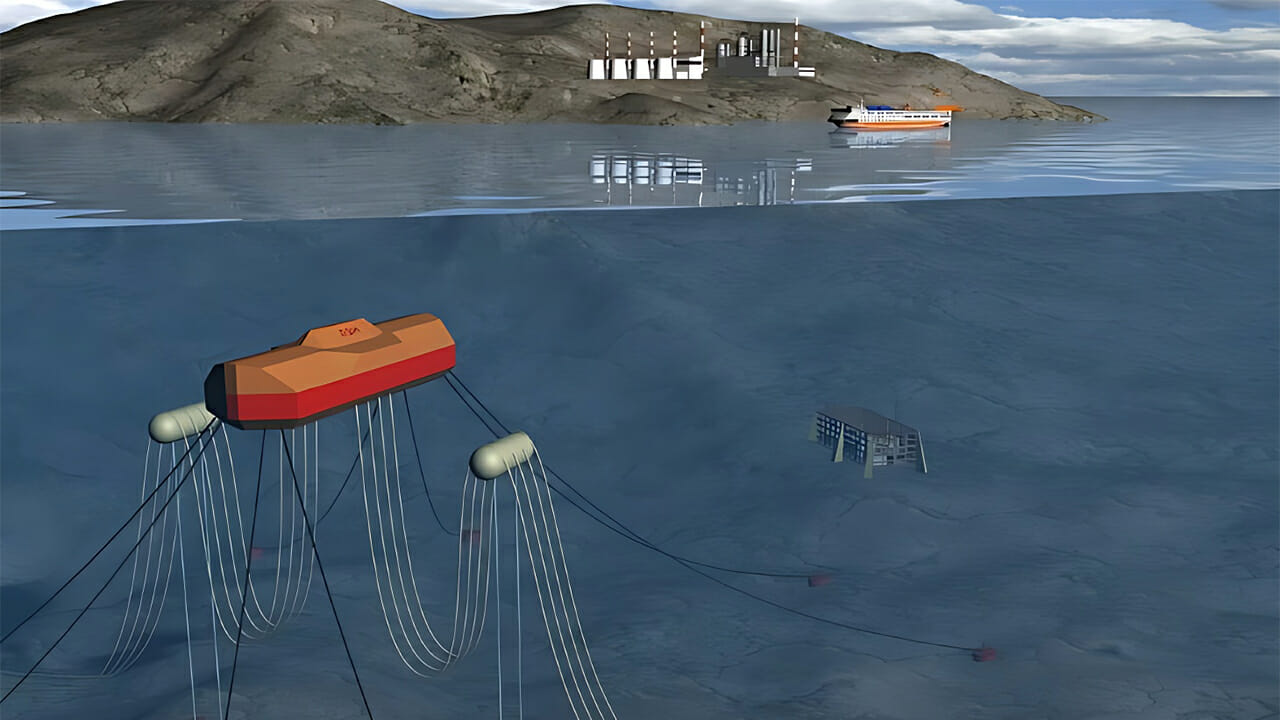
The Malakhit Marine Engineering Bureau, based in St. Petersburg, is the brain behind this innovative initiative. Their plans involve two underwater nuclear power units with a combined capacity of 20 MWe, capable of submerging to an impressive depth of 400 meters.
According to Strana Rosatom, a Russian magazine specializing in nuclear issues, such underwater depth minimizes the dangers of collisions with icebergs. Additionally, the module would operate independently, requiring only quarterly maintenance performed by a team of up to six professionals.
-
Fukushima Marks A Turning Point In Japan’s Energy Policy: After The Disaster, The Country Shut Down Its 54 Nuclear Reactors And, 15 Years Later, Only A Small Portion Have Returned To Operation
-
How Japan Overcame The Nuclear Bomb And Now Houses Millions In Hiroshima, While Ukraine Lost Chernobyl?

-
Bill Gates Receives Historic Approval to Build Giant 345 MW Nuclear Plant in the U.S. and Promises to Generate Up to 500 MW of Energy with Innovative Technology

-
India Opens Nuclear Energy to Private Capital to Accelerate Projects and Attract Billions, While Brazil Remains Stalled at Angra 3 and Discusses Who Will Foot the Bill for Completion
These underwater nuclear plants would primarily serve to supply extremely remote areas, such as the Arctic. These are locations where the installation of conventional power plants is virtually impossible, either due to adverse conditions or the lack of adequate infrastructure.
Benefits and Advances of the Project
On the official Malakhit website, some notable advantages of the submerged nuclear power project are presented. The underwater nuclear unit would have the ability to adjust its depth via eight anchoring cables. Moreover, while hovering in the water column, it would increase its resistance to seismic movements.
Although the exact development phase of the Russian project is not clearly identified, the idea of establishing a submerged nuclear complex is not new. In 2016, a similar project was reported by Interfax, which had already completed studies and 3D modeling for a reactor according to the IAEA standards.
France Proposed an Idea for a Submarine Nuclear Power Plant Called Flexblue in 2011
In 2011, France’s DCNS, with extensive experience in submarine manufacturing, proposed a similar idea called Flexblue. This project involved a compact offshore nuclear unit with a cylindrical shape, measuring 12 to 15 meters in diameter and 100 meters in length. The Flexblue would have the capacity to produce between 50 to 250 MWe, using pressurized water reactor technology similar to that of nuclear submarines.
Russia already has experience with the production of floating nuclear power plants, which could help accelerate the development of this new underwater project. The Malakhit Marine Engineering Bureau, part of the United Shipbuilding Corporation, claims to specialize in marine equipment, including those with nuclear power plants, focusing on “designing, building, and testing nuclear and diesel submarines.”
This initiative demonstrates the extraordinary potential of nuclear energy as an efficient and resilient resource. The possibilities that arise from the union of nuclear technology with maritime engineering could revolutionize the future of energy supply, particularly in inhospitable and hard-to-reach locations.










Seja o primeiro a reagir!