





 Portuguese
  English
  Spanish
  4 min of reading
  0 comments



Understand Why the Requirement to Wait for the End of the Group to Recover Values from the Canceled Consortium Is Legally Questioned, Based on Law 11.795/2008, the Presidential Veto, and Principles of the Consumer Defense Code
The debate over the refund of amounts to the withdrawing consortium member involves longstanding judicial understanding, Law 11.795/2008, a specific presidential veto, and legal interpretation that supports immediate reimbursement, according to an analysis by attorney Fernando Chagas, from the channel Your Rights.
Previous Judicial Understanding and Its Temporal Limitation
For years, the understanding established in a final judgment from 2010 prevailed, according to which the withdrawing consortium member would only be entitled to a refund thirty days after the end of the group.
This understanding became widely used as a basis for denying immediate restitution, creating the perception that the consumer should wait until the end of their quota to recover amounts paid.
-
With the new law, shopping malls will no longer operate on Sundays, similar to supermarkets; the rule imposes closure by 9 PM, foresees a fine of R$ 15,000, suspension, and even revocation of the license in Salvador.

-
Only 7 ships have crossed the Strait of Hormuz in the last 24 hours when the normal is 135 per day, and the United Arab Emirates confirms that 230 oil tankers loaded with oil are ready to depart but are prevented from leaving while Iran turns the waterway into a sovereign control post.

-
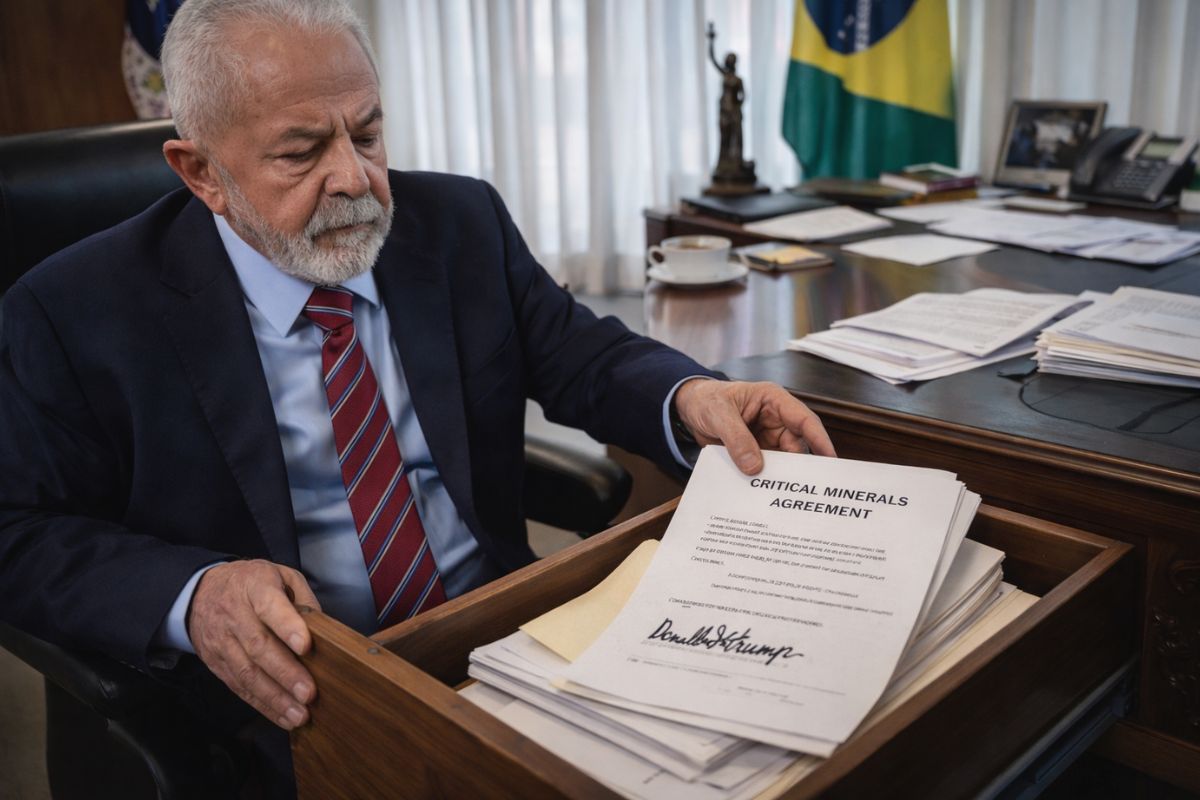
Trump sent a treaty on critical minerals to Lula in early 2026, and the document is sitting in the president’s drawer unsigned because the Brazilian government considers the proposal too generic and refuses to turn the country into a mere exporter of raw materials.
-
R$ 7 billion forgotten in the FGTS may finally be released after failures in the 2025 measures, while millions of workers find out they may have unclaimed money.

However, this judgment was based solely on legislation prior to the current legal framework of the consortium system, a circumstance that limits its application to contracts signed under that revoked norm.
New Law 11.795/2008 and the Consortium System
Law 11.795/2008 specifically deals with the consortium system, establishing new legal guidelines for contracts, rights of participants, and the functioning of administrators throughout the country.
During the legislative process, one of the articles explicitly provided that the withdrawing consortium member would only receive the amounts paid at the end of the group or after being awarded.
This provision, however, was vetoed by the President of the Republic, substantially altering the scope of the norm and the legal treatment of contractual withdrawal within the consortiums.
Justification of the Presidential Veto and Involved Principles
In the justification for the veto, the President of the Republic stated that keeping the consortium member from receiving amounts until the end of the group is absolutely unlawful and offensive to the principle of good faith in contracts.
The text of the veto also highlights that the Consumer Defense Code aims to prevent the breach of contractual equivalence and considers clauses that put the consumer at an exaggerated disadvantage to be abusive.
According to the justification, the refund of installments must be immediate, under penalty of imposing a long and unjust wait on the consumer, incompatible with the prevailing legal principles.
Temporal Benchmark of 120 Days and Validity of Contracts
The interpretation presented considers that contracts signed one hundred and twenty days after the date of the presidential veto must take into account the possibility of immediate refund of the amounts paid.
This time interval marks the beginning of the full effectiveness of the norm without the vetoed article, distancing the automatic application of the previous judicial understanding based on the old law.
Thus, for contracts celebrated after this period, the denial of immediate restitution begins to face relevant legal questions, especially from the perspective of consumer rights.
Contractual Clauses and Market Practice
Generally, consortium contracts include clauses stating that the withdrawing consortium member will only receive the amounts paid at the end of the group, a common practice among administrators.
Given this contractual provision, a practical doubt arises for the consumer regarding what measures to take when deciding to withdraw from the consortium before being awarded.
Attorney Fernando Chagas argues that such clauses can be questioned judicially for violating norms of the Consumer Defense Code.
Legal Basis in the Consumer Defense Code
The guidance presented is to seek the Judiciary based on article 51, items II and IV, of the Consumer Defense Code, which addresses the nullity of abusive clauses.
These provisions consider null clauses that deprive the consumer of the option to refund the amount paid or establish inequitable obligations incompatible with good faith.
With the annulment of the contractual clause, it becomes possible to request the immediate return of the amounts, removing the obligation to wait for the end of the group.
Deduction of Values and Conclusion of the Theme
Even with immediate restitution, the consortium may make deductions previously provided for in the contract, respecting rates and charges agreed upon at the time of entry.
Thus, the debate does not eliminate contractual discounts but redefines the timing of the refund, prioritizing contractual balance and protecting the withdrawing consumer.











Seja o primeiro a reagir!