





 Portuguese
  English
  Spanish
 5 min of reading
  0 comments


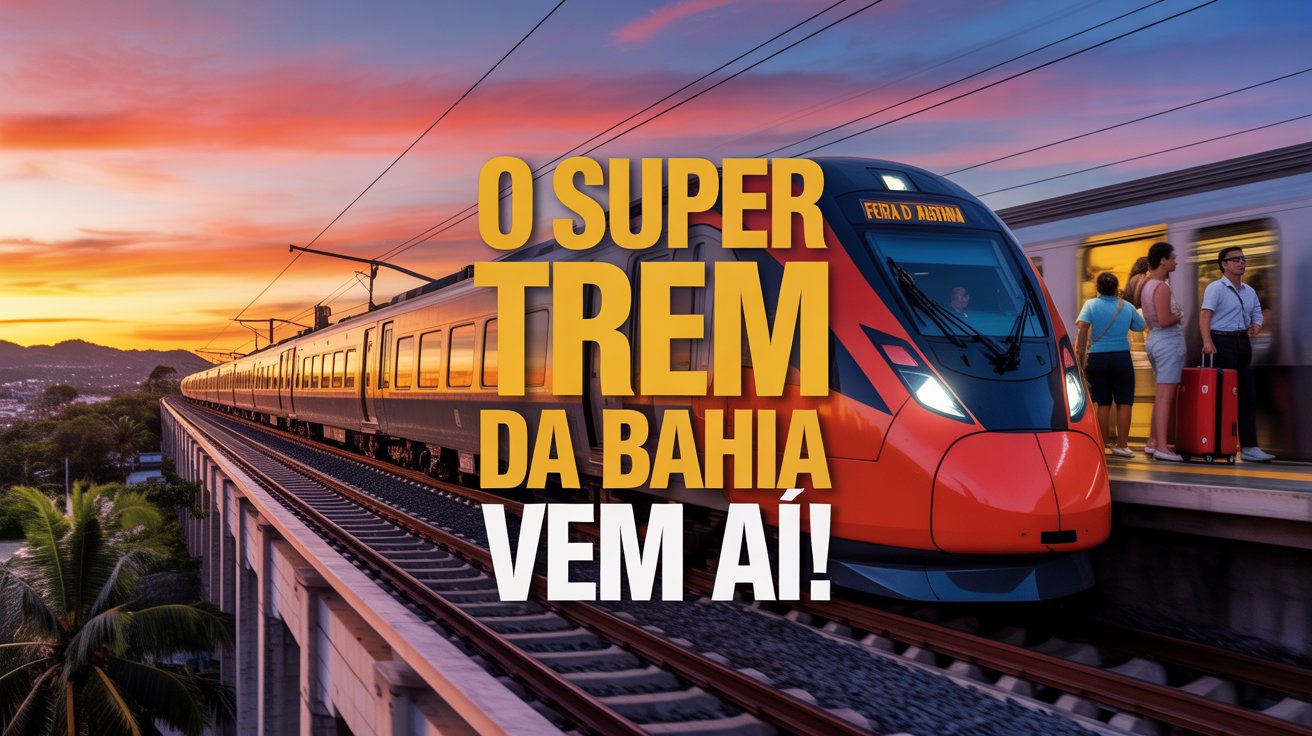
Inspired by a successful Paulista model, a railway project could change the reality of mobility in Bahia. The proposal aims to integrate two strategic cities, encouraging sustainable transportation and rescuing a forgotten past of Brazilian tracks.
The future of passenger rail transport in Bahia could gain significant momentum in the coming years.
According to information from the Ministry of Transport, the project for the train that will connect Salvador to Feira de Santana is already complete and awaits a ministerial decision to move forward.
The plan, inspired by the successful model of the Intercity Train between São Paulo and Campinas, aims to revitalize mobility between the two largest cities in Bahia, promoting regional integration and economic development.
-
Woman arrested after receiving $1.2 million due to banking error and not returning the amount.

-
Beneath Mexico City lies an entire buried Aztec capital, and it all began when workers discovered a 3.25-meter stone disk featuring a dismembered goddess, revealing temples, skulls, and palaces beneath 22 million people.
-
Airfare prices may rise with increasing fuel costs, and the government is considering urgent measures to avoid a direct impact on the wallets of Brazilians.
-
How to build a 35,000-liter cistern with 60 by 50 cm panels and rainwater for drinking and cooking without relying on water trucks or the city hall.
This topic was the highlight of the Passenger Rail Transport Workshop held last Tuesday (05/28) at an event organized by the Ministry of Transport in partnership with the National Association of Rail Passenger Transport (ANPTrilhos).
During the event, experts emphasized the historical importance of railway transport in Brazil and highlighted the potential for a revival of regional lines.
The Historical Vocation of Rail Transport in Brazil
According to Ana Patrizia Lira, executive director of ANPTrilhos, the country transported about 90 million passengers per year on regional trains in the 1960s.
Today, this number has plummeted to approximately 1.3 million, concentrated on just two operational lines: the Vitória to Minas Railway and the Carajás Railway (EFC).
Government Priority and New Rail Projects
The national secretary of Rail Transport, Leonardo Ribeiro, present at the workshop, stated that passenger transport by rail is a priority for the federal government.
He highlighted that currently, there are six regional train projects in the structuring phase, in addition to the Salvador–Feira de Santana train.
The other projects cover various regions of the country, such as Brasília–Luziânia (GO), Maringá–Londrina (PR), Pelotas–Rio Grande (RS), Fortaleza–Sobral (CE), and São Luís–Timbiras (MA).
All these projects aim to utilize existing stretches of the railway network, a strategy that can expedite implementation and reduce costs.
Financial Challenges and Financing Model
However, the secretary also issued an important warning about the financial challenges of these initiatives.
He explained that the traditional ticketing model is not sufficient to cover the costs of implementing and operating the lines, necessitating the search for new funding sources.
For this, the Ministry of Transport is studying a combination of strategies, including public-private partnerships (PPP), like the model used in the Intercity Train between São Paulo and Campinas.
This model, according to Ribeiro, has significant public participation and has proven efficient for enabling large-scale railway projects.
Benefits for Bahia and Brazil
The revitalization of passenger rail transport is seen as a solution to various challenges faced by Brazilian metropolitan regions, such as chaotic traffic, pollution, and the growing demand for sustainable mobility.
In the case of Bahia, the Salvador–Feira de Santana train could transform the relationship between these cities, facilitating the daily commute of thousands of people, boosting tourism, and driving the local economy.
Feira de Santana, the second largest city in the state, is a major commercial and industrial hub, while Salvador, the capital of Bahia, concentrates most of the region’s services, culture, and tourism.
The integration between the two cities through railway transport could reduce travel time, alleviate highways, and improve the quality of life for the population.
Historical Recovery and Modernization of Transport
Beyond the practical aspect, the resumption of regional trains also brings a historical recovery for Brazil, a country that was once a world reference in rail transport.
Experts point out that investment in passenger railways could be a decisive step towards modernizing national infrastructure, aligning the country with global trends in sustainable urban mobility.
Additionally, the adoption of electric trains or those powered by clean technologies could help Brazil meet environmental targets and reduce greenhouse gas emissions in the transport sector.
According to recent data, railway transport is up to four times more energy-efficient compared to road transport.
Therefore, the development of the Salvador–Feira de Santana train aligns with environmental, economic, and social objectives.
Obstacles to Be Overcome
Despite the optimism, experts and authorities also emphasize that the success of the project depends on overcoming obstacles such as financing, modernizing the railway network, and mobilizing society as well as public and private sectors.
To move forward, it will be crucial to have dialogue between government, investors, and the population, ensuring transparency, rigorous technical planning, and efficient execution.
Meanwhile, other Brazilian cities observe the Paulista model as inspiration to enhance their regional transport systems.
São Paulo, which has the Intercity Train linking the capital and Campinas, has served as a national reference by uniting efficiency, modernity, and economic viability.
This Paulista train operates in a metropolitan area with high demand and already demonstrates a positive impact on reducing congestion and stimulating the local economy.
Thus, the Bahian project could be the first step towards a revolution in railway transport in the Northeast region, an area that still shows significant deficiency in this mode.
Investment in rail mobility also reflects a global trend, where countries seek solutions for increasingly populous and congested cities.
With advancements in technology, including high-speed trains and intelligent operation systems, railway transport could become an even more competitive and attractive alternative.
In the current scenario, the expectation is that the Salvador–Feira de Santana train project will receive approval and funding soon, initiating a cycle of improvements that could positively impact the lives of millions of Bahians.
Do you believe that investment in regional trains can transform mobility in large Brazilian cities? What challenges still need to be overcome for this dream to become a reality? Share your opinion!




Seja o primeiro a reagir!