





 Portuguese
  English
  Spanish
  5 min of reading
  0 comments


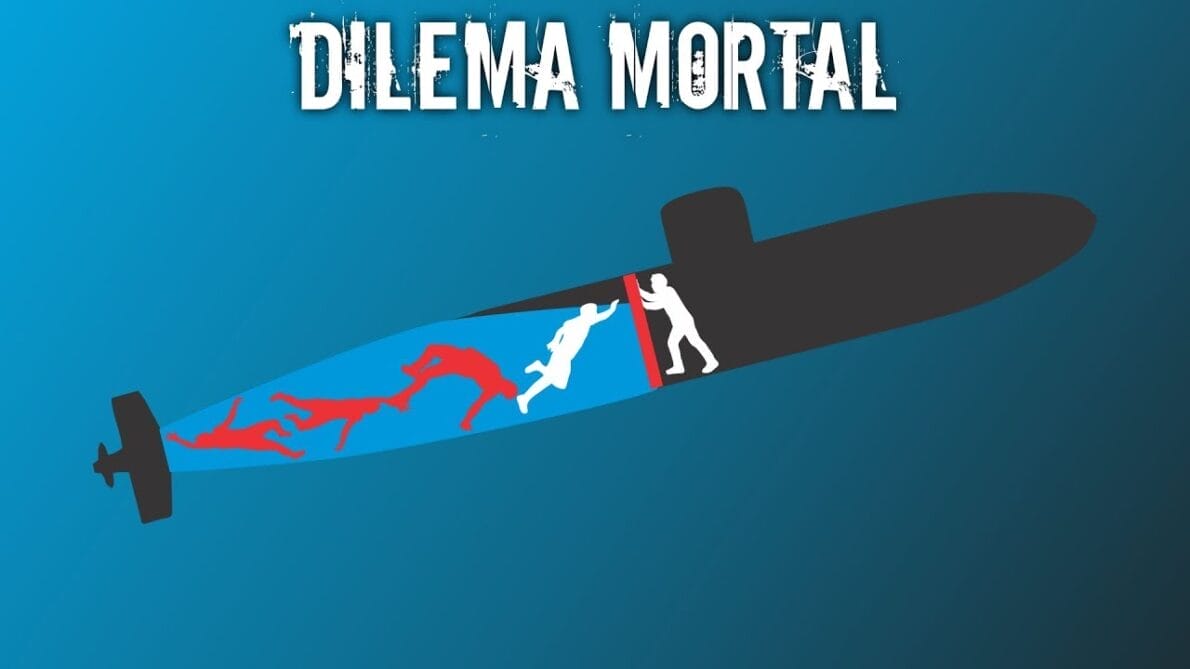
In 1939, the tragedy of the submarine Squalus marked the biggest submarine rescue operation in history. This incident led the U.S. Navy to make historic and innovative decisions, transforming marine salvage procedures.
Although created around 1620, submarines were not considered safe vessels at the beginning of the 20th century. Between 1921 and 1938, approximately 825 men died aboard submarines. In 1939, the tragedy of the submarine Squalus marked history, forcing the U.S. Navy to make crucial decisions that would change the naval industry forever. This incident, the largest submarine rescue operation of its time, highlighted the dangers of submarines and the need for significant advancements in safety and rescue procedures.
Meet the U.S. Navy Submarine Squalus
In 1939, commanded by Lieutenant Oliver Francis, the submarine Squalus was conducting its 19th dive test. Its crew consisted of 4 officers, 51 enlisted men, and 3 civilians. This was one of the most advanced and expensive submarines of its time.
Construction began in 1937, and over 11 months, around 2 million hours of work and more than US$ 4 million were invested, about US$ 70 million today.
-
If the USA were to go to war with Brazil, Washington’s greatest fear would not be the attack itself, but facing a vast territory, prolonged resistance, and a costly, chaotic, and unpredictable occupation.
-
In 2013, Nicaragua sold the concession for a canal to rival Panama to a Chinese billionaire who lost 85% of his fortune, disappeared, and was declared bankrupt. Now the project resurfaces with a new route, a new Chinese partner, and a cost of $64.5 billion.
-
The USA announces a mysterious billion-dollar vault project to store critical minerals, but what intrigues experts is not just the plan itself, but why Latin America, including Brazil, has entered the center of this global dispute against China.

-
Neither the USA nor China: a small European nation has become one of the largest maritime powers on the planet, controlling one of the largest merchant fleets in the world with thousands of ships and dominating the global transportation of oil and strategic cargo.


All 18 previous dive attempts by the U.S. Navy had been successful, and the expectation was that this one would be too. The plan was to test the submarine’s ability to submerge quickly, also known as forced diving. Before diving, the commander checked the safety panel to determine the status of the valves and other openings.
The check showed that all critical indicators of the submarine Squalus were green. The commander then sounded the horn and ordered the crew to execute the maneuver. However, when the submarine began to level off at around 18 meters, a catastrophic event occurred due to a system malfunction.
Understand What Caused the Tragedy of the Submarine Squalus
The main air induction valve was open, allowing seawater to enter through the tubes, which were about 1 meter in diameter.
Both engine rooms started to fill with water. The commander tried to surface by blowing the ballast tanks, and for a moment the bow of the submarine broke the surface. However, the weight of the water at the stern was too great.
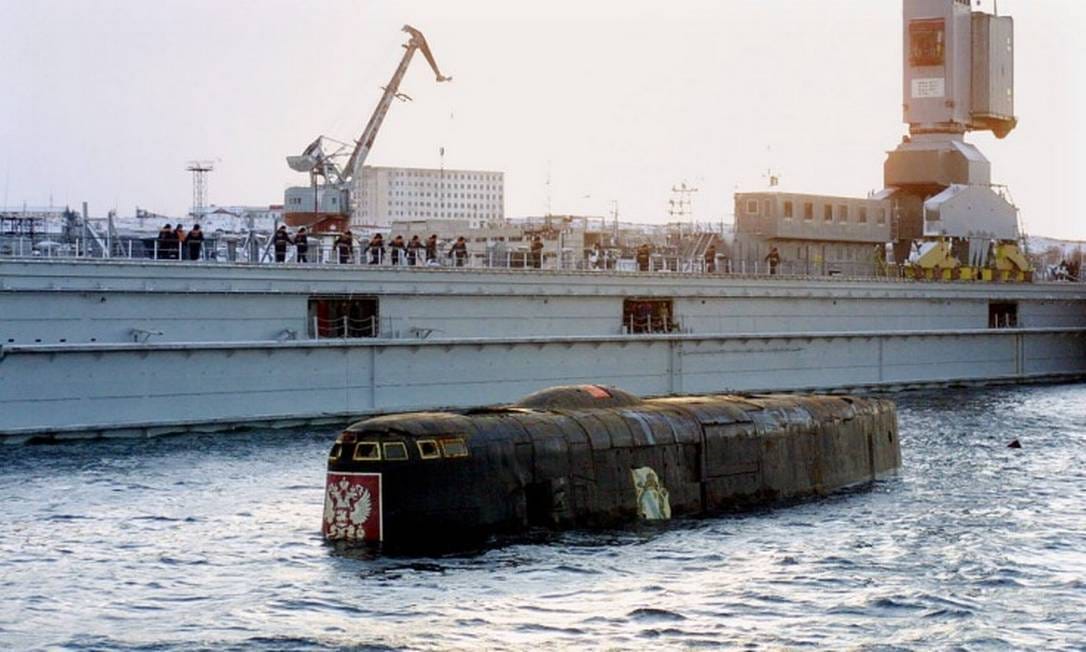
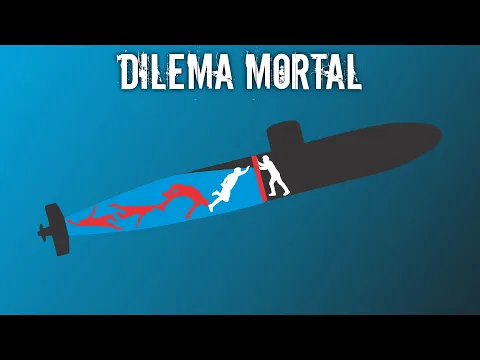
The submarine began to descend by the stern at a 45-degree angle. With the aft compartments flooding, the commander ordered all hatches dividing the rooms to be closed. It was then that Oliver faced a decision that no U.S. Navy officer would want to make: Save everyone or save part of his crew.
Thus, to prevent the tragedy of the submarine Squalus from being even greater, Oliver ordered the control room compartment to be sealed, locking part of the crew inside.
The Rescue of the U.S. Navy Crew
The submarine Squalus sank and rested on the sea floor approximately 73 meters below the surface. 26 men drowned in the aft compartments, but 33 remained alive in the forward areas.
The survivors, huddled in the dark and cold, were trying to conserve the remaining air while reflecting on their fate, as no crew had ever been rescued from below a depth of 18 meters.
A communication buoy was launched to mark the location. This buoy is usually connected to a steel cable and has a flotation system to keep it on the water’s surface, emitting radio waves to communicate with the rescue.
Noticing the delay of the submarine Squalus, the U.S. Navy dispatched a rescue ship named Falcon, which was equipped with a rescue chamber. This chamber was responsible for rescuing 33 crew members, making the tragedy of the submarine Squalus the largest rescue in history.
The Intricate Rescue Operation of the Submarine Squalus
The tragedy of the submarine Squalus, which occurred in 1939, stood out not only for the disaster itself but also for the complexity of the subsequent rescue operation. The Squalus, a U.S. Navy submarine, sank during dive tests off the coast of New Hampshire, after a catastrophic failure in a valve.
The response to the accident was swift, with rescue teams utilizing the innovative McCann-Erickson rescue bell, a device specially developed for underwater emergencies. This bell allowed for the safe evacuation of 33 crew members trapped at the ocean floor, at a depth of approximately 74 meters. The rescue operation was extremely dangerous and challenging, requiring precision and courage from the divers and operators.
Despite adverse conditions and the limited technology of the time, the rescue was successful, marking a significant milestone in the history of submarine salvage operations and demonstrating the value of innovation and rigorous training.
The Technological Advancements Driven by the Squalus
The tragedy of the Squalus was not only a dramatic event but also catalyzed significant technological and safety advancements in submarine operation. Before the incident, submarine rescue protocols were rudimentary and ineffective.
The experience with the Squalus led to the introduction of substantial improvements in submarine safety. For example, the McCann-Erickson rescue bell, used in the salvage operation, was enhanced and became standard equipment in the U.S. Navy. Additionally, the incident led to the development of safer valves and more robust control systems for submarines, reducing the risk of similar failures.
Training procedures for submarine crews were also intensified, ensuring that sailors were better prepared for emergency situations. These advancements not only increased the safety of submarine operations but also influenced the design and construction of future submarines, helping to prevent similar disasters.
Forgotten Heroes: The Stories of Courage and Sacrifice
Behind the tragedy of the Squalus, there are individual stories of courage and sacrifice that are often forgotten. The rescue divers, facing extremely dangerous conditions, played a crucial role in the salvage operation.
One of the heroes was Lieutenant Commander Charles “Swede” Momsen, a pioneer in the field of submarine rescue, whose leadership and innovation were vital to the mission’s success. He and his team of divers, braving cold and murky waters, made repeated descents to the sunken submarine, risking their lives with each dive.
Another hero was Chief Machinist William Badders, who received the Medal of Honor for his fearless actions during the rescue. The stories of these individuals and others involved in the rescue highlight the human spirit of perseverance and bravery in the face of adversity. Their contributions not only saved lives on that fateful day but also inspired continuous improvements in submarine safety and rescue practices.









Seja o primeiro a reagir!