






 Portuguese
  Spanish


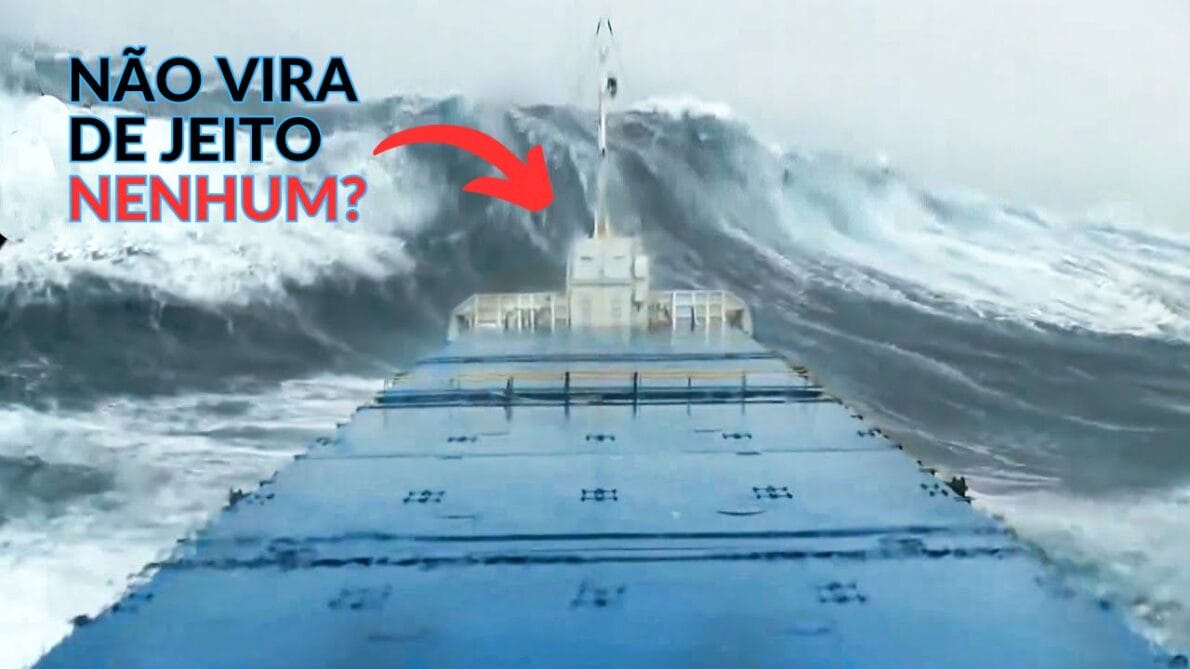

How Advanced Stability Technology Allows Ships of All Sizes to Withstand Giant Waves and Extreme Weather Conditions Without Sinking. Equipped in the Maritime Industry with Systems Like Bulbous Bows, Anti-Rolling Tanks, and Active Fin Stabilizers, These Modern Ships Ensure Safety and Effectiveness at Sea, Highlighting Rescue Vessels That Have the Impressive Capacity for Self-Righting After Complete Rollovers.
Modern ships, both large and small, are now better equipped than ever to handle the feared giant waves, advanced tactics in the maritime industry. Thanks to the advancement of naval engineering, these vessels have sophisticated stability systems that allow them to maintain balance and safety even under the worst atmospheric conditions.
Every ship is designed with a fundamental stability system that functions like the balance of a ship in the water. When hit by strong waves, they are able to automatically right themselves thanks to the bulbous bows and anti-rolling tanks. The bulbous bows, which extend along the hull, improve stability as speed increases, while the tanks contain water that shifts to counterbalance the tilt of the ship.
Besides These Technologies, Ships Are Also Equipped with Active Fin Stabilizers


In addition to these technologies in the maritime industry, ships are also equipped with active fin stabilizers, controlled by sensitive gyroscopic systems, which adjust the ship in real-time to minimize motion. Although less effective at low speeds, these fins are vital for stability at high speeds.
-
They exchanged the idea of a large house for a 35 m² warehouse, spent US$ 12,000 on the structure, and created a tiny house in Colorado with space to live and work.

-
While modern cities rely on pumps and electricity, in Iran, ancient tunnels carried water through the desert using only slope and gravity.
-
Instead of sending families far from the city, a project in Chile intentionally created incomplete houses on expensive urban land and left technical space for each to grow.
-
General Motors Replaces Over a Thousand Workers with 50 Cobots at Electric Vehicle Plant, UAW Union Criticizes Move Amid Industry’s Automation Push


Particularly Impressive is the Self-Righting Capacity of Modern Rescue Ships
Particularly impressive is the self-righting capacity of modern rescue ships. These vessels can recover from a complete 180º roll, a crucial feature during rescue operations in adverse conditions. This is possible thanks to a low center of gravity and a design that keeps heavy equipment well below, ensuring that the ship can right itself after capsizing.
The Maritime Industry Has Made Significant Advancements
The maritime industry has made significant advancements to ensure that ships not only survive severe storms but also provide maximum safety for their crew and cargo. These technologies not only enhance the effectiveness of maritime operations but also save lives, proving that even the most monstrous waves can be faced with the right engineering.









Trabalhei na bacia de campos com robô submarino RCV, ROV, em navios de mergulho e manutenção. O máximo que u vi a 80 km da costa foram ondas de 15 a 20 metros e ventos de 40 nós +/_100 km. Os navios tem uma tecnologia de ponta, esses navios param onde estão, e se posicionam pelo GPS, e não saem do lugar, pode ventar, pode vir a onda que for. Tinham acidentes de helicópteros, muito raros, afundamento de navios por imperícia do comandante etc.
Assunto de extrema importância, para sabermos a tecnologia avançada e sem os transportes de produtos, o mundo para e vira um caos total.Deus abençoe a todos.