





 Portuguese
  English
  Spanish
  5 min of reading
  0 comments


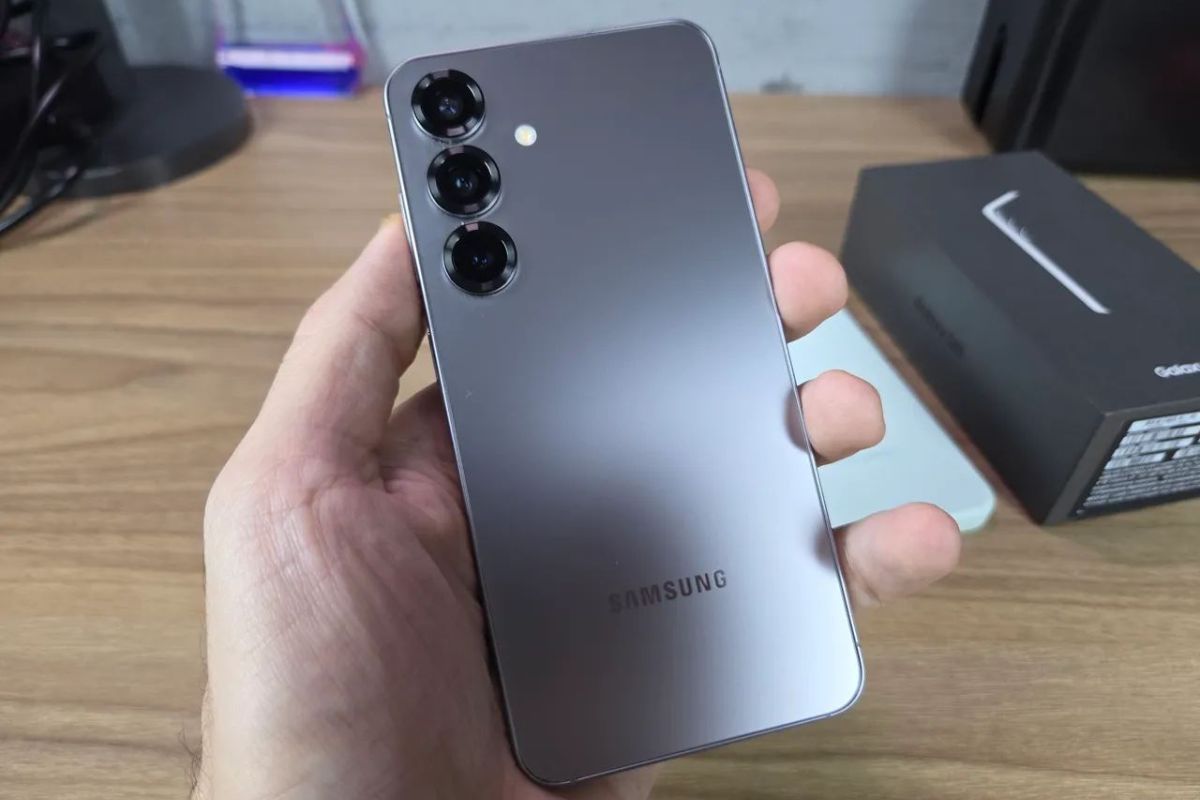
Galaxy S25 FE Launches With Premium Look and High Starting Price, But Keeps Very Similar Specs to S24 FE, With 120 Hz AMOLED Display, IP68, Triple Cameras, and 7 Years of Updates, While the Previous Version Remains Affordable and Competitive
The Galaxy S25 FE hits the market with a premium design appeal and a launch price that is startling, starting from R$ 5,000 for configurations with 8 GB of RAM and 256 GB of storage. The initial impression is one of enhanced finish and convenience in some aspects, but without deep hardware changes in relation to the S24 FE, which today occupies a much more affordable price range in retail.
In practice, the Galaxy S25 FE delivers a solid package that was already the strong point of its predecessor, featuring 120 Hz AMOLED display, IP68 certification, triple cameras, and a promise of 7 years of updates. The real differential could be the price once it drops, bringing the new FE closer to the range between R$ 2,000 and R$ 3,000 where the S24 FE became a benchmark for cost-effectiveness.
What Changed in the Galaxy S25 FE and What Remains the Same
The design follows the current language of the brand with three visible rear modules and a color palette that includes navy blue, light blue almost white, and jet black.
-
A rare storm transformed part of the Gulf into an unlikely scene of hail, extreme rain, and tornado risk in the middle of the desert, with volumes that exceeded the annual average in a single day.

-
Brazil catches the world’s attention with ships powered by ethanol and biodiesel that have lower emissions, an unprecedented certification with advantages in chartering, and a revolution in cabotage.

-
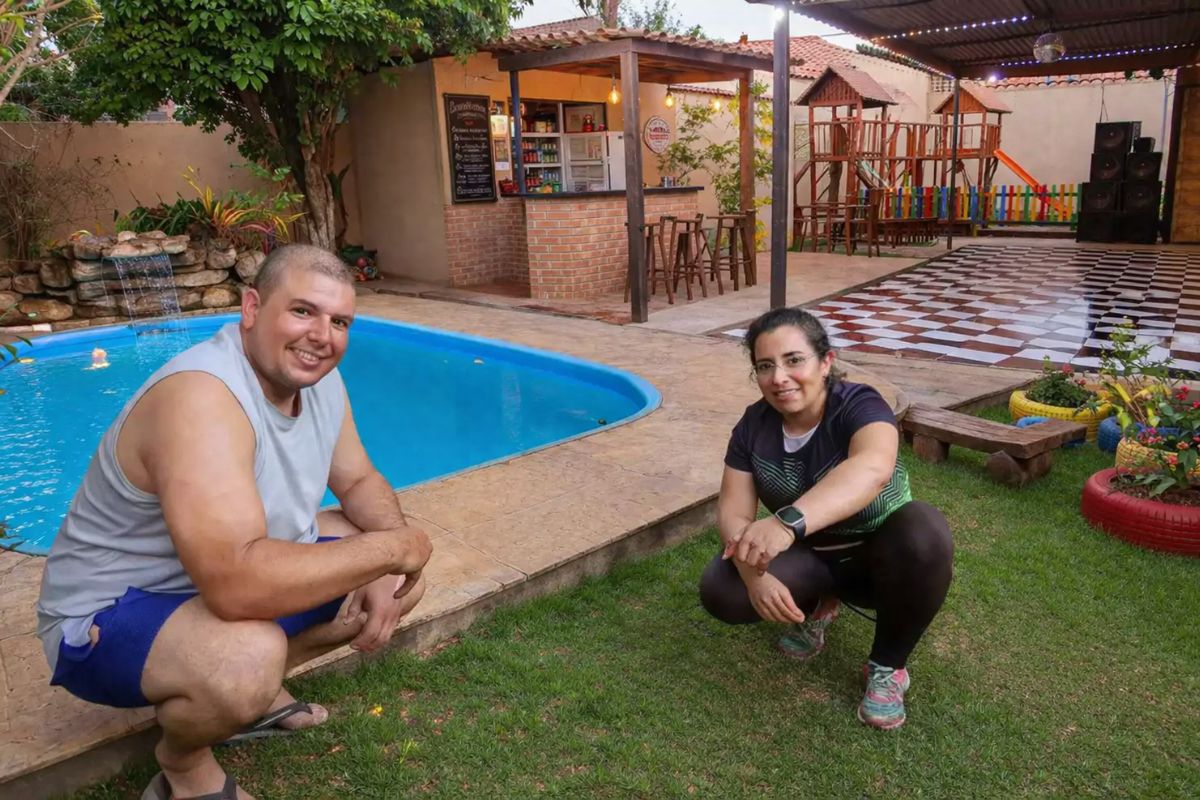
A couple who only has Sundays free has built a hand-dug pool, a hamburger joint, a dance hall, and a playground in their own home without hiring a mason, and even with breaks due to accidents and the pandemic, the work has never truly stopped.
-
Furniture made with aluminum and glass does not warp and has become an alternative to replace MDF in Brazil.

The ergonomics and build convey a high-end device feel, which is consistent with the launch price positioning.
For those who value aesthetics and durability, Gorilla Glass Victus Plus on the front and back and the chassis with details for better signal reception make up a robust package.
In daily use, the evolution is incremental. The 4,900 mAh battery is slightly larger than that of the S24 FE, and the device supports charging up to 45 W, although the included accessory is the 25 W charger.
The rest of the setup is familiar to those who already know the FE line and reinforces the perception that Samsung aimed to maintain the technical foundation and adjust convenience points.
Display, Audio, and Protection: The Experience That Sustains the FE Line
The 6.7-inch Dynamic AMOLED 2X display, Full HD+, and LTPO at 120 Hz remains a highlight, with a claimed peak brightness of 10,000 nits in specific scenarios.
The smoothness in scrolling and gaming is consistent, aided by the adaptive refresh rate variation.
For multimedia content, stereo speakers deliver volume and definition above the average of the category.
The IP68 certification and the slot with rubber sealing reinforce protection against water and dust.
For those who travel, work outdoors, or photograph in external environments, this setup makes a real difference.
It is a product pillar that the FE line preserves with merit, especially considering the expected software longevity.
Processor, Software, and Artificial Intelligence: Where the S25 FE Tries to Differentiate Itself
The Exynos 2400 chip powers the device, while the S24 FE uses the Exynos 2400E. The expectation is for extra breathing room in processing and thermal stability, although, in practice, the experience in popular games was already good in the previous model.
In intense usage sessions, measured temperatures ranged between 36 and 38 ºC in a climate-controlled environment, a comfortable level for long gaming sessions.
In terms of software, the S25 FE ships with One UI 8 based on Android 16 and promises 7 years of system and security updates.
The Galaxy AI package arrives complete, featuring call assistant with translation, real-time interpretation, text revision and rewriting, transcription, and intelligent editing tools for photos and audio. For productivity and studies, these are resources that add practical value to daily life.
Cameras and Video: Triple Competent Setup with Minor Adjustments
The rear module includes 50 MP main, 12 MP ultrawide, and 8 MP 3x telephoto, while the front camera jumps to 12 MP.
4K capture at 60 fps is available on the main and front cameras, and the system allows for switching between lenses at 4K 30 fps to preserve continuity in clips.
The tele 3x does well with portraits and urban scenes, but as with any hybrid zoom, magnifications above 10x lose quality and should be used sparingly.
Overall, the processing pipeline maintains the brand’s signature, with vibrant colors and good electronic stabilization.
For content creators, a practical tip is to activate high bitrate video and capture of playback audio in the advanced options when the goal is to record one’s narration along with the ongoing soundtrack on the device.
Dual SIM, eSIM, and Autonomy: Complete Connectivity and Worry-Free Routine
The tray accepts two physical SIM cards and the device supports eSIM, making it easier to switch between personal and professional profiles.
In mobile networks and Wi-Fi, stability remains a strong point, and the autonomy with 4,900 mAh delivers a typical day of mixed use with moderate leeway.
The bottleneck is the difference between support for 45 W and the included 25 W charger, a detail that extends time on the charger if the user does not purchase a more powerful charger.
For those coming from older models, the leap in connectivity, autonomy, and AI features is noticeable.
For those already using an S24 FE, the gains exist, but do not seem to justify the full launch price when viewed in isolation.
Is It Worth It Now or Is It Better to Wait for the Price to Drop?
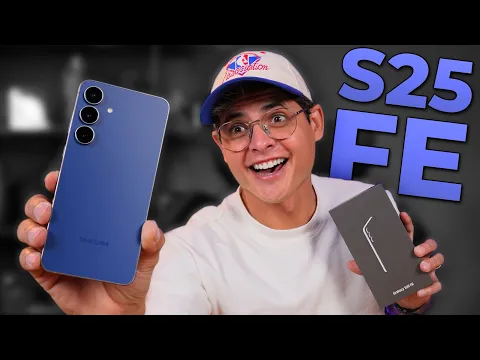

The decisive factor is the price. The Galaxy S25 FE launches expensively, while the S24 FE has established itself between R$ 2,000 and R$ 3,000 with recurring deals.
When the S25 FE reaches levels close to, it tends to repeat the predecessor’s trajectory as one of the best buys in its range.
Until then, the S24 FE remains extremely competitive, especially for those prioritizing cost-effectiveness.
In summary, the S25 FE is a classic FE: top performance where it matters most, few revolutionary leaps, and much predictability for the long term thanks to updates.
If the price drops, it becomes a sure buy. If it stays high, the S24 FE remains the rational recommendation.
The Galaxy S25 FE consolidates the proposal to offer premium experience with pragmatic hardware choices, adding good cameras, excellent display, IP68, and long software life.
The package is convincing, but the timing of the purchase depends on the budget and the natural price drop curve in the coming months.
Those who can wait tend to be better rewarded, maintaining the value logic that has made the FE line successful.
Considering the launch price of the Galaxy S25 FE, would you buy it now or wait for it to reach the R$ 2,000 to R$ 3,000 range as happened with the S24 FE?






Seja o primeiro a reagir!