





 Portuguese
  English
  Spanish
  6 min of reading
  0 comments


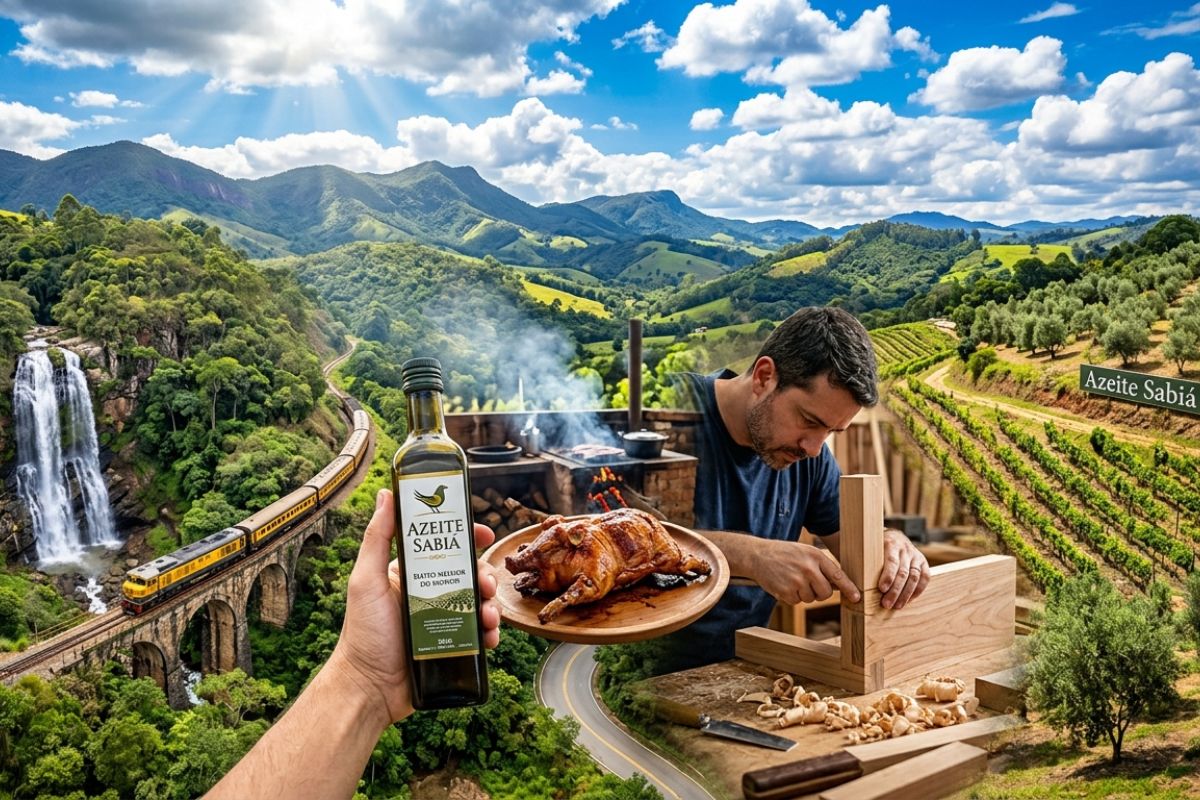
In this place called Santo Antônio do Pinhal, the altitude, water, and culture come together in experiences that range from the award-winning Sabiá olive oil to the historic railway and high-altitude wines
Santo Antônio do Pinhal is a place that surprises because it doesn’t try to be just one thing. Instead of choosing between nature, gastronomy, and history, the city delivers everything together, on the same road: world-renowned olive oil, a waterfall preserved for generations, Japanese joinery without nails, and a bountiful table that makes visitors forget the clock.
And the best part is that this place doesn’t rely on exaggeration to be interesting. It explains itself with numbers and real scenes: it is 163 km from the São Paulo capital, has about 7,314 inhabitants, is at an altitude of 1,143 m, and combines mountain climate, ancient routes, and tourism that grows without losing its sense of calm.
Where this place is and why it seems to slow everything down
Santo Antônio do Pinhal is a place in the interior of São Paulo, nestled in the Serra da Mantiqueira, with a profile of a climatic resort.
-
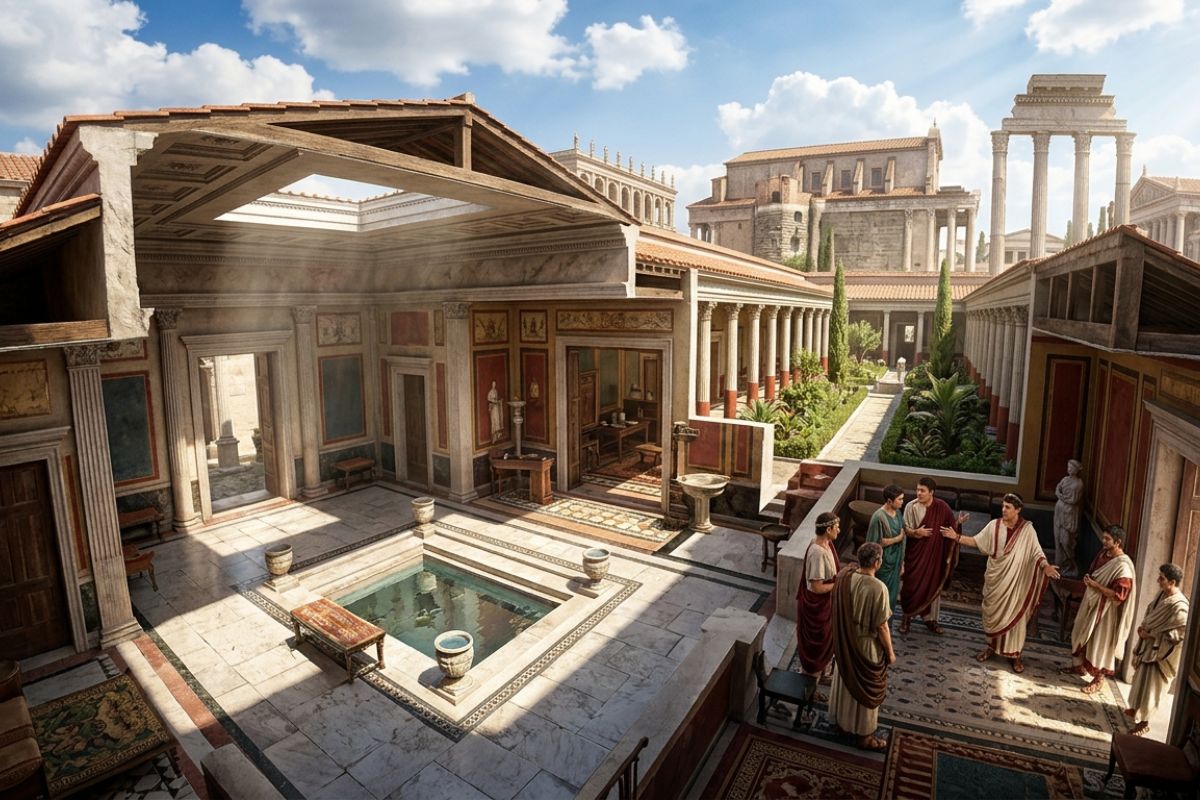
What the Public House of Julius Caesar was like inside in the Roman Forum: layout, atrium with compluvium and impluvium, tablinium and peristyle, and the scandal of the Bona Dea, revealed in an AI recreation.
-
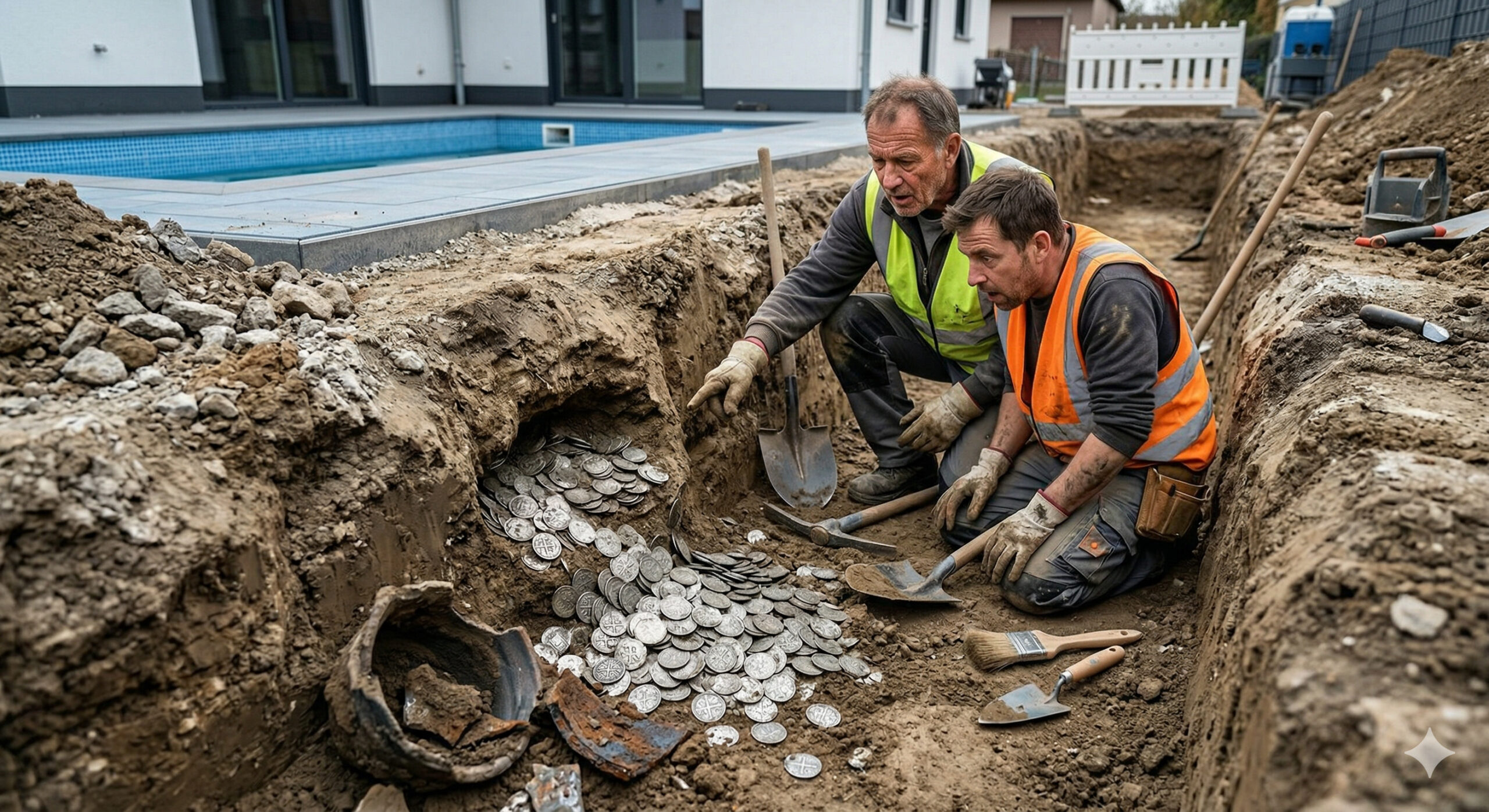
While digging a trench next to a pool in Germany, workers found more than 1,500 silver coins from 1320 in the rubble, revealing a treasure buried for over 700 years.
-
Flight Helios 522, the “ghost” flight with 121 people: the commercial aircraft flew for more than 2 hours on autopilot after a pressurization failure left pilots and passengers unconscious and only stopped when it ran out of fuel.

-
Researchers have located a nearly intact vessel that disappeared 125 years ago on the bottom of icy waters, with masts still preserved and rare details that impress archaeologists.


The city is at an altitude of 1,143 m and has winters that can drop to 6º, with mild summer temperatures that invite relaxation.
The history of the place begins in the early 19th century when muleteers and merchants transformed the high-altitude route into a mandatory path between São Paulo and Minas Gerais.
From the past, memories remain and a historic railway that helped build the region, a theme that appears later in the itinerary.
The Sabiá olive oil and what makes this place a reference in the Mantiqueira

One of the points that puts this place on the map is olive cultivation. The Serra da Mantiqueira stands out for producing award-winning olive oils, and the episode itself reinforces how Brazil has been gaining recognition for the quality of what it produces.
Brazilian olive cultivation is described as young: the first 40 liters of national olive oil were officially extracted in 2008.
In Santo Antônio do Pinhal, a couple embarked on this journey in 2014, planted the first olive trees, and in just over a decade, accumulated more than 160 international awards.
A technical detail explains why this place is suitable for olives: they need cold, with at least 300 hours per year below 10º, something possible at altitudes above 1,000 m, like in Mantiqueira, or at latitudes closer to Europe, like in Rio Grande do Sul.
Why olive oil needs to be fresh and how this place takes advantage of that

The production in the place is organized to reduce the time between harvest and extraction. The factory is just a few meters from the orchard because the olive starts to oxidize as soon as it is picked from the tree, and every minute lost compromises quality.
The episode insists on a simple and important idea: olive oil has no storage potential. Like fruit juice, it should be consumed fresh, without stock at home, to preserve flavor and nutritional quality.
Tasting in this place educates the palate by showing the difference between newer oils and oils that already show signs of oxidation.
The award that put Sabiá olive oil at the top of the world


In competitions held in Italy and Turkey, cited as relevant, Sabiá olive oil was elected the best in the world in the medium fruity category.
The report also mentions that in 2026, the product received the highest score ever recorded in the history of one of these competitions.
This type of recognition reinforces the idea that the place offers not just a tourist visit. It presents a high-level product, made with a quick process, modern equipment, and extreme care with time, temperature, and handling.
Japanese joinery without nails and the art that found its place in the mountains

Another strong highlight of the place is a joinery workshop, with a Japanese craftsman who arrived in Brazil in 1995.
The technique joins wood with wood, without relying on nails, screws, or metal, and each piece is handcrafted from solid wood.
The philosophy behind this work aligns with the climate of the place: the idea that a tree takes 100 years to grow, and therefore, a piece of furniture should last at least 100 years.
The episode showcases chairs, stools, and tables, as well as the craftsman’s dream of returning to produce more cabinets in the future.
Lajeado Waterfall and the preservation that became a destination

The Serra da Mantiqueira is described as a land of many waters, and in this place, one of them stands out: the Lajeado Waterfall, the most visited in the municipality.
It is located 7 km from the center and drops about 20 m over stone slabs, forming natural pools with crystal-clear waters, a wooden suspension bridge, and trails that follow the river’s course.
The site has been in family ownership for about 200 years, with the current generation working in tourism.
The episode cites an average estimate of 15,000 to 20,000 visitors per year, with recurring praise for care and preservation. It is a place designed to welcome people without losing the essence of preserved nature.
Wood-fired pork and the type of food that defines the place in memory

Gastronomy appears as part of the DNA of this place, especially at the Recanto do Pico restaurant. The episode highlights the pork ribs made in local tradition, with a long process: 6 hours over wood, using fruit wood, with smoking and finishing to create crackling.
The experience is presented as a bountiful table, homemade food well-seasoned and made with care. Among the curious items, there is “garden lambari,” a battered and fried foliage, as well as artisanal sausage and other dishes from the wood stove. It is the type of place where the meal becomes an entire chapter of the trip.
Historic railway and the explanation of how this place was connected to Brazil

The episode also leads to a station that seems to have stopped in time. The conversation retrieves historical facts: in 1811, after the decline of gold in the Estrada Real, miners sought a new path through the Serra da Mantiqueira to reach the Paraíba Valley. In 1814, this path was officialized.
The railway mentioned is 47 km long and is connected to the history of Campos do Jordão. In 1880, the high-altitude climate was seen as favorable for those suffering from lung ailments, and before the tracks, there was a long journey on the backs of animals.
The railway began to fulfill this role and later fell into disuse as passenger transport after the 1980s when the SP-123 highway was opened.
Today, according to the report, trains no longer run there, but the station remains standing, the tracks are still in place, and there is hope for a concession project that will bring movement back to this part of the place.
Award-winning high-altitude wines and the itinerary that completes the place

At an altitude above 1,200 m, the episode shows the boutique winery Essenza, with a total area of 18 hectares and 15 maintained as untouched area.
The Sirá Rosé is described as award-winning in international competitions and elected the best rosé in Brazil in 2024 and 2025, with small production and notable results.
There is also information that there are vineyards at the highest altitude in Brazil, with plantings above 1,700 m and reaching close to 2,000 m in some points, in addition to tastings conducted with pairing. The place ties together wine, olive oil, and charcuterie in a complete Mantiqueira experience.
In the end, Santo Antônio do Pinhal presents itself as a place where visitors can create an itinerary that combines nature, technique, history, and dining. And what remains is a rare feeling: that of having seen a lot without needing to rush.
Would you choose this place for the award-winning olive oil, the waterfall, or the Japanese joinery?







Seja o primeiro a reagir!