





 Portuguese
  English
  Spanish
  4 min of reading
  0 comments


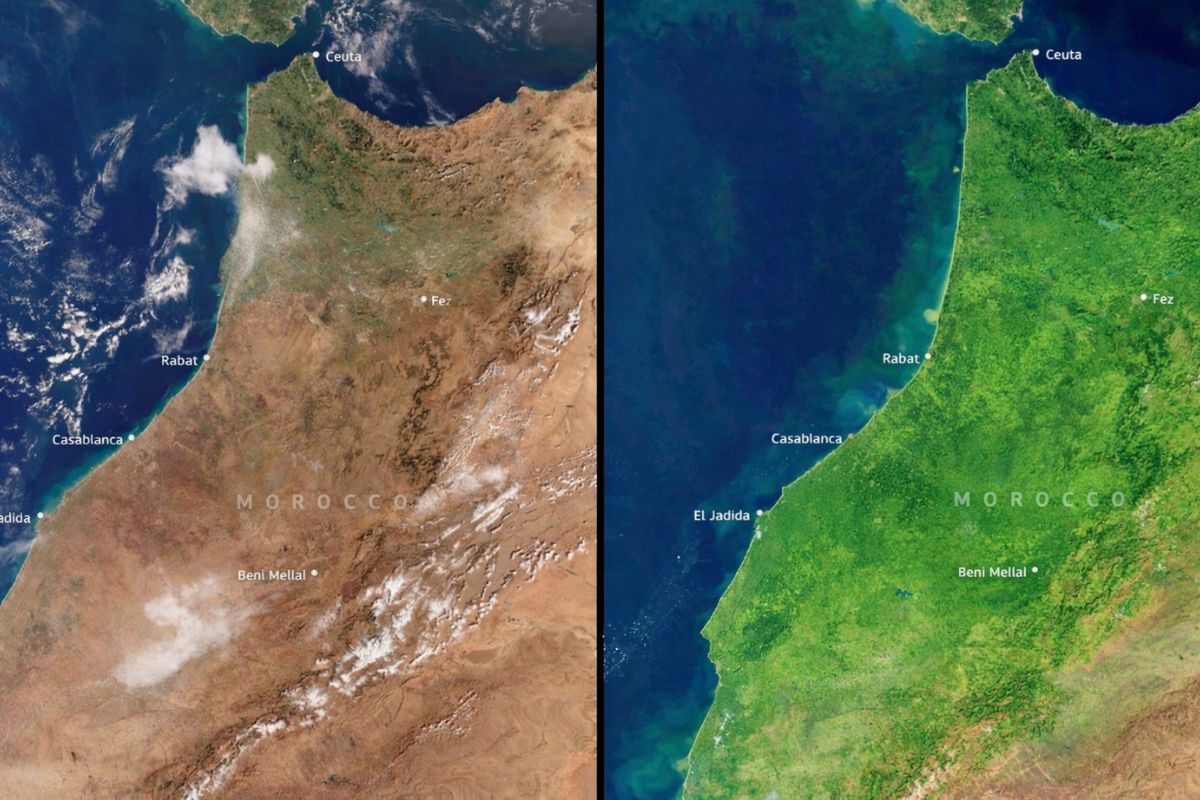
Two months of heavy rain transformed arid lands of Morocco into dense vegetation visible in satellite images of the Copernicus program but scientists warn that the prolonged drought left deep marks and the water crisis in the country is far from being resolved
Morocco looks like a different country when viewed from space in 2026. Satellite images from the Copernicus program compare the same region of northeastern Morocco in February 2025 and February 2026, and the difference is striking: where there was once parched soil and arid landscape, now appears a cover of dense vegetation that had not been recorded in a decade.
But the visible transformation in the satellite images tells only part of the story. According to the program, Morocco faces a water crisis that has worsened over years of prolonged drought, and the scientists involved in monitoring warn that a rainy winter, no matter how exceptional, is not enough to reverse structural damage to agriculture, reservoirs, and the country’s water supply.
The satellite images showing Morocco before and after the rains

The Copernicus program, the European Earth observation system, recorded the same area in northeastern Morocco on two dates: February 20, 2025, and February 20, 2026.
-
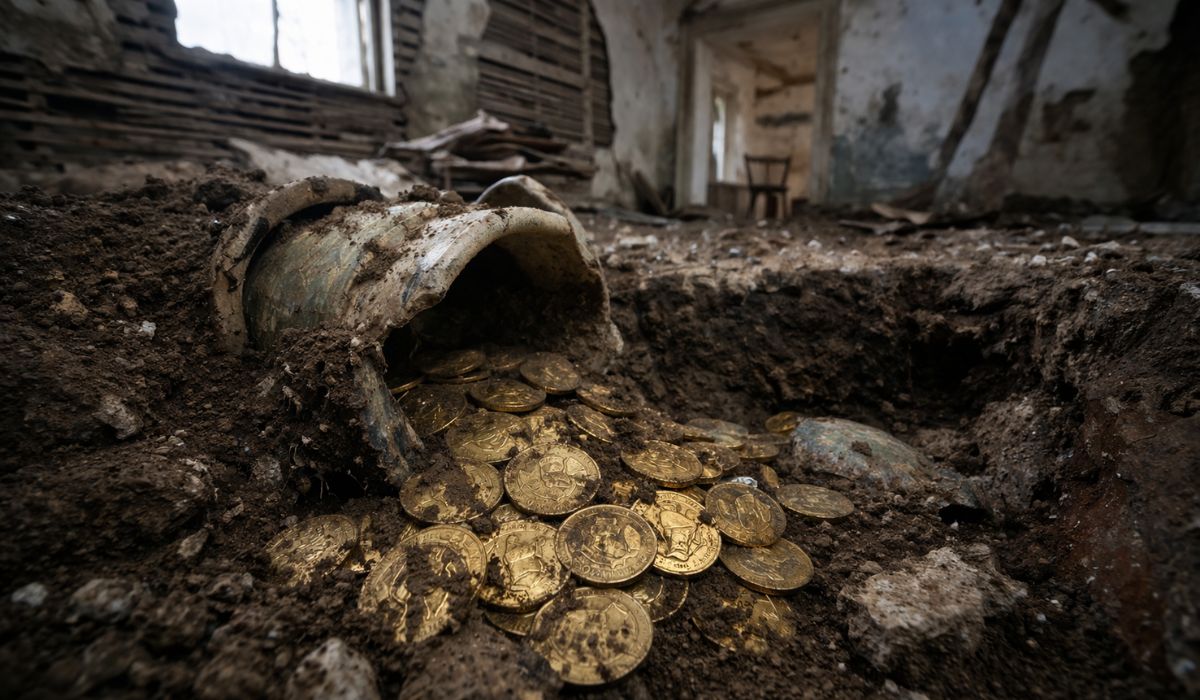
Archaeologists were excavating the foundation of a historic house in Russia when they discovered a buried treasure with gold coins, left behind in the final days of the Russian Empire and now valued at over R$ 2.8 million.
-
The Mediterranean has become the target of the largest underwater archaeological mission ever coordinated by UNESCO: eight countries have joined forces to map shipwrecks and protect a historic corridor.

-
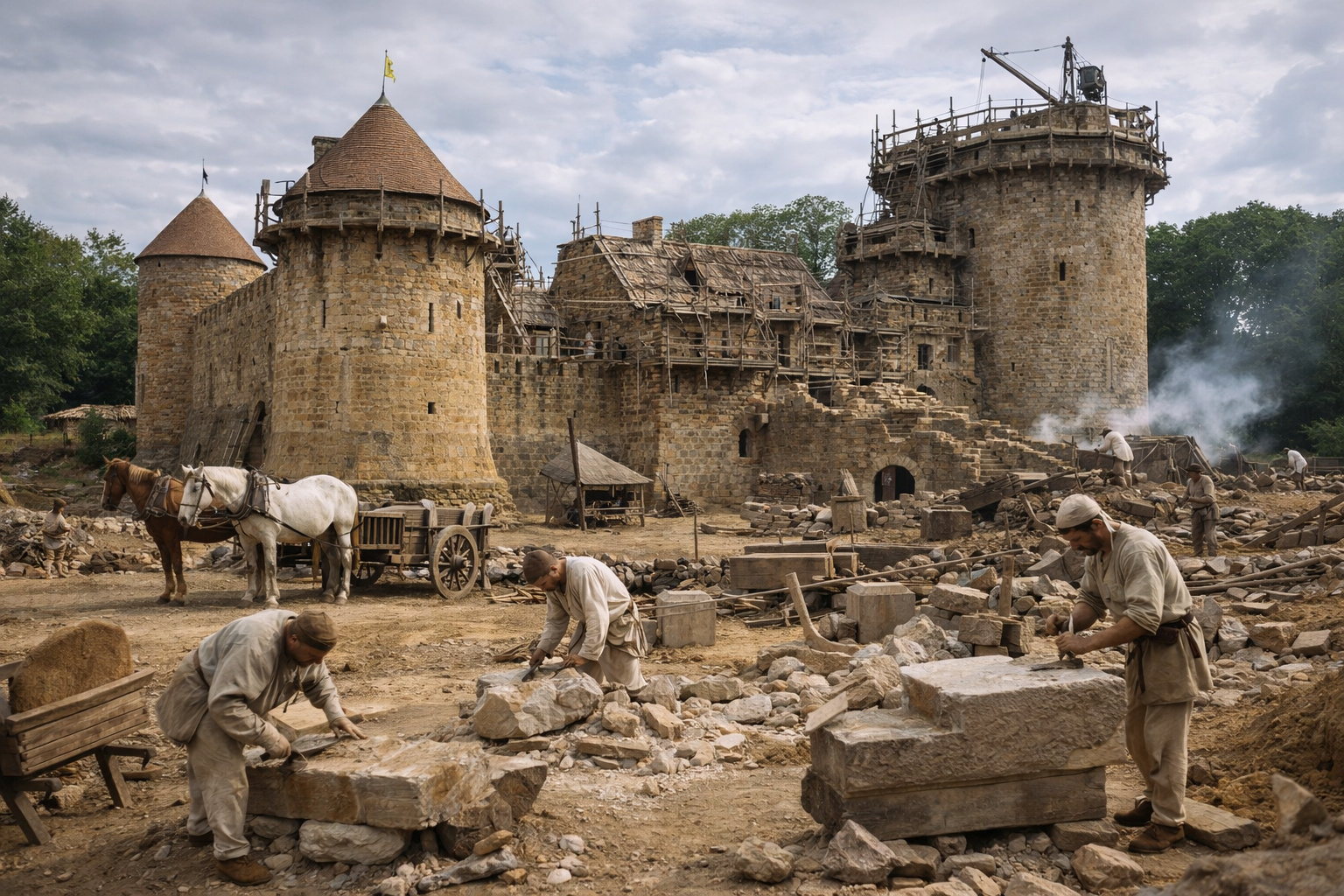
In France, a group of artisans spends 28 years building a medieval castle with 13th-century tools, without machines, without measuring tapes, and with almost zero carbon footprint, and the rediscovered techniques helped in the reconstruction of Notre-Dame.
-
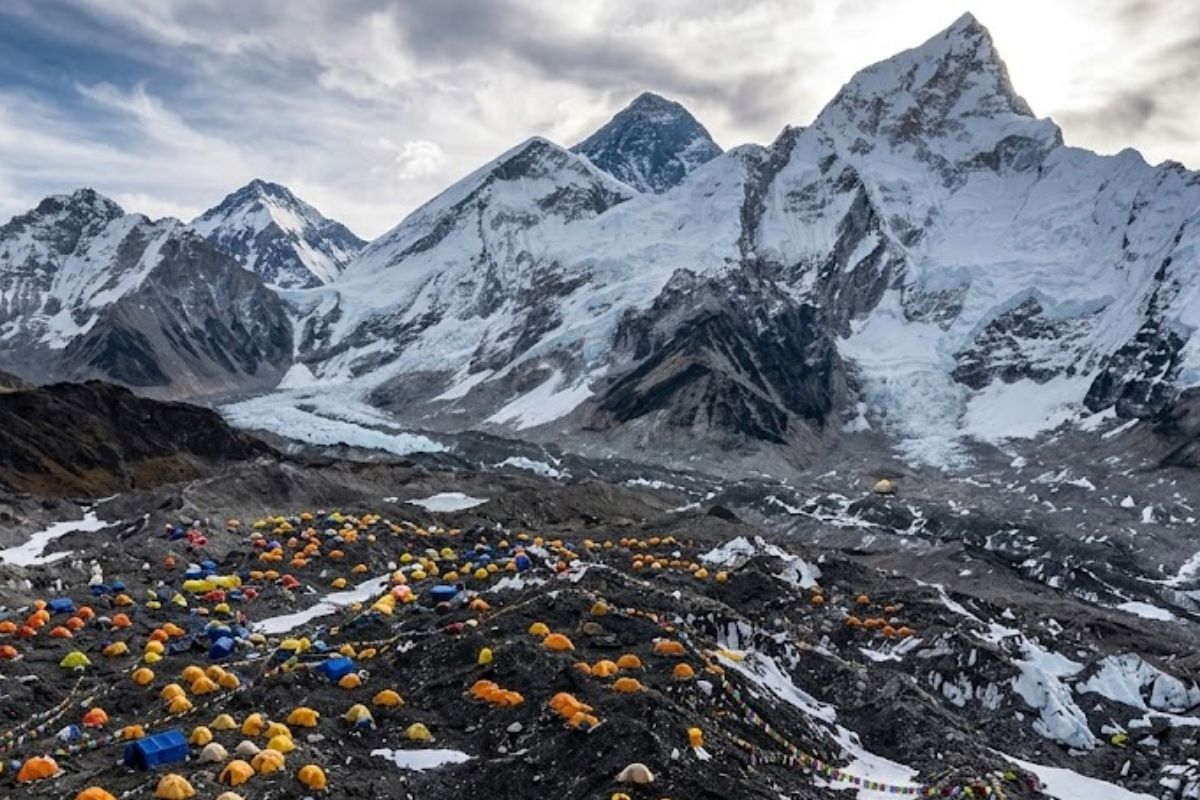
Tourists on Everest were poisoned by guides who mixed substances in food to provoke false symptoms of altitude sickness while helicopter operators and hospitals charged inflated rescue fees to insurance companies.

In the first image, the terrain appears marked by prolonged drought, with shades of brown and beige dominating the landscape. In the second, the region is visibly greener, with vegetation that scientists describe as relatively dense for the area’s standards.
According to the researchers involved in monitoring the Copernicus program, two months of heavy rain were enough to transform previously arid lands into a landscape that Morocco had not displayed in at least ten years.
The satellite images leave no doubt: the change is real, measurable, and visible from space, making this winter one of the most significant for the country in terms of recent precipitation.
Rains 35% above historical average filled reservoirs to 46%
The numbers behind the visible transformation in the satellite images are equally striking.
The Minister of Water of Morocco, Nizar Baraka, reported that precipitation this winter was 95% higher than the previous year and 17% above the seasonal average, causing the filling level of reservoirs to rise to 46%.
After new rains in the following weeks, winter precipitation averaged 35% above the historical average of Morocco.
For a country that has been experiencing years of prolonged drought with poor harvests, reduced livestock numbers, and increasing pressure on urban water supply, these numbers represent a concrete relief.
Rain in Morocco is never just precipitation: it is an economic signal, agricultural hope, and, for many, the difference between a viable harvest and another year of losses.
The prolonged drought left marks that rain alone cannot wipe away
Despite the green transformation captured by the Copernicus program, the water crisis in Morocco is far from over.
The structural consequences of the prolonged drought have left deep marks on the landscape, agriculture, and the water supply system, and experts remain cautious about the long-term significance of this exceptional winter.
A rainy winter can replenish reservoirs and make the landscape bloom in the short term. But that alone is not enough to overcome a water crisis that has worsened over consecutive years of scarcity.
Moroccan agriculture has lost entire harvests, herds have been reduced, and rural communities have migrated to urban centers in search of water, and these dynamics do not reverse with two months of above-average precipitation.
Morocco remains vulnerable even after turning green
What the satellite images show is a moment of relief, not the end of a problem.
Morocco is considered a particularly vulnerable hotspot to climate change, exposed to rising temperatures, irregular rainfall, and periods of prolonged drought that can return at any moment.
The water crisis in the country has roots that go beyond a specific dry cycle. The demand for water grows with urbanization and agriculture, while the supply depends on increasingly unpredictable climate patterns.
The winter of 2026 demonstrated that the landscape can recover quickly when the rain returns, but it also highlighted how Morocco has become dependent on exceptional events to keep its reservoirs at minimally functional levels.
A rare moment of relief captured from space
The satellite images from the Copernicus program recorded something that seemed impossible a year ago: Morocco green, with dense vegetation covering lands that the prolonged drought had turned into desert.
The rain 35% above the average filled reservoirs, revitalized agriculture, and gave the country a concrete breath in the water crisis that has plagued it for years.
But scientists are clear: this is a pause, not a solution. Morocco remains vulnerable, and the water crisis will require more than exceptional winters to be overcome.
Did you know that Morocco was facing such severe drought? What do you think of these satellite images showing recovery in just two months? Leave your opinion in the comments.





Seja o primeiro a reagir!