





 Portuguese
  English
  Spanish
  3 min of reading
  0 comments


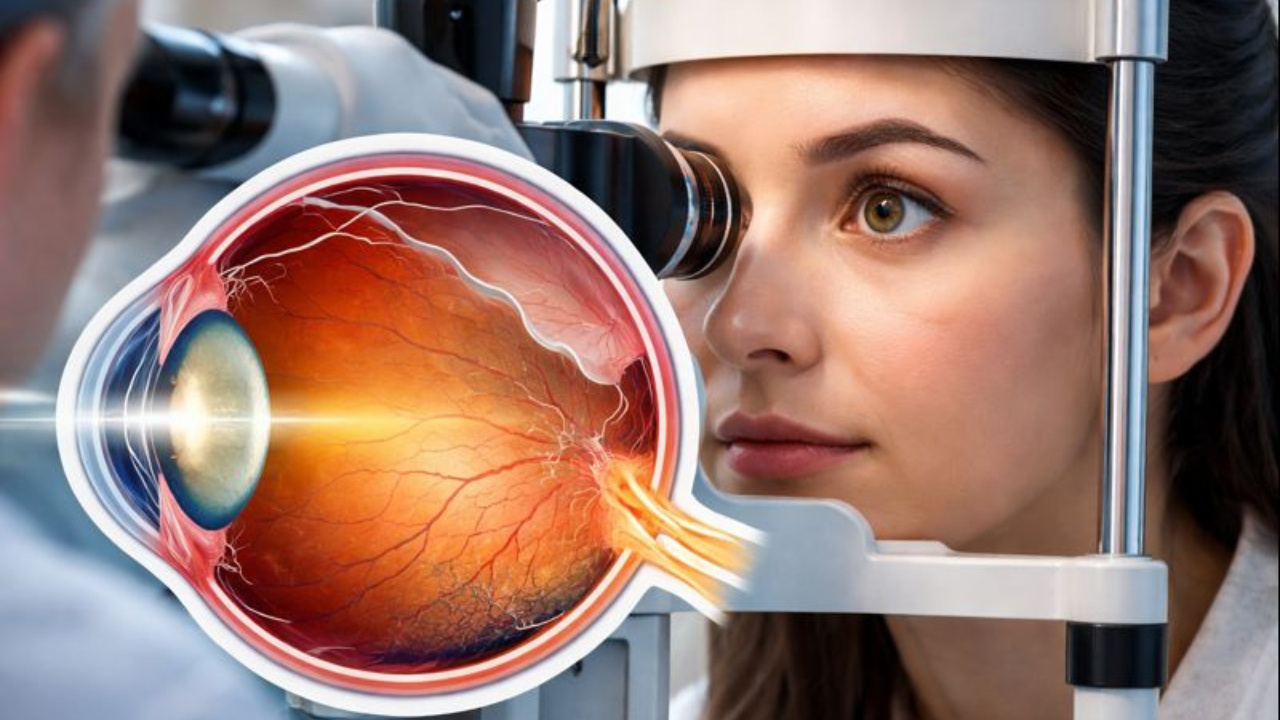
High Myopia Can Cause Retinal Detachment and Other Complications. Learn How Degenerative Myopia Affects Retinal Health.
High myopia is an eye condition that goes far beyond difficulty seeing at a distance and represents a growing challenge for retinal health.
The problem occurs when the degree exceeds 6 diopters, usually accompanied by elongation of the eyeball, a situation known as degenerative myopia.
This process makes the retina thinner and more fragile, significantly increasing the risk of retinal detachment and other complications of myopia, which requires constant medical monitoring to prevent irreversible vision loss.
-
With a cost per shot close to zero, the DragonFire laser could change naval warfare in 2027 and provide British ships with nearly unlimited defense against drones.

-
A British startup creates tires that generate electricity in electric vehicles when passing over potholes, speed bumps, and cracks.

-
Scientists have created robots made with living cells that have their own nervous system, swim on their own, explore the environment, and self-organize without any genetic engineering, and now they want to do the same with human cells.

-
Students create a solar-powered ambulance that operates without a plug, without fuel, and still keeps medical equipment running in remote areas.

In recent years, specialists have observed an increase in high myopia worldwide.
This growth is primarily associated with excessive screen time, reduced time outdoors, and increasingly early diagnosis of common myopia.
Thus, understanding the risks and warning signs becomes crucial to preserve vision throughout life.
What Is High Myopia and Why It Concerns Specialists
High myopia is characterized not only by a high prescription in glasses but also by structural changes in the eye.
When the eyeball elongates beyond normal, the retina undergoes continuous stretching, making it more vulnerable to injuries.
On the other hand, many people still believe the problem can be resolved only with stronger lenses.
However, degenerative myopia is considered a chronic eye condition that can evolve silently and cause permanent damage if there is no proper monitoring of retinal health.
Degenerative Myopia and the Risk of Retinal Detachment
Among the most severe consequences of high myopia is retinal detachment, an ophthalmological emergency.
The elongation of the eye facilitates the emergence of small tears in the retina, allowing the vitreous, the eye’s internal gel, to infiltrate through these openings.
This process can occur without pain but usually presents warning signs. Flashes of light, sudden increase in “floaters,” or the sensation of a dark shadow in the visual field are symptoms that require immediate attention.
Therefore, recognizing these signs can be crucial in preventing vision loss.
Main Complications of High Myopia Over the Years
The complications of myopia are not limited to retinal detachment.
People with high myopia have a higher incidence of peripheral degenerations, which are weakened areas of the retina with an increased risk of rupture.
Additionally, conditions such as epiretinal membrane and macular hole are more frequent in this group. These changes can distort central vision, cause loss of clarity, and compromise daily activities such as reading and driving.
Another point of concern is the increased risk of glaucoma and early cataracts.
In glaucoma, progressive damage to the optic nerve occurs, often without initial symptoms.
Cataracts can appear earlier due to the anatomical and metabolic changes related to high myopia.
The Importance of Early Diagnosis for Retinal Health
Maintaining retinal health primarily depends on regular check-ups with an ophthalmologist, especially with a retina specialist.
Retinal mapping is essential to identify fragile areas before they turn into tears.
When detected early, many of these changes can be treated with laser, reducing the risk of retinal detachment.
Thus, early diagnosis becomes one of the main tools for preventing more severe complications.
Prevention of High Myopia in Children, Youth, and Adults
Prevention starts early, especially in children and adolescents with progressive myopia.
Measures such as reducing screen time, increasing exposure to natural light, and in some cases, using specific eye drops or lenses can help slow down the progression of myopia.
Meanwhile, in adults with high myopia, healthy habits also make a difference.
Controlling conditions such as diabetes and hypertension, avoiding eye trauma, and maintaining regular check-ups are actions that contribute to preserving retinal health.
Continuous Attention Reduces Risks and Preserves Vision
Degenerative myopia does not necessarily mean inevitable vision loss.
However, it requires constant attention and monitoring throughout life. Being informed about the risks, recognizing early symptoms, and seeking prompt care are fundamental strategies.
With proper monitoring, early treatment, and ongoing care, it is possible to significantly reduce the complications of myopia and maintain functional and healthy vision for many years.







-

4 pessoas reagiram a isso.