





 Portuguese
  English
  Spanish
  3 min of reading
  0 comments


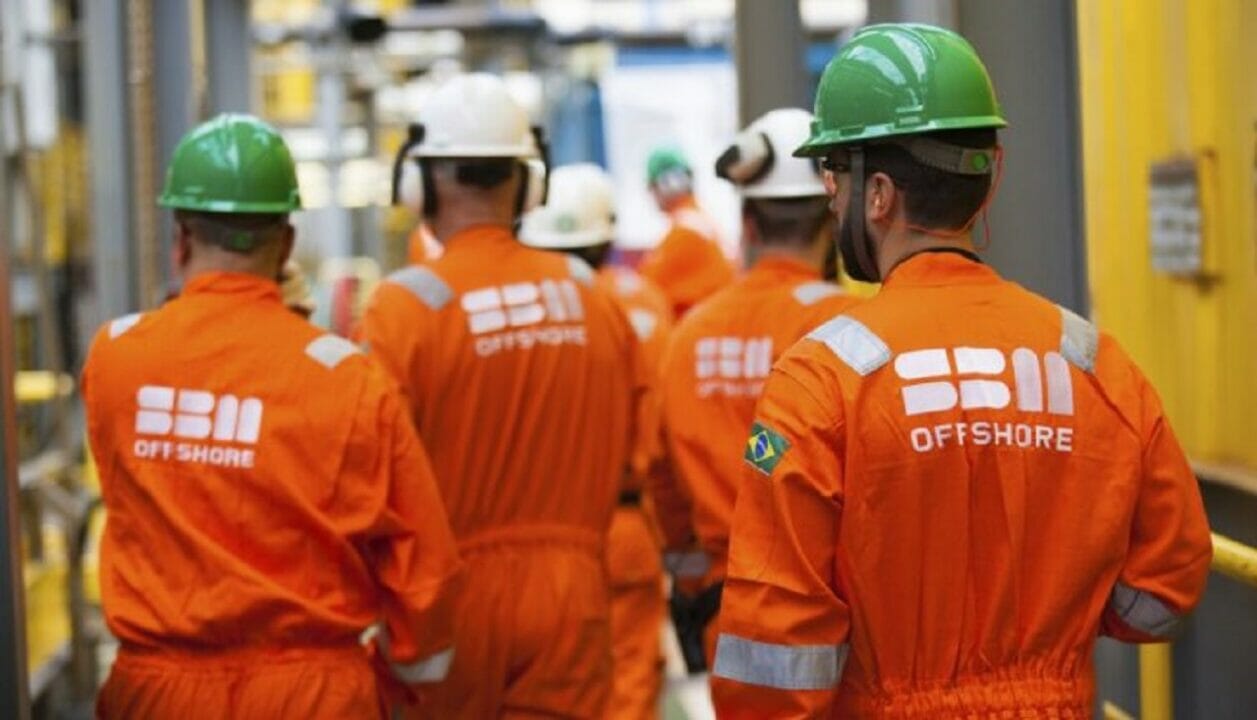
SBM Offshore And Shell Form Partnership And Announce Unprecedented Project In The Country. Called SWIR, The Project Uses Cutting-Edge Technology That Could Revolutionize The FPSO Industry As Early As 2024.
Focusing on enhancing the efficiency of energy generation systems for floating oil production units (FPSOs) in Brazil and reducing carbon emissions on these vessels, SBM Offshore and Shell have signed a contract for phase 3 of the development of the Seawater Intake Riser (SWIR) project, a unique deep-water intake system in Brazil.
Project By SBM Offshore And Shell To Be Completed By 2024
The environmentally sustainable solution envisages that the cooling water intake for these production units will be conducted at a depth of 700m, using large-diameter flexible pipes. The expectation is that the new technology will be validated for incorporation into new FPSO projects by the end of next year.
Currently, the water intake is performed at a depth of about 100m in the sea, where temperatures are around 25 ºC. At greater depths, temperatures are considerably lower, potentially reaching 7 ºC.
-
The rise in oil prices could ensure an extra revenue of R$ 100 billion for the Federal Government, indicates a recent economic study.

-
Naturgy begins an investment of R$ 1.6 million to expand the gas network in Niterói and benefit thousands of new residences and businesses.

-
A major turn in the Justice system suspends tax increases and directly impacts oil and gas companies in Brazil by affecting costs, contracts, and financial planning, leaving uncertain what could happen to the sector if these costs had increased.

-
Brava Energia begins drilling in Papa-Terra and Atlanta and could change the game by reducing costs in oil while increasing production and strengthening competitiveness in the offshore market.


This enables efficiency gains and reductions in CO2 emissions in energy generation and cooling processes on floating oil production units (FPSOs). The SWIR system will also significantly reduce the energy demand for natural gas dehydration and the energy consumption of the vessel’s intake pumps.
According to SBM Offshore’s Project Manager, Caio Bonini, the company is in the final phase of the project, which currently holds significant importance within the company’s portfolio. Completion will allow for the implementation of future technologies focused on emission reductions.
SWIR Allows For Reduced Weight And Operating Costs Of FPSOs
According to the technology manager of SBM Offshore in Brazil, Marcelo Andreotti, this partnership with Shell is seen as a great honor and is a cause for celebration, not only for the collaboration with a major partner and client but also to reinforce its commitment to the energy transition and the development of specialized technology and technical teams in the country.
The implementation of SWIR enables the reduction of the processing plant’s weight and operating costs, and can be utilized in various systems on FPSOs such as gas compression, heat integration, water treatment, and carbon capture from gas turbine exhaust. CO2 reduction could reach 50% in the new generations of FPSOs being designed by SBM Offshore.
Project Started In 2018
Eli Gomes, Technology Project Manager at Shell, expresses his confidence in the project and states that everyone is very optimistic about the promising results of the deep-water intake system project.
The technology being developed in partnership with SBM Offshore will allow for optimization and significant improvements in FPSO processing and utility plants, in addition to contributing to the decarbonization of offshore oil and gas production.
The expectation is that the deep-water intake system will guide future generations of floating offshore units (FPSOs) to be implemented in Brazil’s basins over the next decade.
The revolutionary project began in 2018 and utilizes resources from the Research and Development clause of the concession contracts from the National Agency of Petroleum, Natural Gas and Biofuels (ANP).
In addition to SBM Offshore and Shell, the project also involved testing materials by the Pontifical Catholic University of Rio de Janeiro (PUC-Rio) and the University of Brasília (UNB).








Seja o primeiro a reagir!