





 Portuguese
  English
  Spanish
  3 min of reading
  0 comments


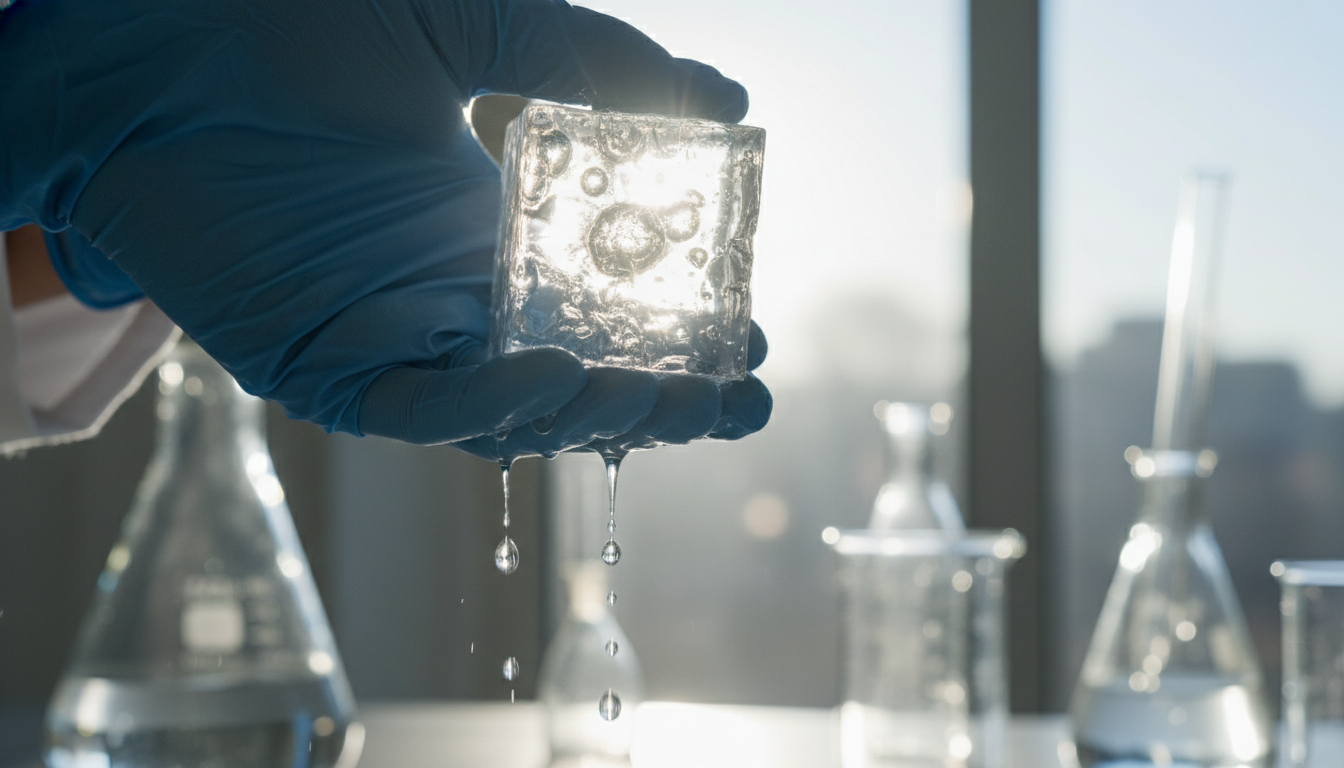
Researchers at the University of Texas at Austin have created a hydrogel-based material that functions as a super sponge capable of absorbing contaminated water and releasing it purified using only solar heat, with production of up to 25 liters per square meter per day and proven results even in the hypersaline water of the Dead Sea
Scientists at the University of Texas at Austin have developed a solar water purification hydrogel that acts as a molecular sponge capable of transforming any source of contaminated water — including that of the Dead Sea — into potable water using only sunlight. According to a study published in the journal Nature Nanotechnology, the system does not require electricity, batteries, or any complex infrastructure to operate.
Solar water purification hydrogel: how the molecular sponge works
The material was developed by Professor Guihua Yu and postdoctoral researcher Fei Zhao, both from the Department of Mechanical Engineering at the Cockrell School of Engineering. It is a hybrid polymer with hydrophilic and semiconducting properties that combines two distinct hydrogels into a single structure.
One of the hydrogels binds to water, while the other absorbs sunlight. Thus, when exposed to the sun, the material heats up and forces the evaporation of the stored water. The vapor rises, condenses on a clean surface, and transforms into pure distilled water.
-
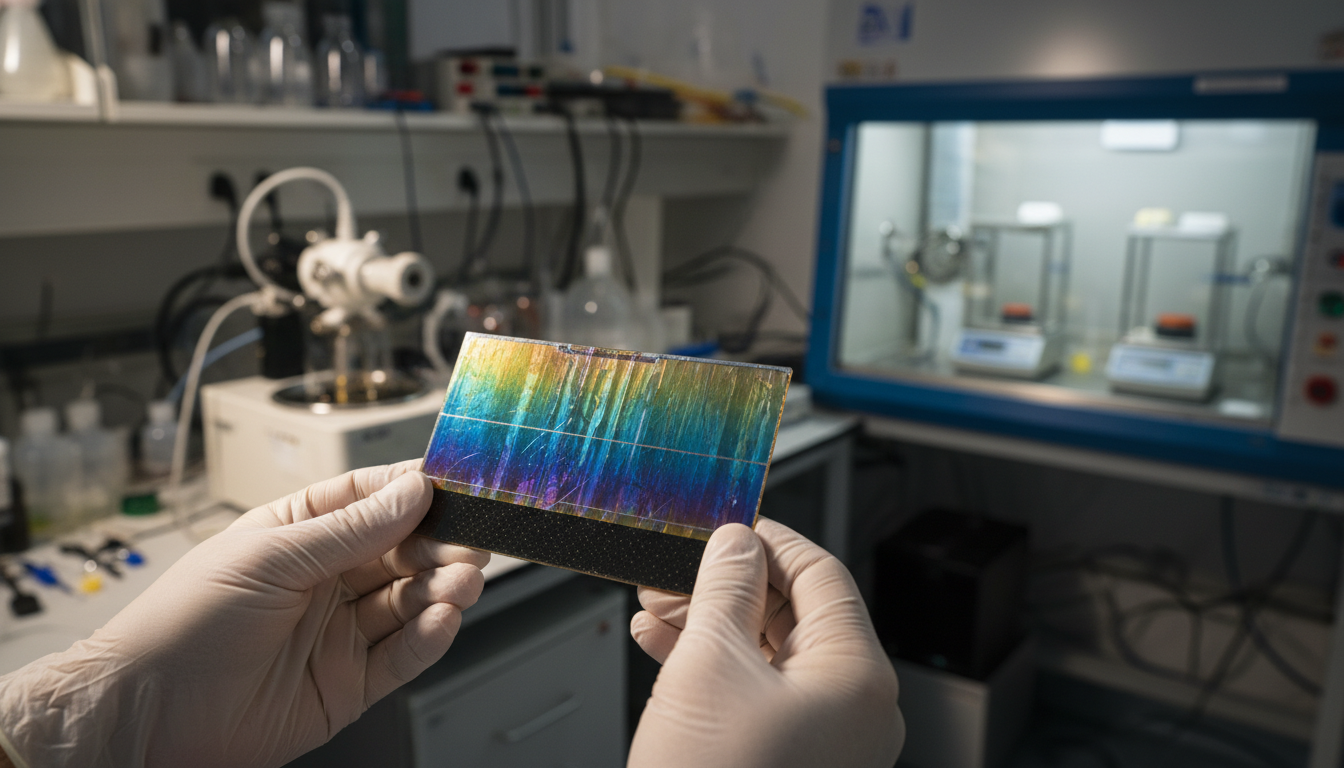
Chinese company creates solar cell that breaks the physical limit of silicon with 34.85% efficiency and promises to revolutionize electricity bills with panels that generate 20% more energy starting in 2026.
-
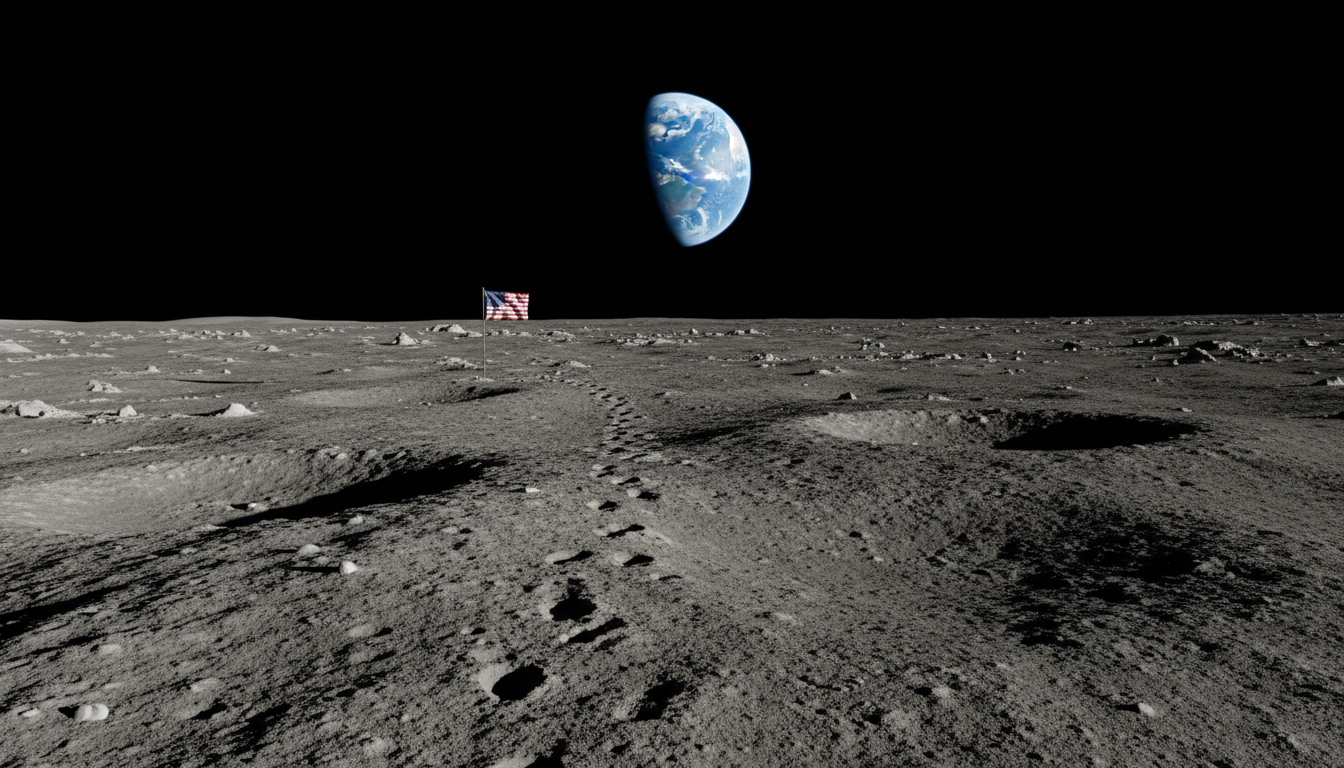
For the first time in over half a century, humans have seen the Moon up close and returned to tell the tale, and the technology that brought them back makes Apollo look like a toy.

-
From 1969 to 1972, only 12 human beings set foot on the Moon, and then the world simply stopped going, until this week when NASA showed that the journey back has finally begun.
-
Prairie chicken robots simulate mating dances and sounds in Wyoming to bring the species back to habitats and prevent breeding at Jackson Hole Airport after a decline from 73 to 3.

Additionally, the process removes salts, heavy metals, pathogens, microplastics, and chemical contaminants all at once. Therefore, the system eliminates the multiple filtration steps of traditional purification methods.
Production of 25 liters per day surpasses conventional systems
In laboratory tests, the solar water purification hydrogel achieved a daily production of up to 25 liters of distilled water per square meter of exposed material. This result is approximately 12 times higher than that of existing commercial solar distillation systems.
However, the most impressive data came from tests with water from the Dead Sea, one of the saltiest bodies of water on the planet. The researchers were able to reduce salinity to levels that meet the drinking water standards of the World Health Organization (WHO) and the United States Environmental Protection Agency (EPA).

Portable technology can save lives in disaster and drought areas
One of the greatest advantages of the system is its simplicity. The material can be assembled in common household containers — such as buckets or basins — and works without any energy source other than natural sunlight.
Thus, the technology becomes ideal for regions affected by drought, natural disasters, or humanitarian crises, where access to electricity is limited or nonexistent. According to UN data cited in the study, 30,000 people die each week worldwide due to unsafe drinking water.
The manufacturing cost is described as “extremely low” by the researchers, as the hydrogels are produced from organic materials abundant in nature. Consequently, the scale of production does not depend on rare minerals or expensive industrial processes.
Material releases 70% of stored water in just 10 minutes
In additional tests with enhanced versions of the hydrogel — which add chitosan to the polymer to increase water retention — the researchers demonstrated that the material can release 70% of the stored water in just 10 minutes when heated by artificial light.
This result is four times faster than previous absorbent gels and suggests that, under real conditions of direct sunlight, the combination of smart materials with solar energy can meet a person’s daily water needs.

Patent applied for and next steps toward commercialization
The research was funded by the Alfred P. Sloan Foundation, the Camille & Henry Dreyfus Foundation, and the National Science Foundation (NSF) of the United States. The team has already applied for a patent and is working with the Office of Technology Commercialization at UT Austin to license the technology.
Still, it is important to emphasize that the results were obtained in a controlled laboratory environment. The transition to commercial-scale production and validation in real field conditions — with variations in temperature, humidity, and water quality — are still challenges that need to be overcome before the solar water purification hydrogel reaches the hands of those who need it most.







Seja o primeiro a reagir!