





 English
  Francês
  Alemão
  Italiano
  Japonês
  Norueguês
  Portuguese
  Spanish
  4 min of reading
  0 comments



A study published in the journal Science Advances revealed that a tectonic plate is progressively fragmenting in the Cascadia region, near the coast of Canada. The rupture occurs over millions of years and may lead to the gradual end of the subduction zone in that section of the Pacific Ocean.
Scientists have identified a rare phenomenon on the ocean floor: a tectonic plate is undergoing a tearing process in a subduction zone near the coast of Canada. The study, published in the journal Science Advances, shows that this fragmentation occurs in the Cascadia region, one of the most monitored and feared seismic zones on the planet. The tectonic plate being pushed into the Earth does not break suddenly, but rather progressively, with separations occurring over millions of years.
As the tectonic plate breaks, parts of it begin to behave independently, forming smaller blocks known as microplates. This process helps explain how some subduction zones cease to exist over geological time. In the case of Cascadia, researchers suggest that the subduction zone may be gradually weakening, which would mean, in the long term, a reconfiguration of the tectonic plates in the region. Despite the scale of millions of years, the discovery is crucial for understanding the dynamics of the planet.
What does it mean for a tectonic plate to be tearing at the bottom of the ocean

A tectonic plate is a massive portion of the Earth’s crust that moves slowly over the planet’s mantle. When two plates meet and one dives beneath the other, a subduction zone is formed.
-
Salaries of up to R$ 25,000, a shortage of professionals, and exploding demand in 2026 make the no-code automation specialist one of the most sought-after careers in Brazil, even without requiring a degree or programming knowledge.

-
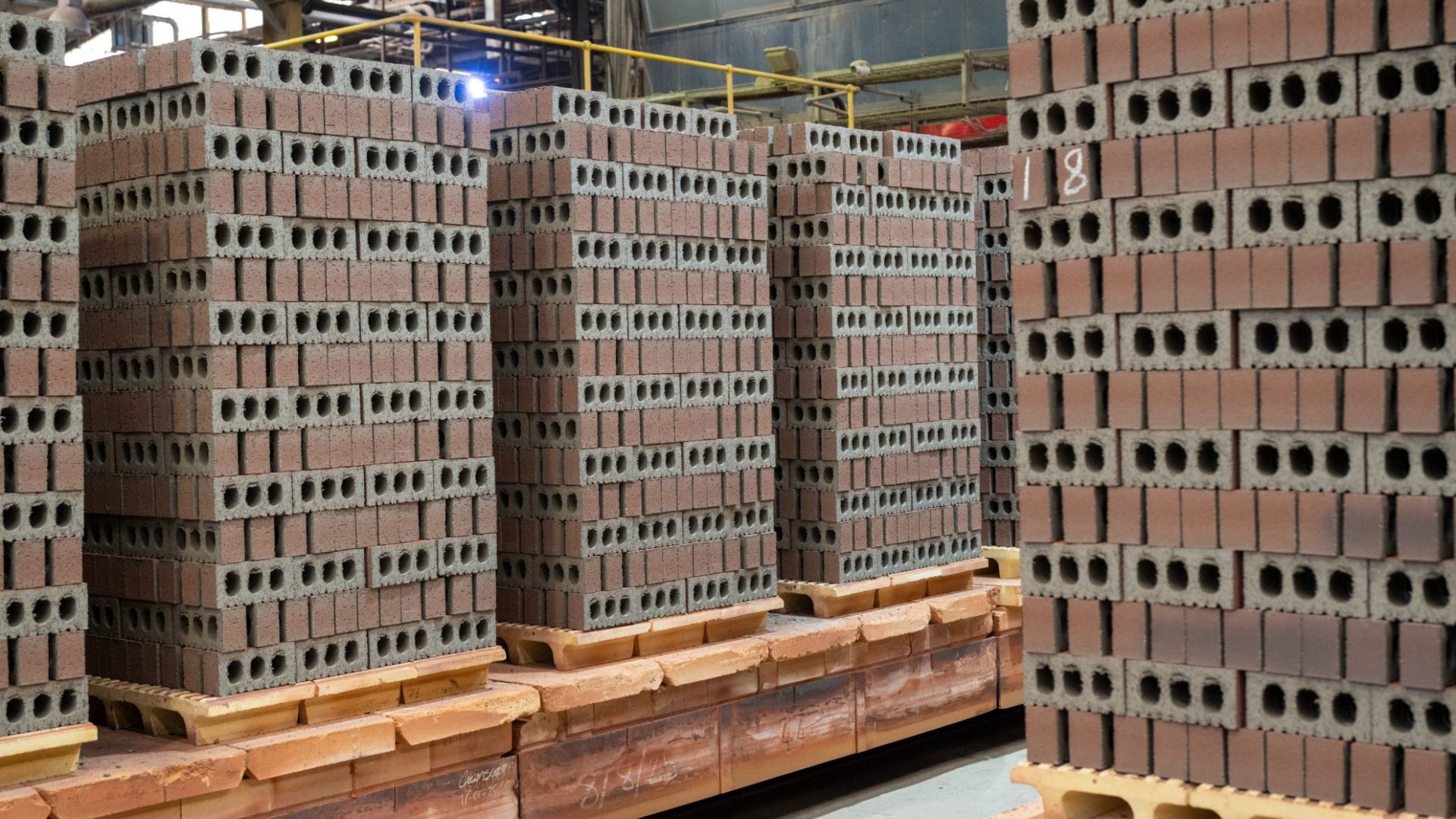
The first commercial-scale hydrogen-powered brick factory will be established.
-
Goodbye to the noisy exhaust fan: silent and smart technology transforms modern kitchens with more comfort, design, and efficiency in everyday life.

-
At just 14 years old, a boy creates a system without energy, using steel pipes buried in the ground, that irrigates seedlings with moisture from the air, to combat the water scarcity threatening reforestation in northern China.


What scientists have discovered is that, in this diving process, the tectonic plate may begin to fragment, creating cracks that propagate over millions of years. It is not a sudden break, but a slow and progressive tear.
This type of phenomenon is rare and difficult to observe because it occurs at great depths on the ocean floor. The analysis was based on high-resolution seismic data, which allowed researchers to map the interior of the tectonic plate at depth.
The results show that the tear does not occur uniformly, but in segments, with different stages of fragmentation throughout the region. Each segment represents a distinct phase of the rupture process.
The Nootka Fault: the weakness line that facilitates the tear of the tectonic plate
At the center of this phenomenon is the so-called Nootka Fault, an underwater fracture zone that marks the boundary between different tectonic plates in the Pacific. This structure acts as a kind of weakness line that facilitates the rupture of the tectonic plate being pushed down.
The Nootka Fault is located on the ocean floor, near the coast of British Columbia, Canada, and has been monitored for decades by seismologists due to its relation to the seismic activity in the region.
Seismic analysis revealed that the Nootka Fault is not a simple static fracture. It is actively contributing to the fragmentation of the tectonic plate that dives beneath the North American continent.
As the tear progresses, blocks of the plate separate and form microplates that begin to move independently. This behavior is consistent with the hypothesis that the Cascadia subduction zone is gradually losing strength.
Cascadia may be disconnecting: what does this mean for seismic activity
The Cascadia subduction zone extends over more than a thousand kilometers along the west coast of North America, from British Columbia to northern California.
It is considered one of the most dangerous seismic zones in the world because it is capable of generating earthquakes with magnitudes greater than 9.0 on the Richter scale. The last major earthquake in Cascadia occurred in 1700 and produced a tsunami that reached as far as Japan.
If the tectonic plate continues to fragment over the next millions of years, the Cascadia subduction zone may weaken to the point of ceasing to function. In practice, this would mean the gradual end of subduction in that section, which would reconfigure the tectonic plates throughout the region.
Researchers emphasize that this is an extremely slow process and does not represent an immediate change on the surface. There is no cause for alarm in the short term. But understanding how these structures evolve is crucial for predicting patterns of seismic activity in the future.
Why this discovery matters for science and understanding earthquakes
The discovery that a tectonic plate is tearing in the Pacific Ocean, near Canada, is not only relevant for geologists. It has direct implications for how science understands the dynamics of the planet.
Until now, the exact mechanism by which subduction zones cease to exist was poorly understood. This study provides concrete evidence that the progressive fragmentation of a tectonic plate may be the process responsible for disconnecting a subduction zone over geological time.
Understanding how a tectonic plate breaks also helps interpret historical seismic records and predict how other subduction zones around the world may evolve.
High-resolution mapping of the interior of the tectonic plate in Cascadia paves the way for similar studies in other Pacific regions, such as in Japan, the Philippines, and South America. The Earth is in constant transformation, and discoveries like this show that seemingly stable processes may have been in silent transition for millions of years.
What do you think about this discovery?






Seja o primeiro a reagir!