





 Portuguese
  English
  Spanish
  7 min of reading
  0 comments


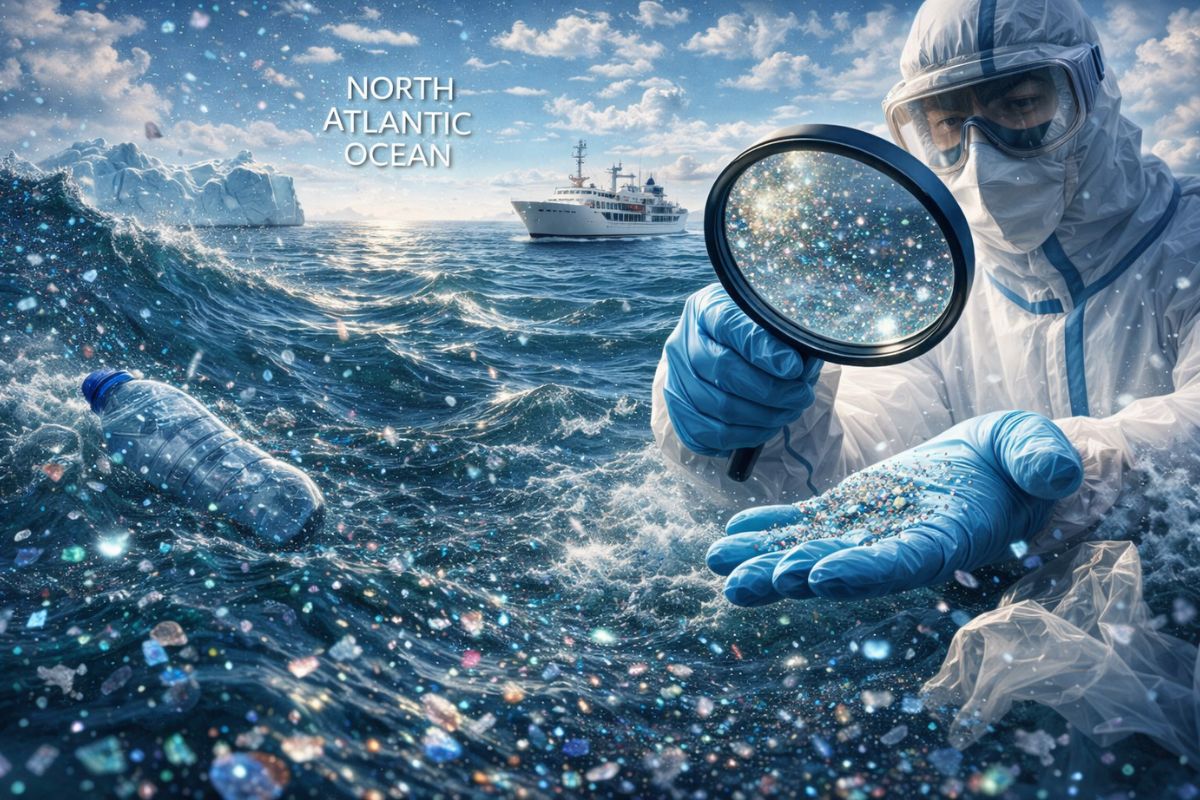
A study published in Nature revealed that the plastic missing from the oceans did not disappear; it degraded into nanoplastic so tiny that it became invisible to traditional monitoring methods, and researchers from NIOZ estimate that at least 27 million tons of these particles contaminate the North Atlantic and have already been found even in the human brain.
For decades, scientists faced a puzzle known as the “missing plastic paradox”: humanity produces hundreds of millions of tons of the material each year, a considerable fraction ends up in the oceans, but traditional measurements never managed to find the expected volume. Now, researchers from the Royal Netherlands Institute for Sea Research (NIOZ) and Utrecht University have solved much of this mystery. The plastic did not disappear; it just became invisible.
The study, published in Nature, revealed that discarded plastic has fragmented over the years into nanoplastic particles smaller than a micrometer, invisible to the naked eye and undetectable by traditional monitoring methods. The estimate is alarming: only in the North Atlantic, the upper ten meters of the water column harbor about 27 million tons of nanoplastic. And worse: these particles have already been found in blood, placenta, and even human brain tissue.
The missing plastic paradox: what the oceans hid

The problem began to intrigue the scientific community when the numbers simply did not add up. Global plastic production surpassed 300 million tons per year, and it is estimated that between 0.3% and 0.8% of all this material ends up in the Atlantic Ocean.
-
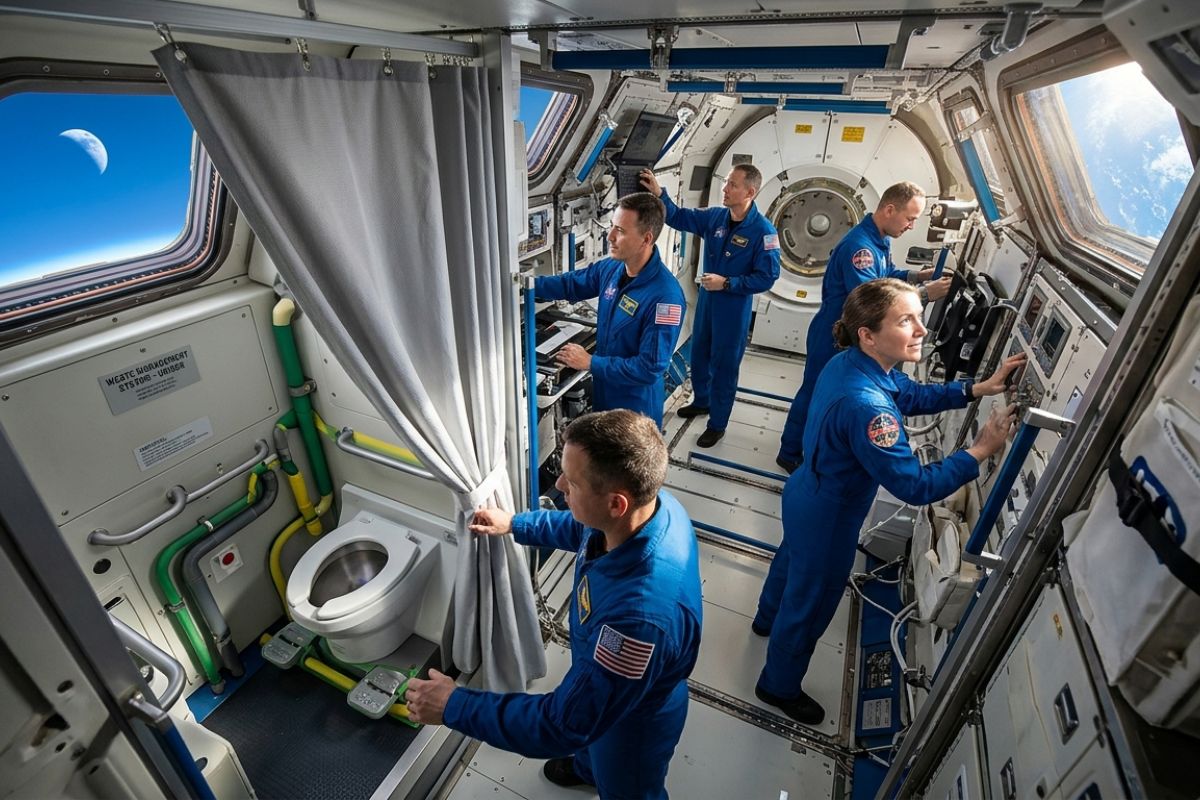
The Artemis II mission will take the Orion capsule back to the vicinity of the Moon with four astronauts, a private bathroom with a curtain, a system adapted for men and women, and a level of comfort that highlights how the Apollo era operated at the rawest limits of space exploration.
-
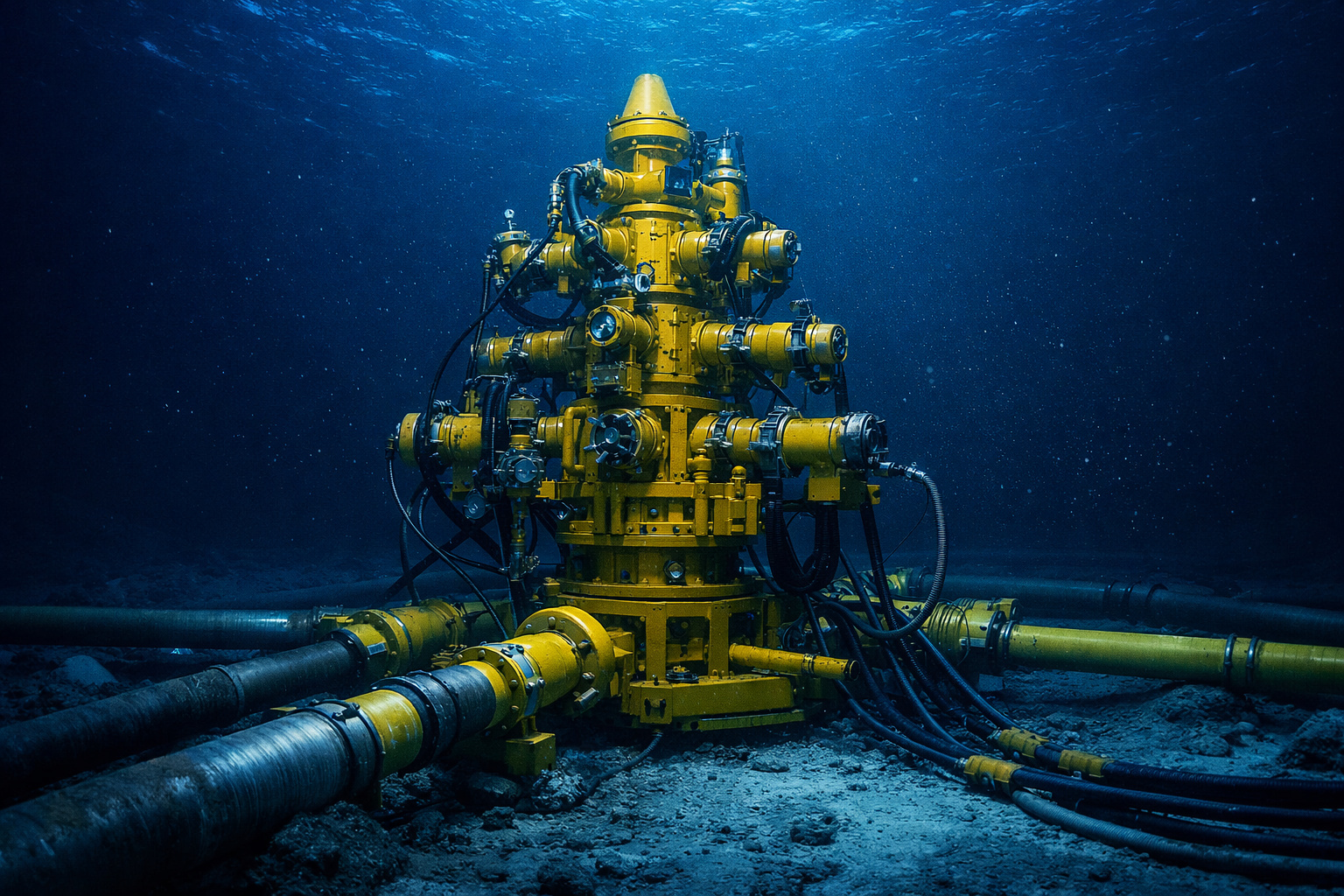
Giant structures on the seabed precisely control oil and reveal how high-tech underwater valves work.
-
China has just tested a giant drone the size of a fighter jet with a wingspan of 25 meters that carries 6 tons, flies for 12 hours, and the most frightening part: it can launch entire swarms of smaller drones directly from the air.

-
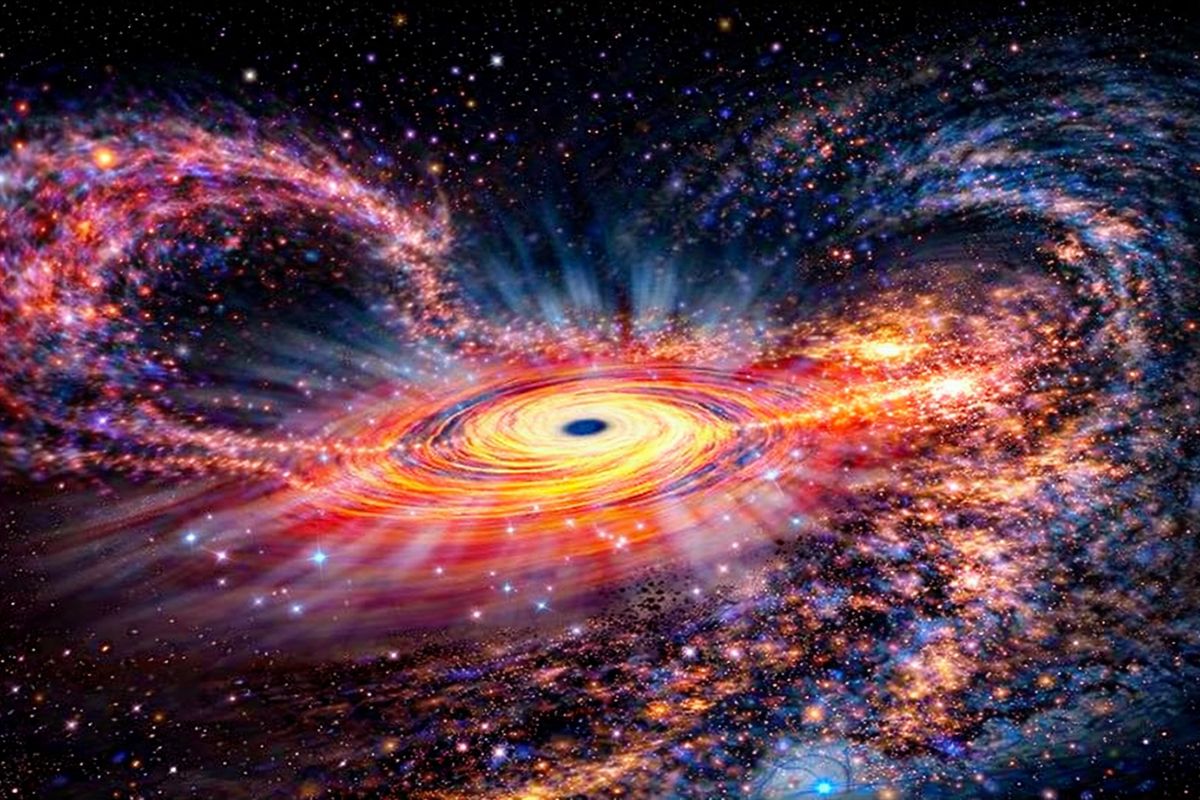
In the center of the Milky Way, there is a sleeping monster with a mass of 4 million suns, and NASA has already set the date for its awakening: in 2 billion years, a neighboring galaxy will collide with ours and feed it with fresh gas.

But when researchers went out to measure pollution by collecting bottles, caps, nets, and visible fragments, the amount found was a tiny fraction of the expected volume. Billions of tons of plastic produced over decades seemed to have simply evaporated.
The answer, we now know, is that plastic did not disappear. It degraded. The combined action of sunlight, waves, salinity, and chemical processes breaks the material into smaller and smaller pieces, first into microplastic (particles smaller than 5 millimeters), then into nanoplastic, fragments less than one micrometer in diameter, that is, smaller than one-thousandth of a millimeter. At this scale, plastic literally becomes invisible: it passes through nets, filters, and practically all environmental monitoring instruments used to date.
How scientists measured what no one could see

To find the plastic that had escaped decades of measurements, the team led by Dušan Materić conducted a four-week expedition in the North Atlantic aboard the research vessel RV Pelagia. Samples of seawater were collected at 12 different stations between the Azores and the European continental shelf, at three distinct depths from the surface to 4,500 meters.
The samples were filtered to remove any larger particles, isolating only the microscopic material.
In the laboratory, researchers used advanced mass spectrometry techniques to identify the characteristic molecules of different types of plastic—a kind of chemical “fingerprint” that reveals the presence of the material even in tiny concentrations.
The highest concentrations of nanoplastic were found near the coasts and at the surface of the water, but the material also appeared at great depths. By extrapolating the data for the entire studied region, the team arrived at the estimate of 27 million tons of nanoplastic only in the upper ten meters of the North Atlantic.
Sophie ten Hietbrink, co-author of the study, said that the surprise was not finding nanoplastic in the ocean—that was already expected.
What shocked the team was the amount: “It’s a shocking quantity,” she stated in an official note. According to the authors of the research, nanoplastic likely represents the largest fraction of the total mass of plastic present in the oceans—greater than everything that can be seen floating on the surface.
From ocean to brain: the path of nanoplastic inside the human body
The problem is not limited to the marine environment. Nanoplastic is small enough to cross biological barriers that larger particles cannot surpass. Recent studies published in Nature Medicine found these plastic particles in human brain tissue at concentrations seven to 30 times higher than in the liver and kidneys.
Matthew Campen, a professor at the University of New Mexico and co-author of this research, revealed that the brain samples contained the equivalent of a spoonful of micro and nanoplastic per person.
The trajectory of these particles begins in the oceans and rivers, passes through the food chain, and reaches the human body through three main pathways: ingestion of contaminated food and water, inhalation of airborne particles, and absorption through the skin.
Fish and seafood living in waters contaminated by plastic accumulate nanoplastic in their tissues, and this material rises through the food chain until it reaches people’s plates. A 2024 study showed that a liter of bottled water contains on average 240,000 plastic particles, of which 90% are nanoplastic.
The health consequences are still being investigated, but the signs are concerning. Research has already linked the presence of micro and nanoplastic to higher risk of heart attack, stroke, and death in patients with plastic in the plaques of the carotid arteries.
People diagnosed with dementia showed plastic levels in the brain three to five times higher than cognitively healthy individuals.
Moreover, scientific reviews published in 2026 by Embrapa and Unesp indicate that these particles may act as endocrine disruptors, interfering with hormone action from gestation.
Why nanoplastic from the ocean is practically impossible to remove
Removing bottles, nets, and bags from the ocean is already a huge logistical challenge. Removing nanoplastic is, in practice, impossible with current technology. These particles are dispersed in trillions of liters of water, mixed with salinity and marine organisms, at depths ranging from the surface to over four thousand meters. There is no filter, net, or system capable of separating nanoplastic from seawater on an oceanic scale.
Helge Niemann, a geochemist at NIOZ and co-author of the study, summarized the problem: now that it is known that nanoplastic is so common in the oceans, it is evident that these plastic particles penetrate the entire ecosystem from microorganisms to fish and top predators in the chain, including humans.
The authors of the research argue that, given the impossibility of cleaning, the only truly effective strategy is to prevent more plastic from reaching the oceans before it transforms into nanoplastic—a problem that is invisible and, for now, irreversible.
What every person can do to reduce exposure to plastic
Although the problem requires coordinated action among governments, industries, and international organizations, researchers point out individual measures that can reduce exposure to plastic in daily life. Avoiding heating food in plastic containers is one of the most repeated recommendations by the scientific community, as heat accelerates the release of micro and nanoplastic into food.
Switching from plastic bottles to glass or stainless steel, thoroughly washing fish and removing the digestive tract before consumption, and opting for smaller fish that accumulate fewer pollutants are other recommendations from experts.
In the political arena, progress is still slow. During the UN Ocean Conference in 2025, representatives from various countries recognized plastic pollution as a threat to human health and marine life, but binding measures are still scarce.
The authors of the NIOZ study are direct: as long as plastic continues to reach the oceans at the current scale, it will continue to degrade into nanoplastic, and the problem will only grow. The window to act, scientists say, is now—before contamination reaches a truly irreversible point.
The plastic we cannot see may be the most dangerous of all
The discovery of 27 million tons of nanoplastic in the North Atlantic solves part of the mystery that has intrigued scientists for decades, but opens an even more unsettling chapter. The plastic that disappeared did not go away; it just became too small to be seen, too small to be removed, and small enough to enter the human body.
It is in the water we drink, in the fish we eat, in the air we breathe, and, according to the latest research, it is literally inside our brains.
The scenario is a clear warning: plastic pollution is not an aesthetic problem of dirty beaches; it is a global public health crisis that has already settled at the cellular level of living organisms. And unlike other pollutants, the nanoplastic dispersed in the oceans cannot be collected. The only response is to prevent more material from reaching there.
With information from the study Nature.
After learning that the plastic from the oceans is inside your body, would you change any habits? Would you switch from a plastic bottle, avoid the microwave with plastic containers? Share in the comments what you think about this scenario and what you are already doing (or plan to do) to reduce your exposure.









Seja o primeiro a reagir!