





 Portuguese
  English
  Spanish
  3 min of reading
  0 comments


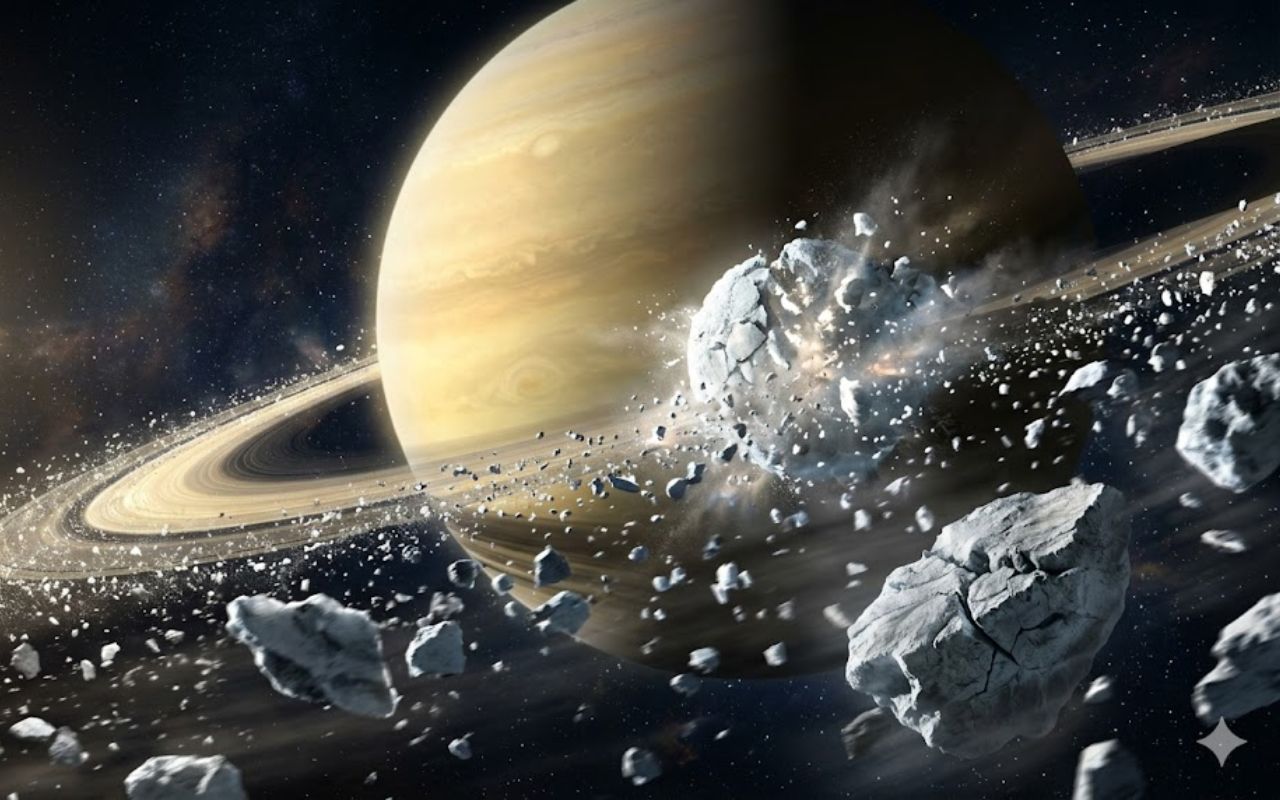
Study indicates that Saturn’s rings formed 100 million years ago from the moon Chrysalis. Ice fragments accumulated in orbit, creating the iconic structure of the gas giant.
Saturn’s rings, which have fascinated astronomers and curious minds for centuries, may have formed much more recently than previously thought. A study presented at the 2026 Lunar and Planetary Science Conference in Texas (USA) indicates that they emerged approximately 100 million years ago, following the destruction of a hypothetical moon called “Chrysalis.”
According to simulations, the ice released during the moon’s fragmentation spread into orbit around the planet, forming the bright structure that now encircles Saturn.
This discovery also reinforces the idea that Saturn’s rings are composed almost entirely of pure water ice, indicating a relatively recent origin and explaining their surprising cleanliness compared to other ancient space formations.
-
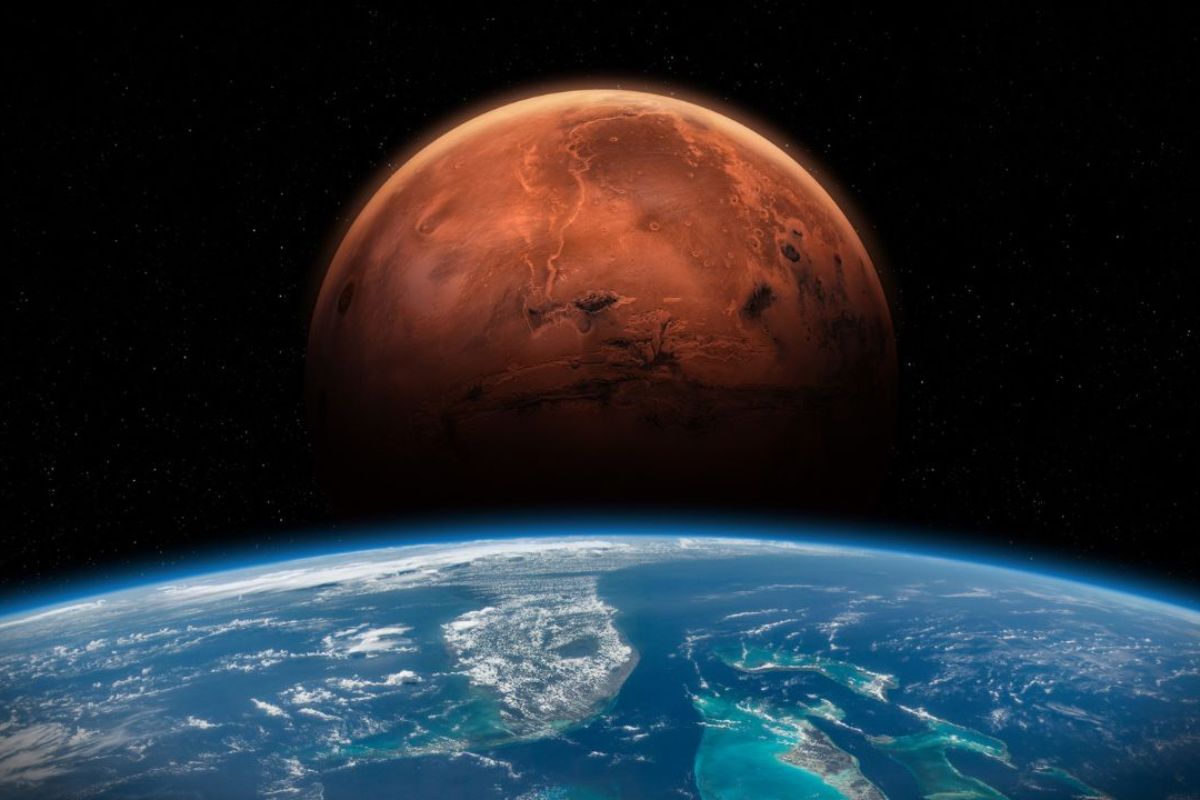
A Brazilian who does not work at any space agency calculated a round trip route to Mars in just 7 months using asteroid trajectories as cosmic shortcuts, and the study was accepted by one of the most prestigious scientific journals in the world.
-
A continent of plastic that keeps growing: what no one tells you about the largest garbage dump in the world, which continues to grow endlessly.

-
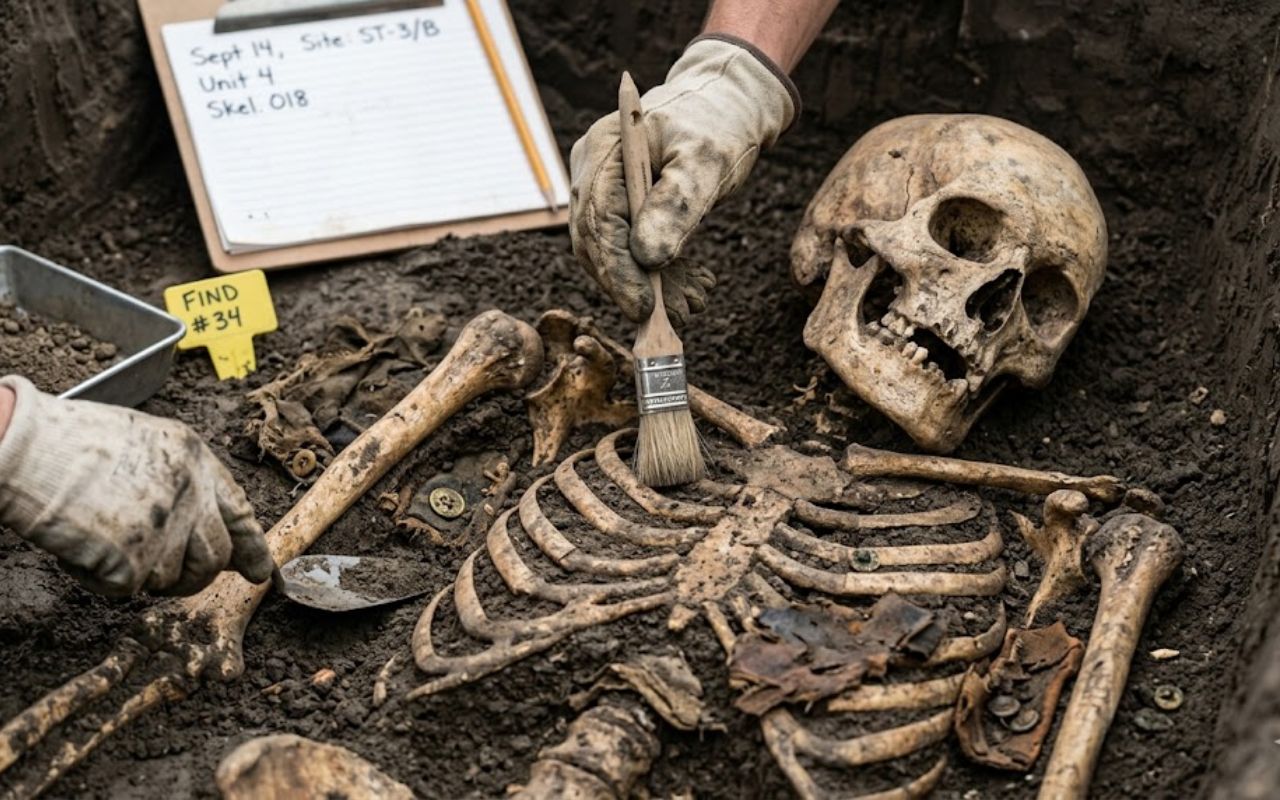
Archaeologists in the United States find the grave of a young 22-year-old soldier hastily buried during a hurricane; the discovery reveals how yellow fever killed soldiers over 150 years ago.
-
New German Zeiss lenses arrive in Brazil promising to reduce mental effort by up to 90% and revolutionize the way we see amidst the excess of screens.
Initial formation of Saturn’s rings from Chrysalis
The study details that Chrysalis had a rocky core surrounded by an ice mantle. As it approached Saturn too closely, tidal forces — gravitational variations that cause stress on nearby bodies — fragmented the icy mantle, while the core remained almost intact.
The ice fragments began to orbit the planet, forming the first elements of Saturn’s rings. Most of the rocks remained on the remaining moon, explaining why the rings are almost entirely icy.

Surprising composition and purity
Saturn’s rings are composed of about 98% pure water ice, an unusual index for structures exposed to space for millions of years.
This purity suggests that the rings did not form alongside Saturn but have a relatively recent origin, derived from the fragmentation of Chrysalis.
Furthermore, the predominance of ice over rocks reinforces the hypothesis that only the icy mantle of the moon was released, while the core remained intact.
Mass reduction and influence of the moons
After the moon’s fragmentation, not all fragments remained in orbit. Some of the ice particles were ejected into space, while the rest formed Saturn’s rings.
Initially, the rings may have been denser and more extensive, but the gravity of moons like Titan reduced their mass by up to 70%, shaping the appearance we observe today.
This process explains why the rings are relatively thin, even though they are rich in ice and composed of particles that emerged from a relatively recent event.

Traces of the event on Saturn’s moons
Fragments detached from Chrysalis may have been captured by some of Saturn’s moons, leaving traces that indicate the history of the fragmentation.
These traces allow scientists to study the origin of Saturn’s rings and the dynamics of the Saturnian system.
Future missions to the planet and its moons may confirm these traces, providing more details about the composition, density, and dynamics of the particles that formed the rings.
New perspective on Saturn’s rings
The study reinforces that Saturn’s rings are dynamic, young structures resulting from complex processes of fragmentation and mass redistribution.
Understanding their formation helps to better understand the evolution of planetary systems and the interaction between giant planets and their satellites.
This discovery opens new perspectives for future investigations into Saturn, its moons, and the mechanisms that shape planetary structures over time.
With information from Olhar Digital








Seja o primeiro a reagir!