





 Portuguese
  English
  Spanish
  3 min of reading
  0 comments


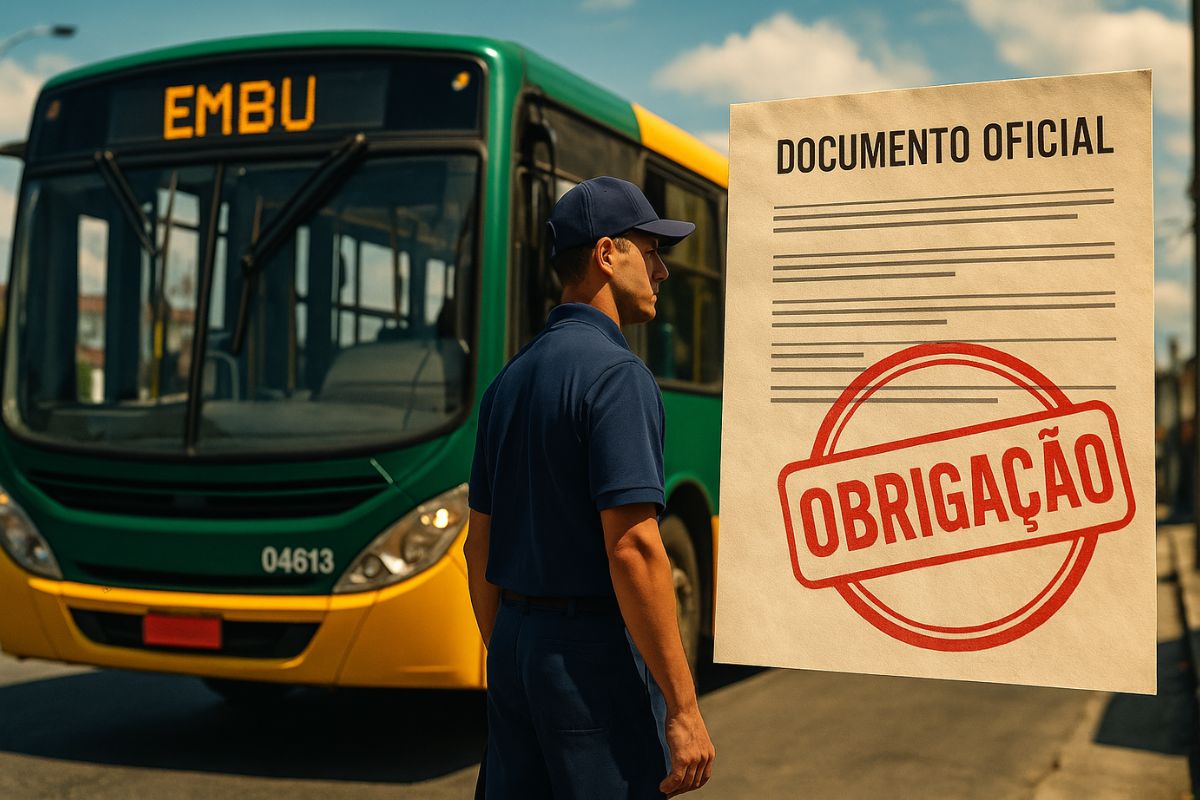
If The Boss Does Not Pay The Transport Allowance, You Are Not Obligated To Work, Explains Lawyer Laura M. Dutra. Specialist In Labor Law Details What The Law Says About The Employer’s Obligation To Provide The Benefit
The lawyer Laura M. Dutra explained that, if the boss does not pay the transport allowance, the worker is not obligated to incur this expense to go to work. According to her, the law is clear: the benefit is the company’s obligation, and its absence can even justify the absence without punishment or the indirect termination of the contract.
This topic is central to millions of Brazilians who rely on public transportation. Although it is guaranteed by legislation, the failure to provide the transport allowance is still one of the most common infractions committed by employers, which can lead to lawsuits and compensation.
What Does The Legislation Say About The Transport Allowance?
Law No. 7,418/1985 and Law No. 7,619/1987 determine that the employer must provide the transport allowance to every worker who uses public transport. The benefit is not considered salary and can have a deduction of up to 6% of the basic salary, with the remainder covered by the company.
-
Brazilian city bets on the business environment to generate jobs and attract investments in the energy sector — secretary reveals strategy at Macaé Energy 2026.

-
50 viaducts, 4 tunnels, 28 bridges, and 40 kilometers of bike paths: BR-262 in Espírito Santo will receive 8.6 billion reais for the largest engineering project in the state’s history, inspired by the Immigrant Highway in São Paulo.

-
Brazil produces too much clean energy and doesn’t know what to do with it: over 20% of solar and wind capacity was wasted in 2025 while investors flee and 509 renewable generation projects were abandoned in the last year.

-
Piauí will produce a new fuel that replaces diesel without needing to change anything in the truck’s engine and reduces pollutant gas emissions by half: truck drivers from all over the Northeast are already celebrating the news that will arrive later this decade.


Additionally, the Decree No. 10,854/2021 reinforces that cash payment is prohibited, except in exceptional cases, and that reimbursement must be immediate. This ensures greater transparency and prevents abusive practices.
What Does The CLT Foresee In Case Of Non-Compliance?
The Article 483 of the CLT establishes that the worker may consider their contract terminated if the employer commits a serious fault. The omission in providing the transport allowance falls under this situation, as it prevents the employee from attending work.
The jurisprudence of the Superior Labor Court (TST) and various Regional Labor Courts confirms that the lack of this benefit can justify the indirect termination, guaranteeing the worker all the rights of an unjustified dismissal.
Can The Worker Miss Work Without Being Punished?
Yes. If the company does not provide the transport allowance, the employee cannot be punished for missing work. The absence is considered justified because the inability to travel arises from the employer’s failure, not from bad faith on the part of the worker.
This understanding reinforces the principle of objective good faith, which requires balance in contractual relationships. Failing to provide appropriate means of transportation is a breach of a basic duty, disrupting the labor relationship.
What Rights Are Guaranteed In An Indirect Termination?
If the worker opts for indirect termination, they will be entitled to:
- Salary balance
- Notice period
- Proportional vacation + 1/3
- Proportional 13th salary
- Withdrawal of the FGTS + 40% fine
- Guides for unemployment insurance
These rights ensure financial protection and prevent the employee from suffering losses due to a fault solely of the employer.
What To Do If The Company Ignores Complaints?
The recommendation is to record all attempts to resolve the situation, whether by email, letter, or internal protocol. If the company remains silent, this serves as evidence in any labor lawsuit.
Cases already judged, such as in the TRT-15, show that workers who documented the lack of payment were able to obtain the indirect termination and all severance payments.
The stance of lawyer Laura M. Dutra brings clarity to a basic right that many employers still violate. The transport allowance is a legal obligation, and its absence can result in serious consequences for the company.
And you, have you ever been in a situation where the boss did not pay the transport allowance? Do you think it is fair that the worker can miss work or request termination in these cases? Leave your opinion in the comments.









Seja o primeiro a reagir!