





 Portuguese
  English
  Spanish
  3 min of reading
  20 comments


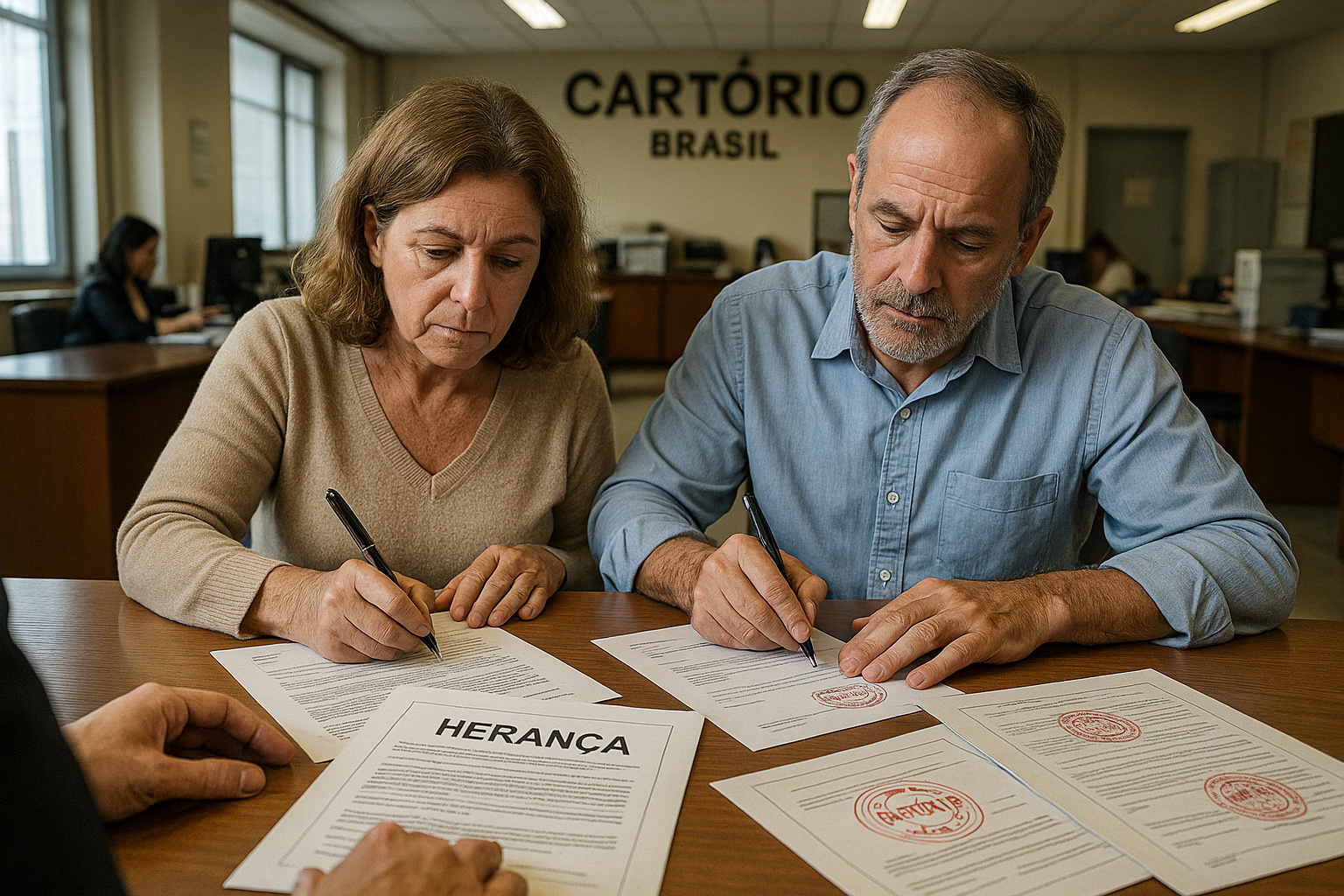


Bill No. 4/2025 Proposes to Exclude Husband and Wife from Mandatory Inheritance; Simulations in Different Property Regimes Reveal Changes in the Daily Lives of Brazilian Families
The Bill No. 4/2025, currently under review in the Senate, proposes to amend the Civil Code of 2002 to remove the spouse from the list of necessary heirs. If approved, only children and parents would have automatic rights to inheritance. The measure, which is already dividing opinions, raises questions about how inheritances would work in real-life situations.
Partial Community Property Regime
In the partial community property regime, the most common in Brazil, all assets acquired after marriage belong equally to the couple. Under the current rule, in addition to the half that is already theirs by right, the surviving spouse also inherits part of the other half. With the proposal, they would only keep their share, with no automatic inheritance rights, leaving the children as the sole heirs of the remainder.
-
Larger than entire cities in Brazil: BYD is building a 4.6 km² complex in Bahia with a capacity for 600,000 vehicles per year, but the discovery of 163 workers in conditions analogous to slavery has shaken the entire project.

-
With an investment of R$ 612 million, a capacity to process 1.2 million liters of milk per day, Piracanjuba inaugurates a mega cheese factory that increases national production, reduces dependence on imports, and repositions Brazil on the global dairy map.

-
Brazilian city gains industrial hub for 85 companies that is equivalent to 55 football fields.

-
Peugeot and Citroën factory in Argentina cuts production by half and opens a layoff program for more than 2,000 employees after Brazil drastically reduced purchases of Argentine vehicles.


This change could impact families where the residence was purchased jointly. Currently, the widow or widower would inherit part of the property; with the change, the other half could go directly to the children, generating conflicts over possession and use of the property.
Total Separation Property Regime
In the total separation of property, each party maintains what they acquired individually. Currently, even in this model, the spouse is a necessary heir and has the right to compete with the children. If the proposal is approved, they would only have access to what is in the will; otherwise, they could be left out of the inheritance, even after years of cohabitation.
This is one of the most controversial points, as couples who chose total separation for the purpose of asset organization still counted on the protection of mandatory inheritance. Without this rule, the financial security of the surviving spouse could depend solely on the wishes of the deceased.
Universal Community Property Regime
In the universal community property regime, all assets, acquired before or after marriage, belong to the couple. Currently, in addition to their share, the spouse is also an heir. With the change, the inheritance would be solely for the children, while the survivor would be limited to the half they already owned.
Although it may seem that there are no losses, practical situations can complicate the division. In family businesses or high-value properties, the spouse could lose autonomy over assets that were previously shared, becoming dependent on direct negotiations with the descendants.
Stable Union
In the case of a stable union, legally recognized as a family entity, current rules equate the partner to the spouse for inheritance purposes. Excluding the category of necessary heir would also affect this group, increasing insecurities in unions not formally registered in a notary’s office.
According to experts, the change may lead to greater demand for cohabitation agreements and wills as a means of securing rights for the surviving partner.
Financial and Social Impacts
This information was highlighted by Campo Grande News, which reported how the exclusion of the spouse from mandatory inheritance raises concerns about the future of asset protection. Families where only one partner has a primary income may be the most affected. Additionally, there is a risk of legal disputes, especially when children from different unions are involved.
What Could Change in Practice
In practice, if the new Civil Code is approved, the recommendation is for couples seek succession planning (as reported here in CPG), creating wills or pacts to secure rights for the surviving partner. The change, if enacted into law, will bring about a cultural shift, transferring the decision from the state to individual will expressed in formal documents.
And you, do you believe that the spouse should continue as a necessary heir to ensure family security, or do you think the new Civil Code should prioritize only children and parents, leaving the decision to the will?








Gente é só fazer testamento pronto…isso evita que um idoso por exemplo case com uma mulher mais nova…ela fica com a metade…e a ex que ajudou em tudo dança…e não resolve muito testamento….é so planejar a morte
Não,o conjuge não deve ser herdeiro necessário.
Sim,o cônjuge deve continuar como herdeiro, vive muitos anos juntos, constroem tudo juntos e vem uma lei **** e sem vergonha e quer tirar esse direito, não é justo para o que fica, fora a dor da perda, vão mudar essa lei que benefícia ****, corruptos , marginais e não no que tá certo.