





 Portuguese
  English
  Spanish
  3 min of reading


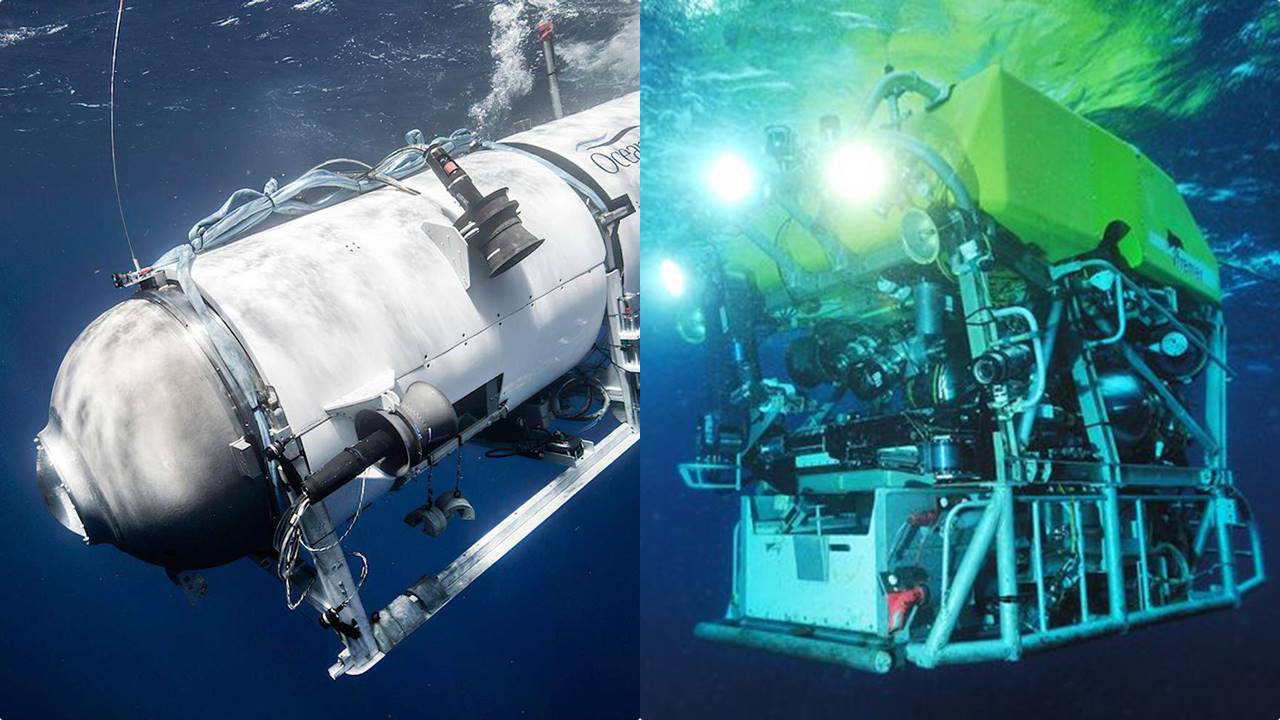
The ROV Is a Vehicle Prepared to Operate in Deep and Ultra-Deep Waters, Primarily in the Oil and Gas Industry, but a Relatively Simple and Obvious Safety Detail Shortened the Lives of 5 People
Both the ROV (short for Remotely Operated Underwater Vehicle) and submarines are vehicles built to operate beneath the ocean, at relatively high depths. While an ROV can easily exceed depths of more than 3 KM, submarines reach much less than that.
As reported by the media, a tourist submarine called Titan, operated by the company OceanGate, disappeared in the Atlantic Ocean during an expedition to the site where the Titanic sank. The submarine had five passengers on board when it disappeared on Sunday, June 18th.
Accident Could Have Been Avoided If It Had Been Tethered, Like a ROV
It is evident that the safety and effectiveness of any underwater mission depend heavily on the technologies used and the safety protocols followed. In the case of the Titan submarine, which disappeared during an expedition to the resting site of the Titanic, it seems there were failures in both aspects.
-
OceanPact Announces Acquisition of CBO and Creates One of Brazil’s Largest Maritime Support Structures with 73 Vessels, Annual Revenue Above R$ 4 Billion and R$ 14 Billion Backlog
-
With Extreme Winds, Giant Waves, and Unrestricted Currents, Drake Passage Is Considered the Most Violent Stretch of the Oceans
-
15th Century Merchant Ship Surprises Archaeologists
-
Odfjell Inaugurates First Operational Green Corridor Between Brazil and Europe Using Sustainable B24 on Maritime Routes and Reinforces Decarbonization Strategy
As mentioned by a ship pilot with experience in the Santo Basin, the use of Remotely Operated Vehicles (ROVs) is common practice in underwater missions due to their safety and effectiveness. A ROV can be operated from a surface vessel, controlled by a tethered fiber optic cable that transmits signals between the operator and the vehicle. This cable also supplies power to the ROV, eliminating the need for a power source on board and thus reducing the risk of oxygen depletion, as appears to have occurred with the Titan.
Additionally, the ROV can be equipped with acoustic transponders, allowing the support vessel to constantly monitor the position and depth of the vehicle. This would have provided a way to track the Titan in real-time, possibly allowing for a quicker response to its disappearance.

ROV Has Its Limitations Too
Compared to the Titan, a ROV seems to be a much safer and more efficient option for underwater explorations, especially at extreme depths like those of the Titanic. However, it is important to note that ROVs have their own limitations and may not be suitable for all situations. For example, they are generally unable to carry human passengers, which would be a disadvantage for underwater tourism.
Overall, it seems that the accident with the Titan could have been avoided, or at least mitigated, if stricter safety protocols and appropriate technologies, such as those used with ROVs, had been employed. This tragic situation serves as a stark reminder of the importance of safety and prudence in underwater exploration.
Updates on the Progress of the Titan Submarine Search
The United States Coast Guard, along with rescue teams from Canada and support vessels from France, are conducting a search and rescue operation. The initial forecast was that the oxygen available on board the submarine would last 96 hours after the disappearance, which ended today at 7 AM local time.
The search efforts have focused on an area of the ocean where underwater noises were detected by aircraft, which may indicate that the submarine is still intact. However, the nature of these noises has yet to be confirmed.
The searches are complicated by the depth at which the submarine may be located. The vessel from the U.S. Navy can only descend to about 600 meters, while the Titanic is nearly 3,900 meters deep. In this case, a remotely controlled vehicle could assist in the rescue and raise the vessel to the surface.
Ryan Ramsey, a former submarine captain of the Royal Navy, described the situation as “bleak” and stated that the chances of finding survivors are low. He indicated that the situation will likely shift from a rescue mission to a recovery mission in the coming days.







Seja o primeiro a reagir!