





 Portuguese
  English
  Spanish
  7 min of reading
  0 comments


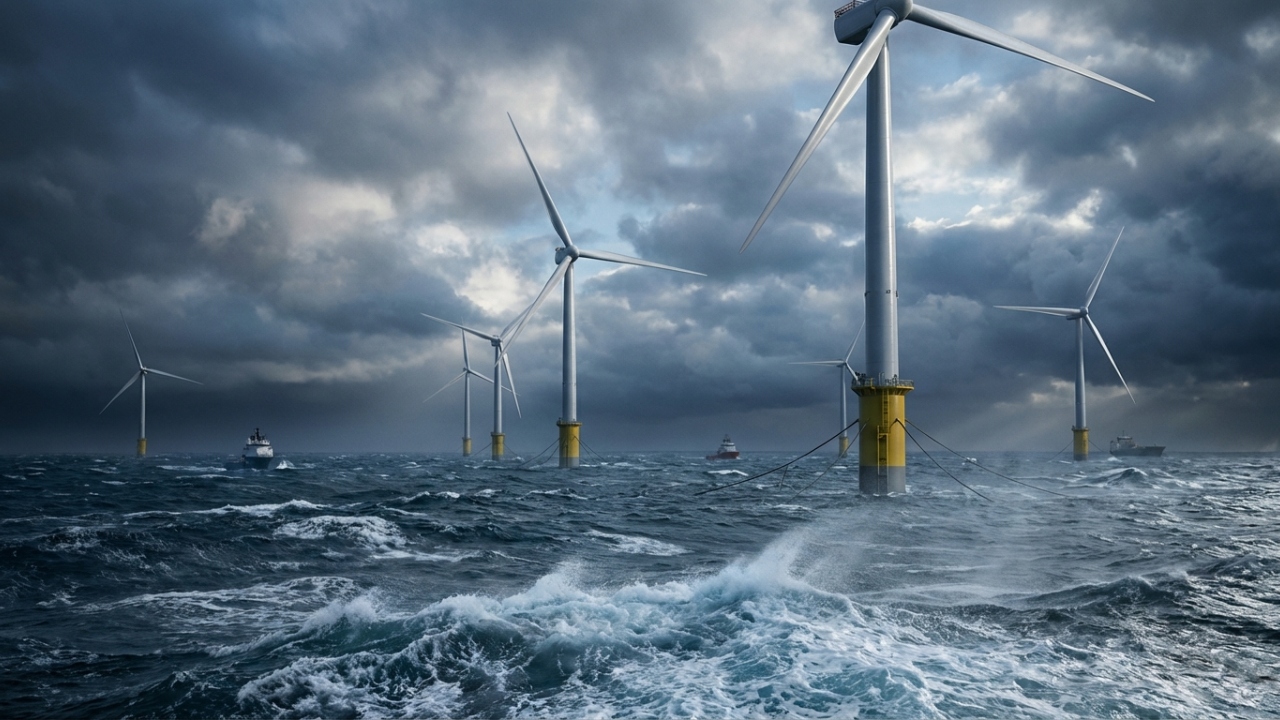
The oil and gas industry adopts the floating wind tower as a strategic solution to decarbonize offshore operations, reducing diesel and natural gas consumption at exploration and production units.
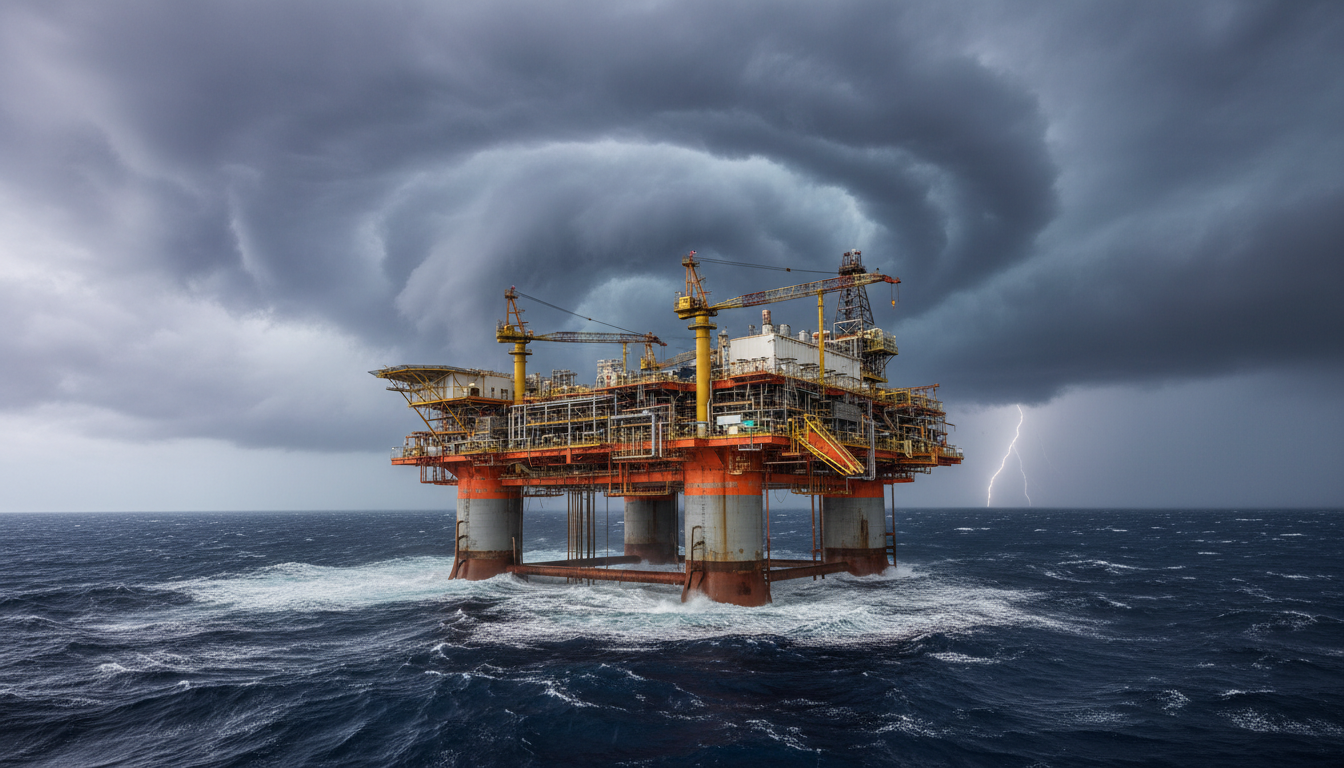
The energy sector is witnessing a technological milestone with the commissioning of a monumental floating wind tower designed to withstand the extreme conditions of rough seas and supply oil platforms with clean electricity.
This innovation allows giants in the oil sector to replace the burning of fossil fuels in their local generating turbines with a renewable and inexhaustible source.
Located in areas where ocean depth prevents the installation of conventional towers on the seabed, this structure floats on semi-submersible hulls anchored by high-strength cables. The design delivers energy directly to production units, thus drastically reducing greenhouse gas emissions during oil and gas extraction.
-
After a devastating fire that left 3 injured and 200 intoxicated by smoke in the Red Sea, the most expensive warship ever built — $13.3 billion — returns to the front in Iran after quick repairs in Croatia.
-
It shouldn’t exist — but it’s there: James Webb telescope captures impossible atmosphere on giant exoplanet that challenges all known astrophysics.

-
Seen from space, an image taken by an astronaut shows in Argentine Patagonia the exact point where a colossal glacier, a turquoise-blue lake, and a greenish arm of water meet, creating one of the rarest and most impressive landscapes in the region.

-
Workers are being forced to train the AI that will replace them in their jobs.

In addition to the environmental benefit, the technology reduces logistical operational costs, as it eliminates the need for constant diesel transportation to the platforms.
This integration of wind and oil signals a pragmatic energy transition, where existing offshore infrastructure accelerates the development of renewable solutions on an industrial scale.
The challenge of harnessing wind in ultra-deep waters
Offshore engineering faces colossal obstacles when deciding to install a floating wind tower in open sea regions. Unlike fixed towers, which engineers install at depths of up to 50 meters, floating versions conquer the horizon where the ocean reaches hundreds of meters in depth.
The wind in these areas blows with greater consistency and speed, enhancing energy generation per turbine.
To maintain the turbine’s stability while the waves batter the structure, the base utilizes principles of naval physics. The semi-submersible hull has ballast tanks that the control system manages automatically.
If the wind pushes the turbine to one side, the system compensates the weight to the other, keeping the blade in the ideal capture position. This dynamic balance ensures that the tower withstands severe storms without suffering structural damage or interruption in energy generation.
How does energy reach the oil platform?
Many curious individuals wonder about the electrical connection between the turbine and the extraction unit. The system uses dynamic submarine cables, known as umbilicals. These cables have special flexibility to follow the movement of the waves without breaking.
Electricity travels from the floating wind tower to a nearby substation or directly to the platform’s distribution system.
High voltage transformers: Raise the voltage to reduce losses during the underwater journey. Quick connectors: Allow for safe disconnection in cases of emergency or heavy maintenance. Monitoring systems: Optical fibers within the cables send real-time data about the health of the structure.

This electrical integration transforms the platform into a “hybrid island.” During periods of strong winds, the wind power takes on the entire load.
In calm moments, the platform’s gas generators kick in as backup, ensuring that oil production never stops due to lack of electricity.
Curiosity: The monumental size of these structures
The scale of a modern floating wind tower impresses even the most experienced observers in the naval industry. Each turbine blade can exceed 100 meters in length, covering a sweep area equivalent to several football fields.
When mounted on the floating base, the structure reaches a height greater than many famous skyscrapers.
To give an idea, the steel used in a single semi-submersible base would be enough to build thousands of compact cars. Transporting these giants requires powerful tugboats and millimeter-precise logistics.
The fact that these structures float allows assembly to occur entirely in the port, reducing the risks and costs of working with gigantic cranes in the open ocean.
Real impact on the decarbonization of the pre-salt and other basins
The oil exploration consumes a lot of energy. The pumps that extract oil from the seabed and the systems that separate gas, water, and oil require constant power. Traditionally, oil companies burn part of the extracted gas to generate this electricity.
By adopting the floating wind tower, the company stops burning this gas, reducing the carbon footprint per barrel produced.


This movement meets the demands of investors and governments for cleaner production. In Brazil, the potential for this technology in the pre-salt is immense. The wind currents off the Brazilian coast rank among the best in the world for offshore generation.
The implementation of these hybrid wind farms places the country at the forefront of maritime technology, thus combining deep-water exploration expertise with the new frontier of renewable energies.
Reduction of logistical costs and independence from fuels
Maintaining diesel generators in operation at sea requires a complex logistics chain. Support ships need to deliver fuel regularly, facing climatic risks and high freight costs. The floating wind tower offers a local, free, and inexhaustible energy source after the initial investment.
The savings generated by reducing fossil fuel consumption pays off the investment in the turbine in just a few years. Additionally, maintaining combustion engines in a saline environment is costly and frequent.
The wind turbines, designed for the marine environment, require fewer direct human interventions, using artificial intelligence sensors to predict failures before they occur.
This increases operational safety and reduces the need to maintain large technical teams on board just for energy generation.
The role of anchoring technology in rough seas
The secret to the survival of a floating wind tower in rough seas lies in the anchoring system. Engineers use suction anchors or piles driven into the seabed, connected to the platform by special steel chains or high-performance synthetic fiber cables.
These anchoring lines have a configuration that allows the tower to move slightly with the waves but never leave its original position. The design avoids material fatigue, ensuring that the structure withstands for over 25 years under the constant attack of corrosion and the force of ocean currents.
It is a demonstration of strength of modern naval engineering, applying concepts from oil platforms to support green energy generation.
The convergence between petroleum engineers and renewable specialists
The floating wind tower promotes an unprecedented union of minds. On one side, petroleum engineers bring decades of experience in offshore structures, metallurgy, and fluid dynamics. On the other, wind energy specialists bring advanced aerodynamics and power electronics.
This collaboration therefore accelerates the learning curve. The oil sector already has the ports, installation ships, and regulatory knowledge to operate at sea.
By “borrowing” this infrastructure for the wind sector, the energy transition occurs much more quickly than if the renewable sector had to build everything from scratch. Oil companies cease to be seen merely as oil extractors to become integrated energy companies.
The future: Floating wind farms and green hydrogen
The success of a single floating wind tower paves the way for entire industrial complexes in the ocean. The plan of major companies involves creating wind farms with dozens of interconnected turbines.
The surplus energy that the platforms do not consume can be sent to the mainland via long-distance submarine cables.
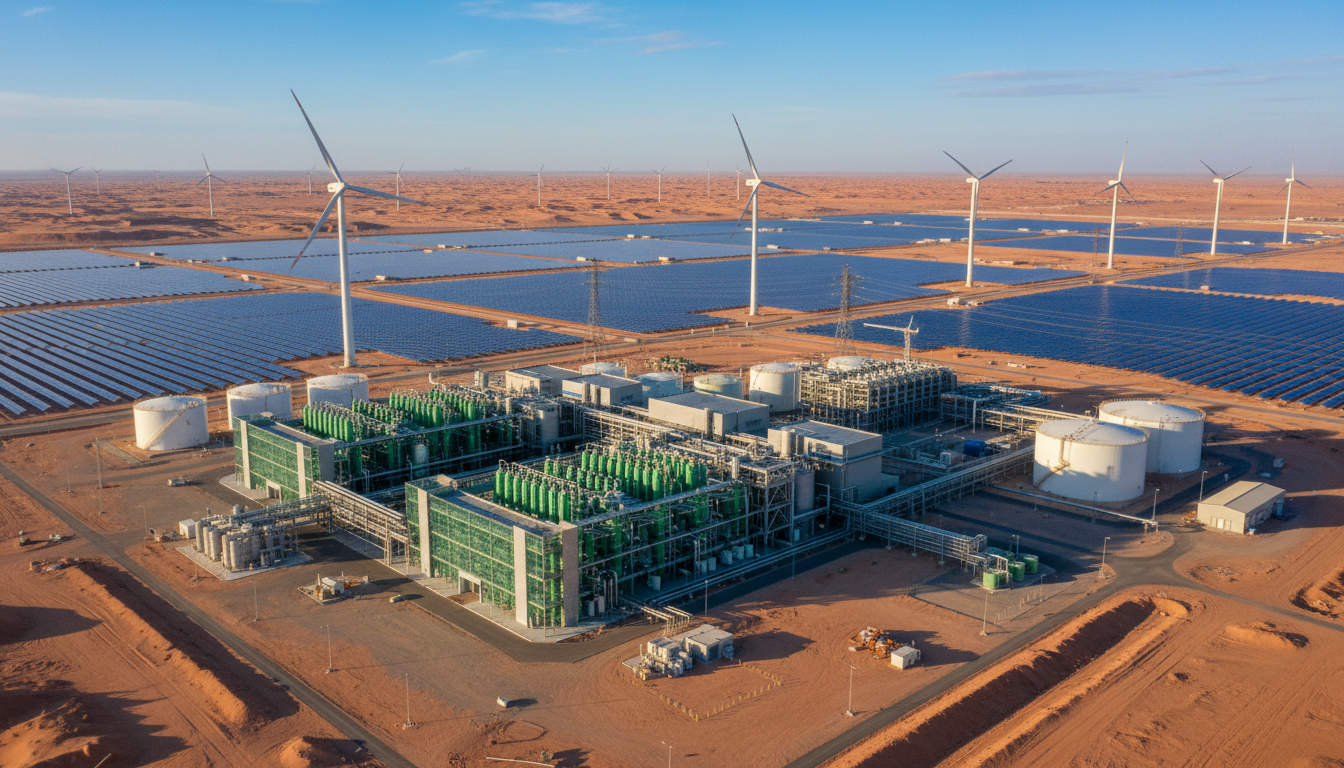
Another fascinating possibility is the production of green hydrogen offshore. The energy from the turbine powers an electrolyzer installed on a decommissioned platform, separating hydrogen from seawater.

This gas can be transported by ships or existing pipelines, serving as clean fuel for heavy industries on the mainland. Thus, the infrastructure that once served only for oil begins to produce the cleanest fuel on the planet.
Remote maintenance and the use of drones and robotics
Operating a floating wind tower in the middle of the ocean requires smart maintenance solutions. Sending technicians by helicopter or boat for every small inspection would be economically unfeasible. Therefore, these towers leave the factory filled with high-definition cameras, acoustic sensors, and thermal sensors.
Autonomous drones: Fly around the blades to detect micro-cracks without the need for industrial climbers.
Submarine robots (ROVs): Inspect the anchoring lines and electrical cables on the seabed.
Digital Twins: Software creates a virtual copy of the tower, allowing engineers to test storm scenarios and predict wear on parts from the mainland.
This digitization makes offshore wind energy more competitive and safe, minimizing human exposure to hazardous environments and ensuring that clean energy production is constant.
Integration as a path to sustainability
The implementation of the floating wind tower in oil operations proves that technology can unite seemingly opposing sectors for a common goal: energy efficiency. By using the wind from rough seas to power the extraction of mineral resources, the industry demonstrates maturity and capacity for innovation.
The world demands practical solutions to the climate crisis, and the electrification of the offshore sector is a fundamental step.
The monumental vision of giant turbines spinning alongside oil platforms symbolizes the future of energy: a hybrid, technological system increasingly independent of polluting fuels.
The success of these initiatives ensures not only the continuity of energy production but also the preservation of the oceans and the construction of a more resilient and conscious global economy.




Seja o primeiro a reagir!