





 Portuguese
  English
  Spanish
  6 min of reading
  6 comments


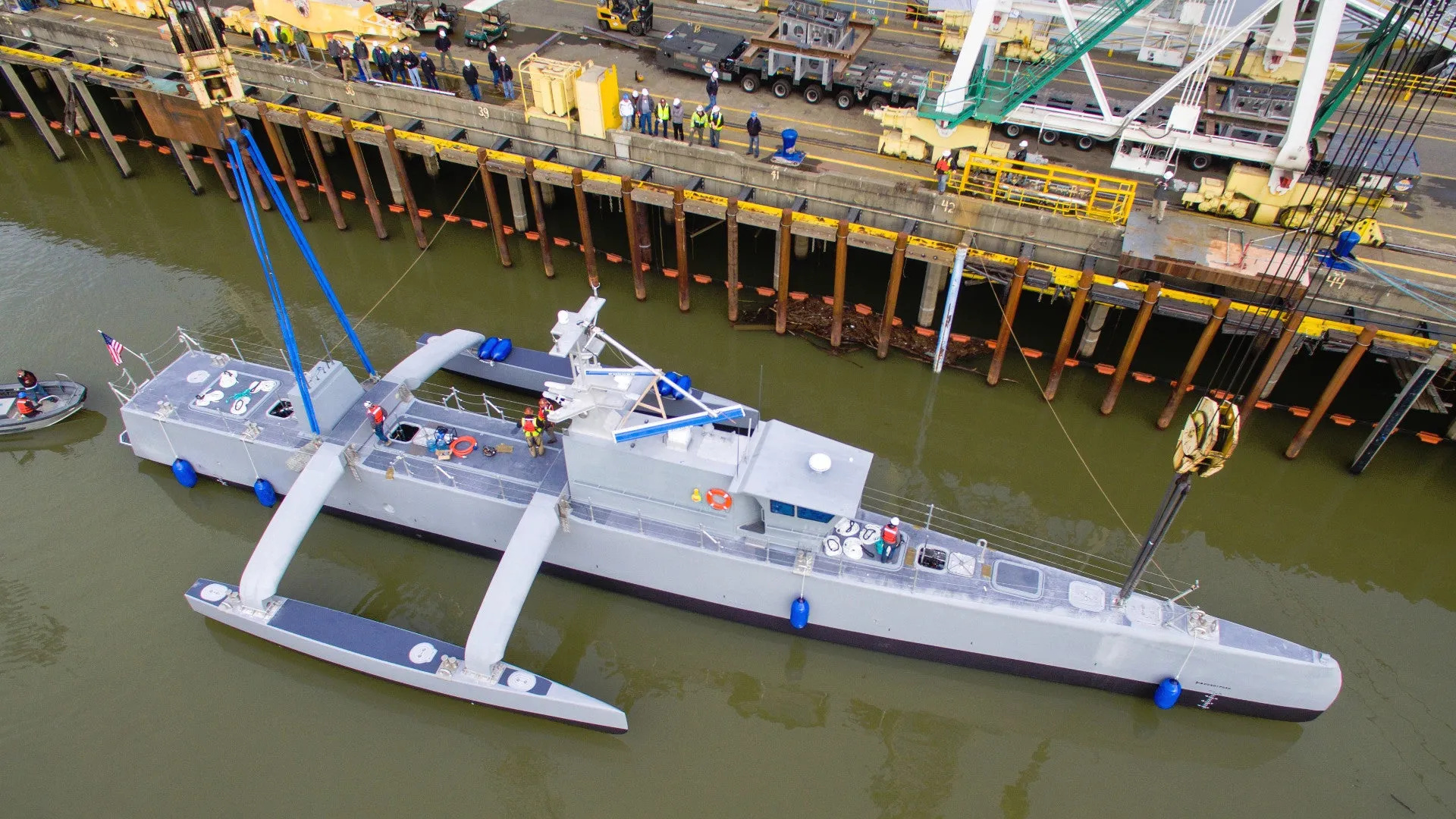


With 40 Meters and Autonomy Over 10,000 Km, the Sea Hunter Demonstrated That Military Vessels Can Cross Oceans and Operate for Months Fully Autonomous.
The history of naval warfare has always been marked by great technological leaps: from sails to steam, from steel to radar, from sonar to nuclear submarines. In the 21st century, a new turning point began to silently materialize in the oceans, far from the spotlight and large crewed fleets. This turning point is called Sea Hunter, an uncrewed military surface vessel that has practically demonstrated that ships can cross entire oceans, operate for months, and carry out complex missions with not a single crew member on board.
With 40 meters in length, a displacement comparable to that of a light patrol vessel, and an operational range exceeding 10,000 kilometers, the Sea Hunter is not a laboratory experiment nor a prototype limited to coastal testing. It was designed from the start to navigate in open ocean, comply with international maritime traffic rules, avoid collisions autonomously, and carry out extended surveillance and tracking missions. More than a vehicle, it represents a structural shift in the concept of naval presence.
The Birth of a New Class of Military Vessels
The Sea Hunter emerged from a concrete challenge faced by the United States Navy: how to monitor vast ocean areas continuously, silently, and at a much lower cost than traditional crewed ships.
-
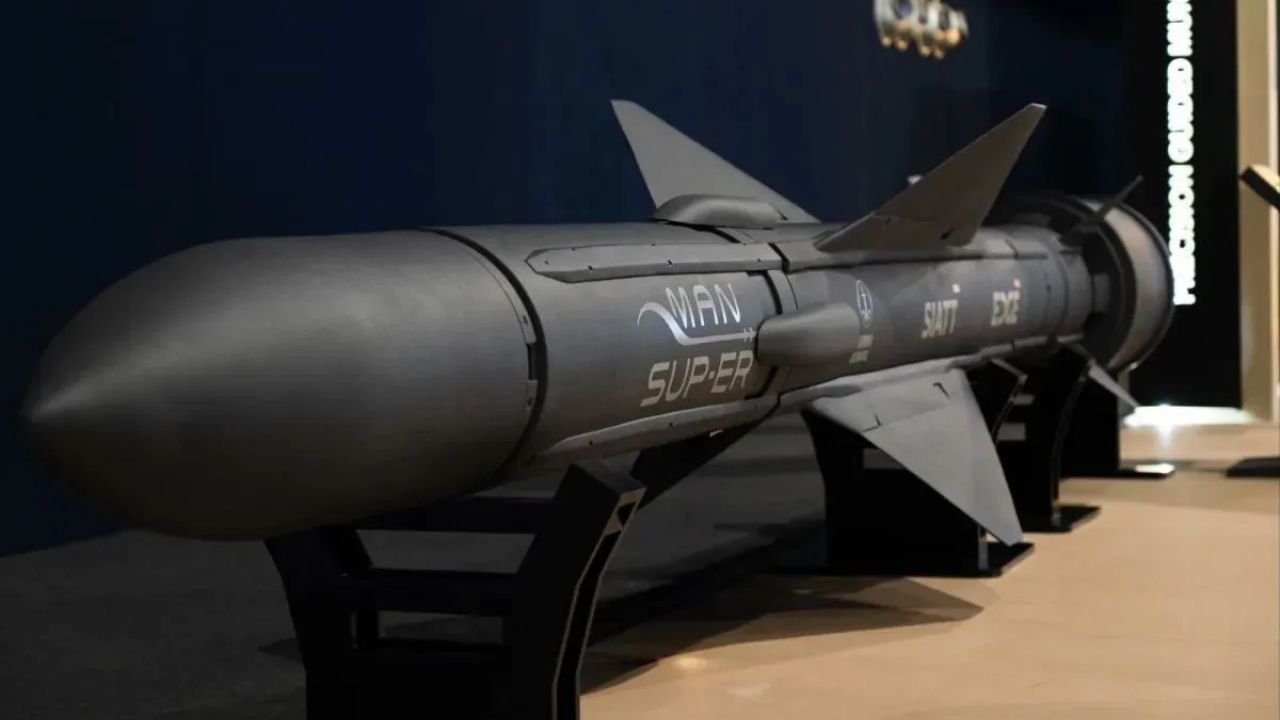
Brazil accelerates the evolution of the MANSUP missile, designing an air-surface version with a range exceeding 200 km, advanced guidance, and precision strike capability against land and naval targets, paving the way for a new generation of national armaments with global potential.
-
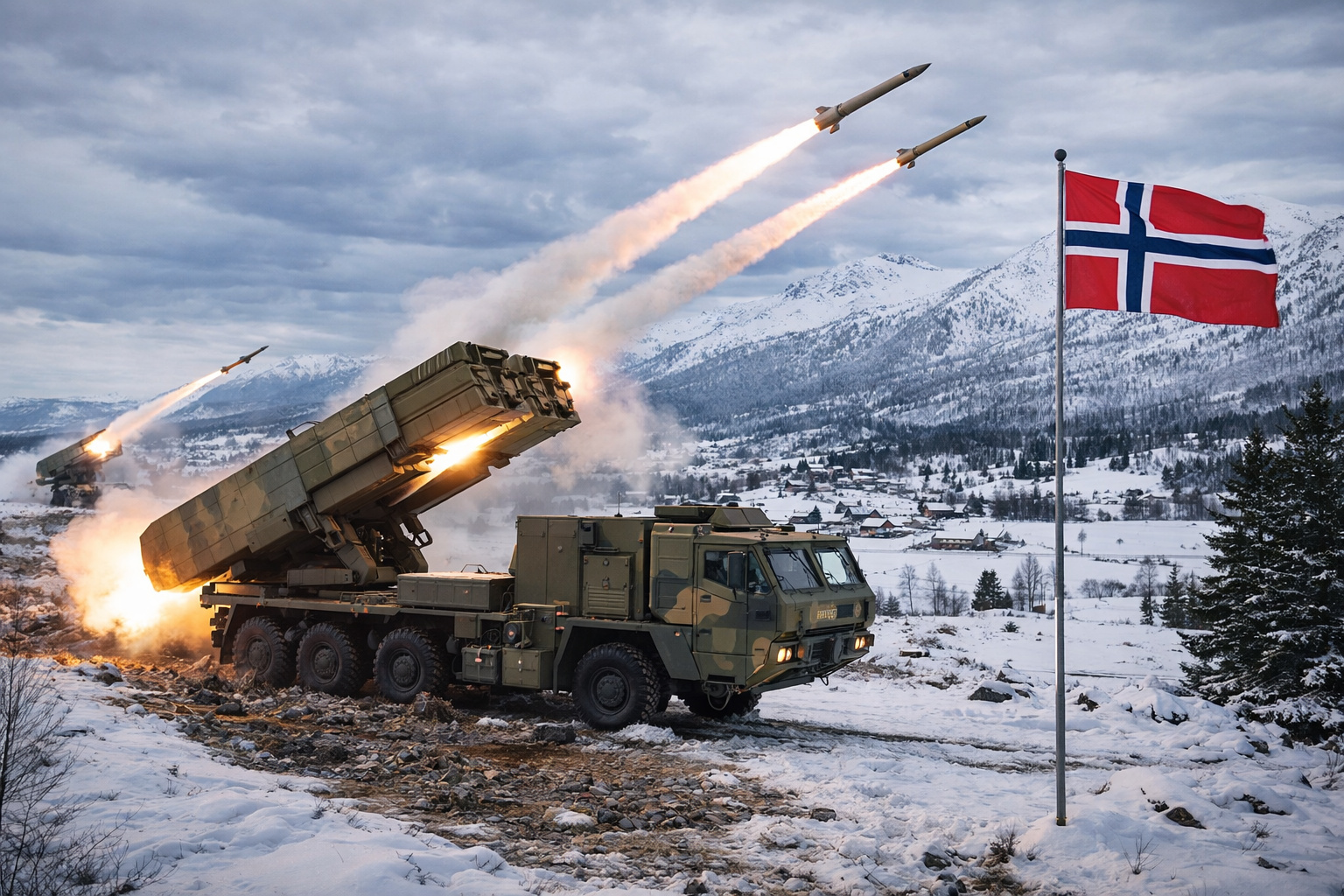
South Korea signs a $922 million deal with Norway, bringing Chunmoo launchers capable of firing guided missiles up to 290 km with an accuracy of 15 meters to Europe and turning the system into a key component of the new global race for precision artillery.
-
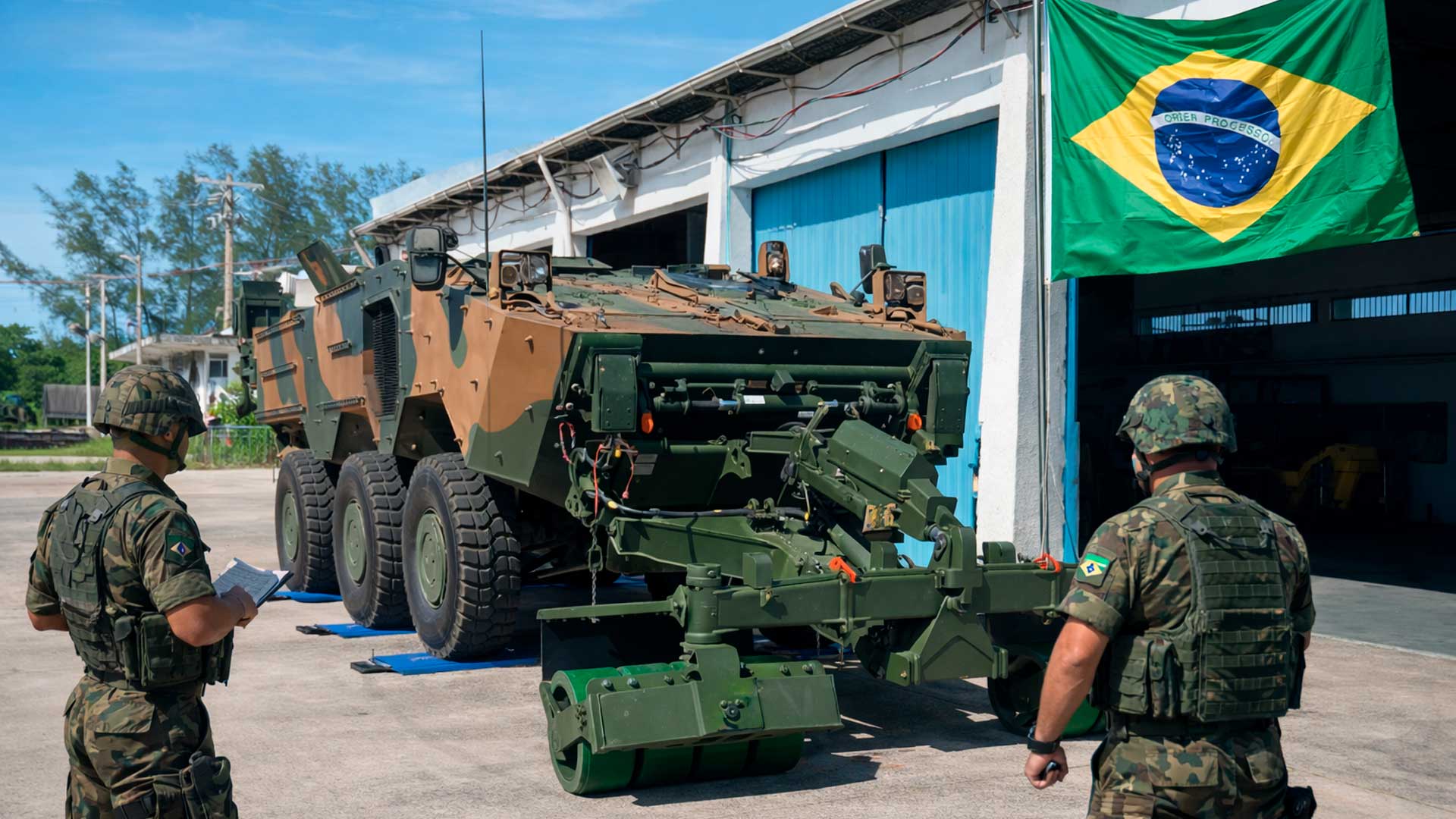
Brazil advances with decisive tests until June, the 6×6 Guarani armored vehicle with engineering equipment enters the most important phase and can enhance the operational capability of the Army.
-
Furnas Airport is handed over to the Navy and becomes a strategic base with complete military operations, attack drones, and international mobilization at Furnas Lake.

In a scenario of increasing naval competition, especially in strategic regions such as the Pacific and North Atlantic, maintaining a constant presence requires increasingly larger human, logistical, and financial resources.
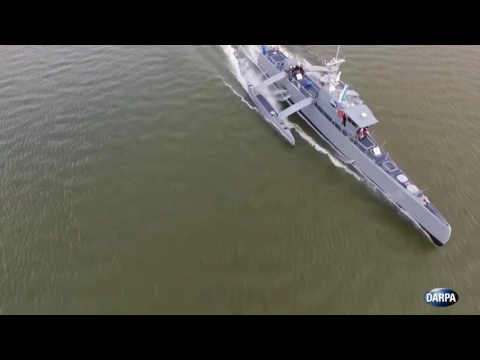

It was in this context that DARPA launched the ACTUV program (Anti-Submarine Warfare Continuous Trail Unmanned Vessel). The objective was not to create a “naval drone” in the popular sense, but rather to develop a large autonomous surface vessel capable of operating alone for long periods, tracking enemy submarines without exposing itself or escalating conflicts.
The result was the Sea Hunter, launched in 2016 as one of the first USVs (Unmanned Surface Vehicles) designed for real, extended, transoceanic missions.
Dimensions, Autonomy, and Technical Data That Changed the Game
The numbers of the Sea Hunter help to understand why it stands out even among other unmanned vessel projects. With approximately 40 meters in length and a hull designed for stability in open waters, it is large enough to face adverse conditions but small enough to operate with reduced costs.
Its range exceeding 10,000 km allows it to cross oceans without the need for frequent refueling, something essential for extended surveillance missions.

The propulsion system has been optimized for energy efficiency, prioritizing endurance and staying power at sea over maximum speed. Nevertheless, the Sea Hunter is capable of achieving speeds compatible with tactical naval operations.
Another crucial aspect is the ability to remain operational for months on end, something unfeasible for crewed ships without intense logistical support. Without a crew, human limitations such as fatigue, daily supply needs, and direct risks to life are eliminated.
Autonomous Navigation in Open Ocean: The True Advancement
The most revolutionary aspect of the Sea Hunter is not just its physical autonomy, but its cognitive autonomy.
The vessel was designed to navigate independently in congested routes, respecting international sea collision avoidance rules (COLREGs), which govern the behavior of ships worldwide.
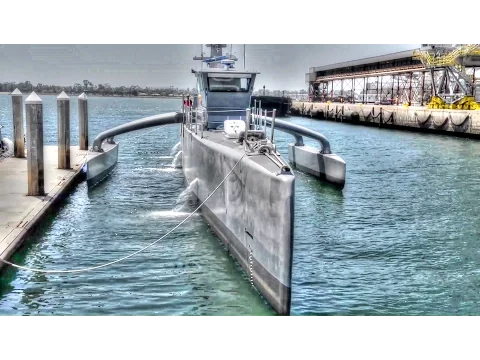
This means that the Sea Hunter not only follows a pre-programmed route but also interprets the environment around it, identifies other vessels, assesses collision risks, and makes real-time decisions. This capability has been tested in real scenarios, including long crossings and busy routes.
One of the most symbolic milestones was autonomous navigation between California and Hawaii, a distance of thousands of kilometers in open ocean, accomplished without direct human intervention. This feat solidified the Sea Hunter as a platform capable of operating outside controlled areas, something that few unmanned systems had demonstrated until then.
Surveillance and Anti-Submarine Warfare Missions
The Sea Hunter was primarily designed for anti-submarine tracking and surveillance missions. Modern submarines, especially those powered by nuclear propulsion, are difficult to detect and can remain submerged for long periods, posing a significant strategic threat.
The logic of the Sea Hunter is simple and efficient: instead of employing large crewed ships or expensive aircraft for continuous surveillance, the Navy can utilize autonomous vessels to silently follow targets for days or weeks, relaying information to command centers or other fleet units.
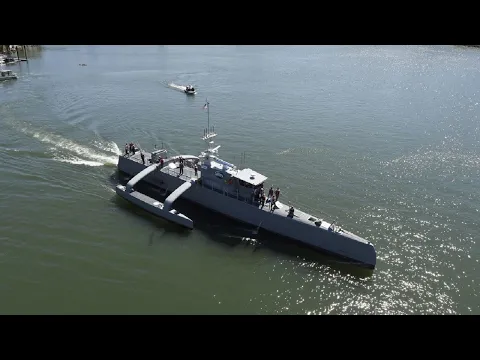
This approach reduces costs, increases surveillance persistence, and diminishes human risks. At the same time, it creates a distributed network of mobile sensors in the ocean, drastically enhancing naval situational awareness.
Operational Costs and Strategic Impact
One of the strongest arguments in favor of the Sea Hunter is its reduced operational cost. Traditional warships require large crews, constant maintenance, and complex logistical chains. Each day of operation represents a significant expense.
In contrast, an autonomous vessel like the Sea Hunter can operate for long periods at much lower costs, allowing for persistent presence in strategic areas without compromising budgets or human resources. This paves the way for a new naval doctrine, based on quantity, distribution, and permanence, instead of a few extremely expensive assets.
From a strategic perspective, this alters the naval balance of power. Countries capable of operating large fleets of USVs gain an advantage in surveillance, deterrence, and information gathering, even without drastically expanding their traditional navies.
The Sea Hunter and the Future of Uncrewed Fleets
The success of the Sea Hunter does not mean the end of crewed ships but points towards a hybrid model of naval operations. In the future, large crewed vessels are expected to function as command centers, while USVs like the Sea Hunter carry out patrol, escort, surveillance, and even light logistics missions.
This integration allows for greater tactical flexibility and reduces human exposure in high-risk scenarios. Moreover, it paves the way for the development of even larger, more autonomous, and specialized vessels capable of operating in a network.
The experience gained with the Sea Hunter is already influencing new projects, both in the United States and other naval powers, which have begun to invest heavily in unmanned surface platforms.
Why the Sea Hunter Represents a Historic Breakthrough
The Sea Hunter is not just another incremental innovation. It represents a conceptual breakthrough in the way naval presence is exercised. For the first time, it has become clear that large vessels can operate reliably, autonomously, and for extended periods in open oceans, without relying on human crews.
This advancement redefines concepts such as patrol, surveillance, and maritime control. It also raises debates about ethics, maritime law, and rules of engagement in a world where ships can make navigation decisions independently.
Regardless of these discussions, the fact is that the Sea Hunter has already fulfilled its historic role: proving that autonomous navigation on a transoceanic scale is no longer theory but operational reality.
A Silent Milestone That Anticipates the Next Naval Era
While large warships attract attention in parades and military exercises, the Sea Hunter advances discreetly yet profoundly transformative. It does not impress with weaponry or colossal size but with the ability to remain invisible, persistent, and efficient.
In the long run, projects like the Sea Hunter are likely to redefine not only naval warfare but also how the oceans are monitored, protected, and understood. Just as submarines forever changed maritime strategy in the 20th century, autonomous surface vessels are now beginning to shape the 21st century.








Sempre tem entendido pra desconstruir!
Brasil pais distribuidor do conhecimento e heróis.
Sempre tem um entendido pra contrapor o conhecimento.
Brasil país destruídor de conhecimento é heróis.
¿Son necesarios tantos puntos suspensivos? Le quitan el sentido lógico a reportajes importantes como este.