





 Portuguese
  English
  Spanish
  4 min of reading
  0 comments


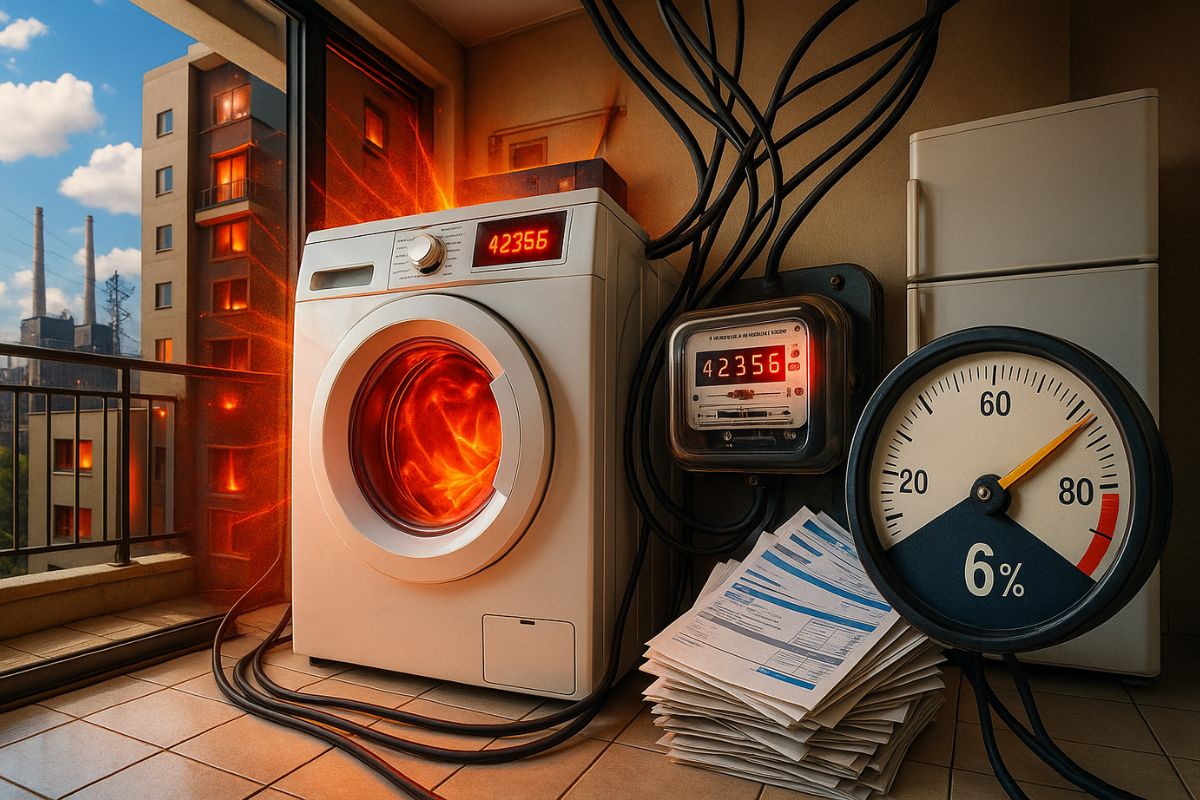
Clothes Dryer, Responsible for Up to 6% of Household Electricity, Can Add Up to R$ 804 Per Year to the Light Bill When Used Frequently and Without Efficiency Criteria
In a scenario where the light bill increasingly weighs on family budgets, the clothes dryer comes into focus as one of the appliances that consume the most electricity in the home. Although it is seen as a practicality ally, especially in small apartments and rainy regions, this appliance can represent a significant portion of monthly spending without the consumer clearly noticing where the increase in the bill comes from.
Data cited by international agencies indicate that the clothes dryer can account for up to 6% of the total electricity consumption of an average household, amounting to around R$ 804 per year with regular use throughout the week. When we add this impact to that of other energy-intensive appliances, the dryer ceases to be just a comfort and becomes a strategic point for those looking to reduce costs, optimize equipment use, and choose more efficient models, especially those certified with the Procel A seal.
Why The Clothes Dryer Weighs So Much on Electricity
The main reason the clothes dryer is considered a villain of electricity is heating.
-
China is building a city in Brazil: a complex with an investment of R$ 5.5 billion comes to light, but allegations involving workers draw attention.

-
While Argentina buys old war equipment, Brazil is keeping an eye open and joins the select group of nations with advanced military technology by investing $5.2 billion, producing 36 Gripen fighters in the country, and reducing operational costs.

-
Brazil on alert? Why invading Brazil is a NIGHTMARE for the USA: 8.5 million km², 213 million inhabitants, Amazon covering 60% of the territory, trillion-dollar war, and resistance that even 13,000 aircraft could not control.

-
How to build a floating island from scratch with reeds, giant blocks, and stakes in the lake in a process that needs to be repeated almost every day.


Unlike appliances that operate continuously and moderately, like the refrigerator, the dryer needs to generate a lot of heat in a short time, in addition to keeping the air circulating at high power throughout the cycle.
This causes this appliance to operate at power levels that can easily reach several thousand watts, increasing the electricity demand with each use.
Even short cycles can concentrate a significant expense, especially when the household routine involves several loads of laundry per week.
In smaller homes, where ventilation is limited and natural drying is more difficult, the use of the dryer tends to be even more frequent, increasing the accumulated impact on the light bill.
When The Clothes Dryer Uses More Than The Refrigerator
Although the refrigerator runs 24 hours a day, much of the time it operates with the compressor turned off, alternating work and rest periods to maintain the internal temperature.
The clothes dryer, on the other hand, is an appliance that works at high power for almost the entire cycle, without significant pauses.
Therefore, in a single drying cycle, the clothes dryer can consume as much or more electricity than a refrigerator consumes over an entire day.
When the habit is to turn on the dryer almost every day, the accumulated effect clearly shows on the light bill, especially during times of higher rates.
This mismatch between the perception of usage time and the actual impact is one of the factors that confuse consumers the most.
Usage Habits That Make The Clothes Dryer Consume Even More
In addition to the technical characteristics of the appliance, the way the clothes dryer is used has a direct impact on electricity consumption.
Some common habits unnecessarily increase costs:
Overloading the drum, forcing the appliance to work longer to dry the entire load
Repeating cycles or always using longer programs than necessary
Not cleaning the lint filter, reducing air circulation and requiring more electricity to achieve the same result
Turning on the dryer for small loads that could dry easily outdoors
Each of these behaviors increases the operating time of the clothes dryer and, consequently, the burden on the light bill.
Adjusting these habits is a quick way to reduce the impact without giving up the appliance when it is truly needed.
How To Choose A More Efficient Clothes Dryer
When buying or replacing a clothes dryer, paying attention to the Procel A seal is one of the main cost-saving strategies.
The Procel A seal indicates that that model of appliance is among the most efficient in its category in terms of electricity consumption, which tends to reduce the cost per drying cycle.
In addition to the Procel A seal, it is worth observing:
Drum capacity, to match the family’s laundry volume with the appropriate size of the equipment
Heating technology used, as some systems are more efficient in converting electricity into heat
Presence of moisture sensors that turn off the clothes dryer when the items are already dry, avoiding extra operating time
Combining the Procel A seal with smart features is a way to ensure that the clothes dryer provides convenience with less impact on the light bill.
Practical Tips To Reduce The Impact On The Light Bill
Even those who already have a clothes dryer at home can adopt measures to alleviate the weight of this appliance on the light bill. Some simple routine adjustments make a difference in the final sum:
Maximize the spin cycle of the washing machine, delivering less soaked clothes to the dryer
Group full loads, but without exceeding the drum’s limit of the clothes dryer
Reserve the equipment for rainy days, high humidity, or items that really need quick drying
Combine natural drying and dryer use, using electricity only to finish or soften some items
When replacing equipment, always prioritize models with Procel A seal, reducing consumption throughout the product’s entire lifespan
When the use of the clothes dryer becomes planned and focused on situations of real necessity, the light bill tends to reflect this change clearly, without giving up the comfort that the appliance offers.
To wrap up, looking at your routine: do you think you use the clothes dryer more out of real need or habit, and would you be willing to change some customs to ease your next light bill?







Seja o primeiro a reagir!