





 Portuguese
  English
  Spanish
  5 min of reading
  0 comments


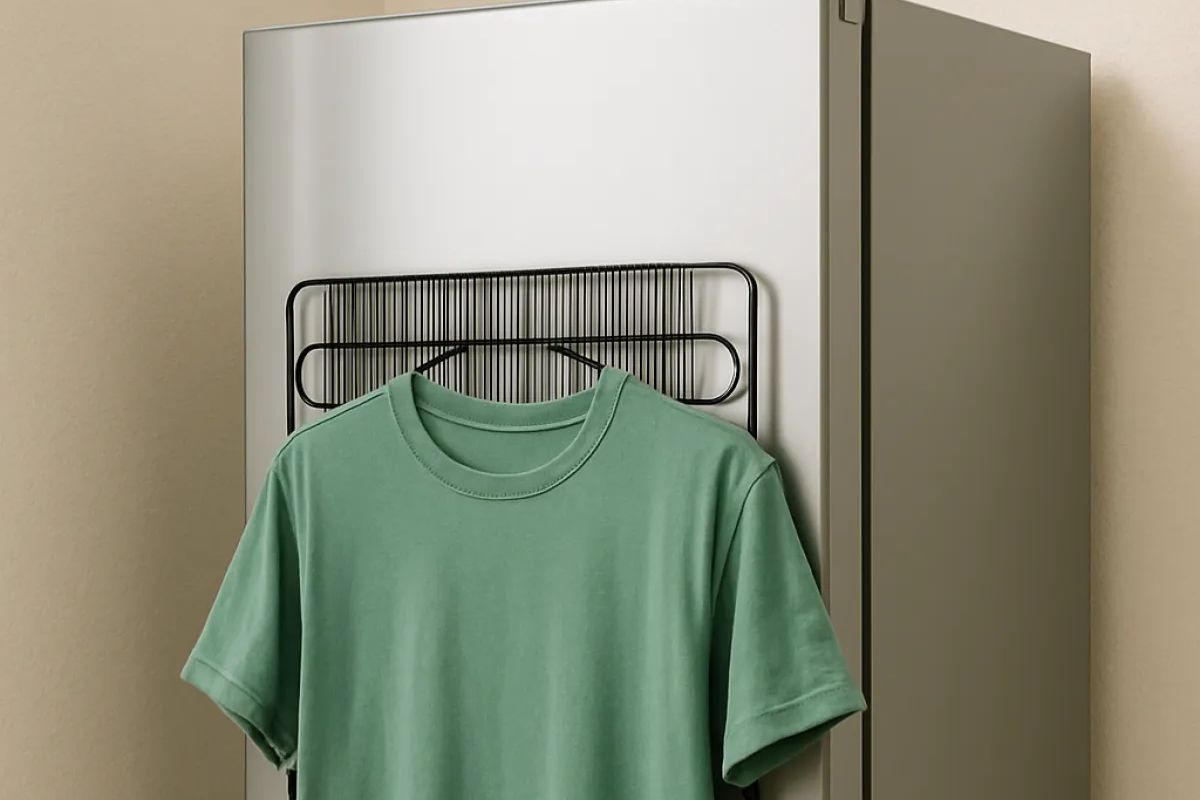
Common Practice Raises Electricity Bill, Damages Motor and Can Reduce the Lifespan of Your Appliance; Energy Efficiency Expert Explains the Dangers.
The habit of drying clothes behind the refrigerator, while it seems like a practical solution for rainy days or for those with limited space, hides significant risks that go far beyond mere humidity. According to the portal techtudo, this common practice creates a “blanket effect” that traps heat, directly interfering with the refrigeration cycle and forcing the motor to work much harder than necessary. Thus begins a dangerous chain reaction: the accumulated heat requires more effort from the compressor, which in turn consumes more electricity, wears out rapidly, and can even burn out. As a result, the electricity bill skyrockets, and the lifespan of the appliance can be drastically reduced.
According to Welhiton Adriano de Castro Silva, an energy efficiency engineer at Cemig, obstructing the back of the refrigerator prevents proper heat dissipation, a vital physical process for cooling. The result is a vicious cycle of overheating and wear that, besides potentially leading to premature failures and a higher electricity bill, compromises the overall efficiency of the device in the long term, making it increasingly “greedy”. Understanding why this household habit is so harmful is the first step to avoid problems and expenses that could easily be prevented.
Why Does the Practice Compromise the Equipment So Much?
The back of a refrigerator, where the condenser (the famous “grill”) is located, is designed to exchange heat with the environment, functioning similarly to a car’s radiator.
-
Novo drone Guardian debuts in the United States with an 8-mile range, robotic battery swapping, and Starlink connectivity for continuous response.
-
100 kW megalasers are already pointing to a new industrial phase, with enough power to cut thick steel, drill through rocks, accelerate mining, and increase productivity in operations previously considered too difficult.

-
Thousands of people in poor countries are paid cents to film household tasks, label images, and operate systems remotely all day long, and this invisible work fuels a $17 billion market that trains the artificial intelligences of Google, Tesla, and Meta.

-
Technology created in the United States uses deep drilling to store high-level nuclear waste.

It is there that the heat removed from inside the appliance is released outside.
When damp clothes or any other objects are placed there, they create an insulating barrier that drastically hinders this thermal exchange.
This forces the compressor, the heart of the refrigerator, to operate for a longer time and with greater intensity to maintain a low internal temperature.
It’s like trying to cool off on a hot day wearing a heavy coat; the body (motor) has to work twice as hard, generating continuous effort, overheating, and completely unnecessary energy expenditure.
“If I place a cloth, for example, to dry behind the refrigerator, I will block air circulation. This delays heat exchange.
This delay causes the motor to work more intensely for a longer time,” explains the engineer.
In addition to severe mechanical wear, the combination of constant moisture and heat creates an ideal environment for the proliferation of mold and fungi on the wall and in the motor, causing stains, bad odors, and potential respiratory problems for residents.
Worse yet, the electrical risk should not be underestimated: moisture can, over time, degrade the insulation of the wiring and oxidize contacts, paving the way for short circuits that can damage expensive electronic components or, in more severe cases, cause a fire.
Are New Refrigerators and Frost Free Models Also Affected?
Many people believe that the more modern models, especially the Frost Free types that do not have an apparent rear grill, are immune to this problem. However, this is a dangerous and costly misconception.
Although the heat dissipation system is often different, with heat being released through side walls or by a small fan at the base of the appliance, the need for adequate ventilation still exists and is equally crucial.
The engineering design of these appliances presupposes, without exception, that air will circulate freely around them for the system to operate at maximum efficiency.
Even in these refrigerators, heat exchange occurs as planned through these surfaces or specific openings.
Blocking these areas with clothes has exactly the same harmful effect: the motor is overloaded, energy consumption increases, and internal components wear out faster.
It’s no surprise that instruction manuals always specify a minimum distance of several centimeters between the appliance and the walls.
This recommendation is not just a simple suggestion, but a factory condition for the correct and safe operation of the product.
Ignoring it, whether due to improper positioning or drying clothes in the area, is using the appliance improperly, which can even void the manufacturer’s warranty in case of defects.
The Real Impact on the Electricity Bill
Yes, drying clothes behind the refrigerator definitely increases the electricity bill, and the impact can be much greater than one imagines.
The refrigerator is already one of the largest energy consumers in a household by running 24 hours a day.
Any factor that reduces its energy efficiency, no matter how small it seems, will have a direct and continuous impact on the wallet.
Trying to dry clothes there is like driving a car with the handbrake slightly engaged: it can still move, but the engine needs to burn much more fuel to overcome the resistance, resulting in constant waste.
Although it is difficult to pinpoint an exact percentage increase, the financial loss is a certainty.
“While it is not possible to estimate exactly whether the increase will be 5% or 10%, one thing is certain: there will be waste.
That’s because the refrigerator’s motor will have to work longer, which means higher energy consumption,” says Welhiton.
He emphasizes that older appliances are even more vulnerable, as their motors have already naturally lost some of their original efficiency and thermal insulation may be worn out.
In these cases, adding another obstacle to the appliance’s operation has a cumulative and amplified effect, accelerating wear and significantly inflating the monthly bill.
The Damage Goes Beyond Energy Consumption
The increase in the electricity bill is just the tip of the iceberg and often the least of the losses. The constant overheating of the compressor is the most serious and silent damage, as this part is essential and its replacement tends to be costly.
Often, the repair cost, including the part and labor, can come close to the price of a new, more efficient refrigerator, making “time-saving” a terrible financial decision.
When the motor is forced to operate at temperatures above normal, its efficiency decreases and the risk of premature failures increases considerably, potentially rendering the refrigerator useless long before its projected lifespan ends.
Additionally, this practice can generate cascading electrical problems, especially dangerous in homes with old or inadequate wiring.
The engineer warns that, while the immediate risk of a fire is low, constant moisture near electrical components is never a safe combination.
Corrosion can set in on terminals, the insulation of wires may deteriorate slowly, and the circuit board may be damaged.
“These bad habits reduce the lifespan of the equipment. The motor works harder, the system overheats and, over time, you reduce performance,” concludes the specialist. It’s a small habit with potential to cause a big and costly headache.
Have you ever had the habit of drying clothes or shoes behind the refrigerator? Were you aware of all these risks? Share your experience in the comments; your story can help others avoid making the same mistake.








Seja o primeiro a reagir!