





 English
  Francês
  Alemão
  Italiano
  Japonês
  Norueguês
  Portuguese
  Spanish
  2 min of reading


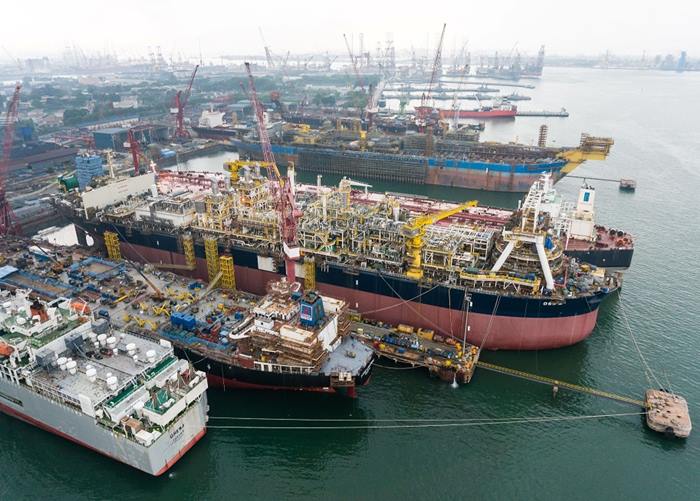
ANP Declares That The Six Fields That Received No Bids In The Two Oil Auctions Held This Week Did Not Impact The Initial Planning
On October 29, ANP’s Director-General, Décio Oddone, reported that on average 60 oil platforms are expected to be installed in the Brazilian offshore with the new oil auctions to be held by the Agency by 2030, most of which will be in the pre-salt.
After the 3 auctions scheduled for the end of this year, the ANP executive publicly stated that despite the Sépia and Atapu fields not receiving bids in the last Wednesday’s (06/11) onerous assignment surplus round, the fact does not negatively impact the planned schedule, because Petrobras is already operating in these areas.
Advanced Planning
The ANP Director-General further explained that the onerous assignment area already has well-advanced planning, including the platforms that will produce the oil, already contracted.
This is the case of the P-70, which will operate in the Atapu field in 2020 and is under construction in China, and the FPSO of Sépia, whose first oil is scheduled for 2021.
-
Government unlocks R$ 554 million for a highway that has been requested for decades and accelerates the duplication of BR.
-
Without bricks, without cement, and without endless construction: the cardboard house that is assembled in modules and can be moved.

-
Billions of barrels on the equatorial margin could lead Amapá to double its oil production in Brazil — the state aims to enter the route of companies in the Campos Basin, attract investments, and boost jobs and businesses in the oil and gas sector.
-
Without bricks, without cement, and without endless construction: the cardboard house that is assembled in modules and can be moved.

Not to mention the Búzios field, the largest field offered in the auctions, which already has four platforms in operation.
“We will see hundreds of offshore wells being drilled and dozens of platforms installed in Brazil over the next few years,” projected the ANP director.
Regarding the fields that did not receive bids in the 6th production sharing auction held this Thursday (07/11), Oddone shares the same opinion, “Not having contracted four of the areas also does not have a significant impact because the ANP conducts simulations and geological risk analyses assuming that some of the blocks will not have oil discoveries while others will,” he assured.
The exploratory risk is quite significant for oil companies during a bidding process, just look at the Uram area, acquired by Petrobras (80%) in a consortium with the Chinese CNODC (20%), which is the second largest reserve in the country.
A signing bonus of R$ 5.05 billion was paid for the asset and investments of around R$ 278 million are expected for its exploration.
Also Read! If Brazil Is Self-Sufficient In Oil, Why Does It Still Buy The Product?









Seja o primeiro a reagir!