






 Portuguese
  Spanish


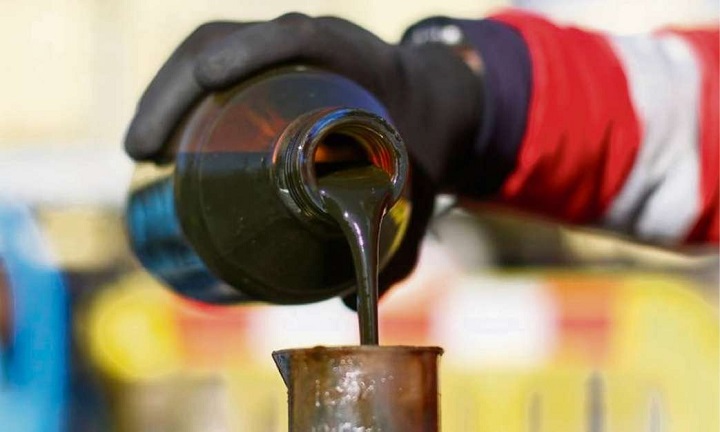

In Addition to Importing Oil, We Also Buy Derivatives Such as Gasoline and Diesel, with Added Value from Our Competitors
According to data from ANP, the average daily oil consumption in Brazil in 2018 was 2.586 million barrels per day, and Brazilian production in May 2019 was 2.731 million barrels per day. See Here Why Shell Did Not Make an Offer in the Auctions!
But if we produce more than we consume, can we be considered self-sufficient? Many would answer: Yes! Unfortunately, that is not the answer.
In 2018, according to ANP, Brazil sold 410 million barrels of oil, mostly to China, and in the same year, the country needed to buy about 68 million barrels, mostly from countries in Africa and the Middle East.
There is also an aggravating factor that worsens the data of this “Balance,” Brazil buys oil derivatives such as gasoline and, mainly, diesel.
-
Over 2,000 Tons of Discarded Fishing Nets Since 2020 Repurposed into Durable Caps, Fins, and Parts

-
Seals and Sea Lions Lose Habitat and Food as Climate Change Advances, Impacting Ice, Prey, and Coastal Communities

-
Brazilian Innovator Uses 3D-Printed Device to Cool Two Rooms with One Air Conditioner
-
China Uses 432 Robots to Move a 7,500-Ton Historic Building in Shanghai, Preserving Architecture While Creating Space for Underground Center


According to experts, the reasons for the imbalance are two: the first is that our refineries do not have the capacity to refine all of our oil, and the second is the underutilization of these refineries, which in 2018 did not utilize 25% of their capacity.
To understand this math, we must be clear that we are comparing different products. As our refineries do not have the capacity to process all of our oil nor to meet the demand for derivatives, the numbers do not add up.
Simply put, we can say that Brazil exports oil and imports fuels and derivatives, which are products with higher added value.
The Refining
Brazil has 17 oil refineries, with a total capacity to process 2.4 million barrels per day. 13 of them still belong to Petrobras, which holds 98.2% of the national refining capacity.
The big problem, according to experts, is that our refineries cannot refine Brazilian oil. Most of our refineries were built in the 1970s, designed to refine Middle Eastern oil, which is lighter than the oil that would be produced here.
Thus, Brazil is forced to import oil because our refineries have not been invested in technology to adapt to the new situation, in which Brazil has become a producer of oils with different characteristics.
Therefore, to keep functioning, our refineries started processing a mix of Brazilian oil with Nigerian or Arab oil, which is lighter.
According to the doctor in Energy Planning and research coordinator at the FGV Energia study center, Fernanda Delgado, “Due to Petrobras’s strategy of always focusing on oil exploration and production, there was little investment in the refining area in Brazil. The refineries are obsolete, their technologies have not improved. They cannot refine all the oil that we produce,” says the FGV professor.
If Petrobras increased the refining production levels, fewer derivatives would be imported, but the company’s current strategy is to focus on Exploration and Production while decreasing its participation in the refining market, even selling eight refineries.
For Fernanda Delgado from FGV, “everything depends on the appetite of investors for infrastructure investment,” in her opinion, the refineries are being put up for sale by Petrobras to attract technology.
“If there is investment in the refineries, the expectation is that it will promote the decoupling of the Brazilian market from dependence on the international market,” she states. “The ideal is that we produce crude oil and export gasoline and diesel. Exporting crude oil is excellent, but even better is exporting products with added value,” she concluded.
Read Also! Petrobras and Chinese Are Again the Only Ones Making Purchases at Today’s ANP Auction!







