





 Portuguese
  English
  Spanish
  3 min of reading



Farmers Around The World Are Facing Increasing Challenges Amid Extreme And Unpredictable Climate Changes.
Events such as droughts, floods, and frosts are becoming more frequent and intense, with significant impacts on food production. The Brazilian agricultural sector is no exception, and the recent corn and soybean harvests have been affected by adverse weather conditions. As a result, producers are facing significant economic losses.
In light of this, crop insurance becomes an important mechanism to mitigate risks associated with climate change. However, a study conducted by the Climate Policy Initiative (CPI) points out that crop insurance in Brazil is not keeping pace with climatic crises, resulting in increasing losses for producers.
The Importance Of Crop Insurance
Crop insurance is a fundamental tool for protecting farmers from losses caused by extreme weather events. It allows producers to plan more securely for the future, resulting in greater economic stability and sustainability.
-
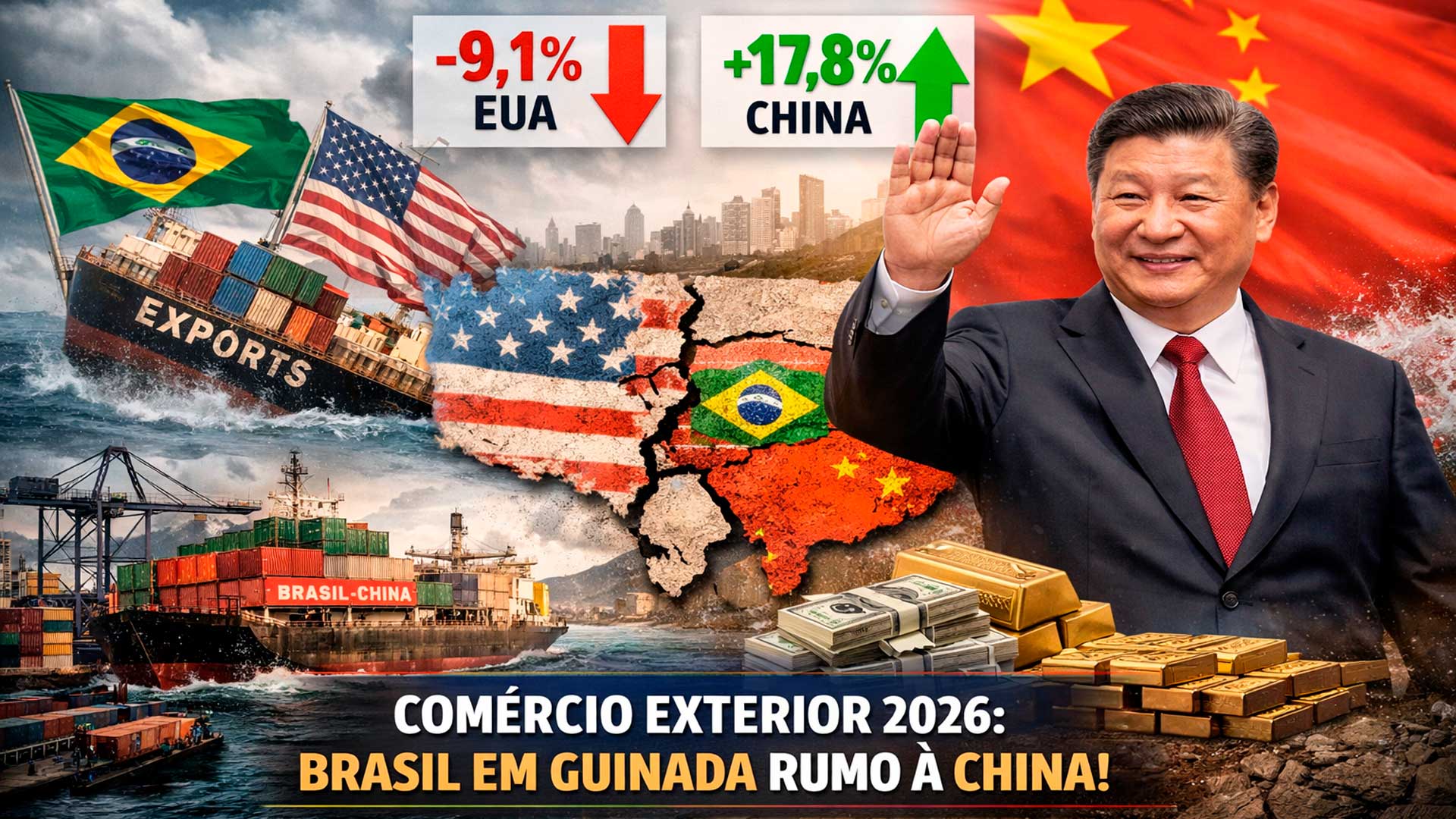
Brazil’s exports to the U.S. plunge for the eighth consecutive time, while China expands its leadership, and this is changing the landscape of foreign trade in 2026.
-
The Federal Government wants to curb family indebtedness and is considering releasing FGTS with a renegotiation that could cut up to 80% of debts for families and individual micro-entrepreneurs (MEIs).

-
‘Theory of the Madman’ is the strategy that explains why Trump threatened to end Iran and hours later offered a two-week truce as if nothing had happened.

-
Oil secures a larger drop, exports advance in March, and Brazil ends the month with a surplus of $6.4 billion despite the strong rise in imports.

However, crop insurance in Brazil has not been adequately addressing the new climatic reality. According to the Superintendência de Seguros Privados (Susep), in 2022, insurers and reinsurers spent more on indemnities than they collected in premiums.
This is due to the lack of climate predictability and the increase in the frequency of extreme weather events. As a result, the cost of insurance rises and availability decreases, making it difficult for producers who cannot afford high costs.
Restrictions In Crop Insurance
Furthermore, crop insurance in Brazil is highly restricted and concentrated in the southern and central-western regions. Although soybean cultivation is expanding into regions such as Matopiba (Mato Grosso, Tocantins, Piauí, and Bahia), insurance has not followed this movement.
According to the CPI study, in 2010, the Matopiba region accounted for 10% of soybean production, and in a decade this share grew to 14%. However, in 2018, around 1,000 municipalities did not have insurance for soybean production.
Additionally, Brazilian grain production is poorly insured, with a concentration on a few crops, with soybeans being the highlight, accounting for 30% of policies and more than half of the premium value paid in 2018, according to Susep.
The Need For Improvement In Public Policies
It is essential for insurers to adopt more sophisticated models in expanding insurance coverage for which the claims history is limited. Among the researchers’ recommendations for improving public policies is the need for action on multiple fronts with coordination between the government and the private sector.
The government should stimulate the expansion of crop insurance by investing in the Crop Insurance Premium Subsidy Program, reducing the cost of acquiring policies, enhancing the Agricultural Risk Climate Zoning, and strengthening the reinsurance market in Brazil.
In a higher risk scenario, reinsurers are becoming increasingly important, adds Priscila Souza, senior research manager at CPI and coordinator of the study. Implementing public policies for the expansion of crop insurance is important not only for protecting producers and developing the sector but also for advancing sustainable agriculture and reducing greenhouse gas emissions.
Crop insurance is an important tool for protecting farmers from losses associated with climate change. However, current public policies do not adequately consider the new climatic reality, resulting in increasing losses for producers.
To face these challenges and promote the development of more sustainable agriculture, it is necessary for the government and the private sector to work together to improve crop insurance, expanding coverage and reducing costs. This is a crucial step to protect farmers and ensure the economic stability and sustainability of the Brazilian agricultural sector.








Seja o primeiro a reagir!