





 Portuguese
  English
  Spanish
  5 min of reading
  0 comments


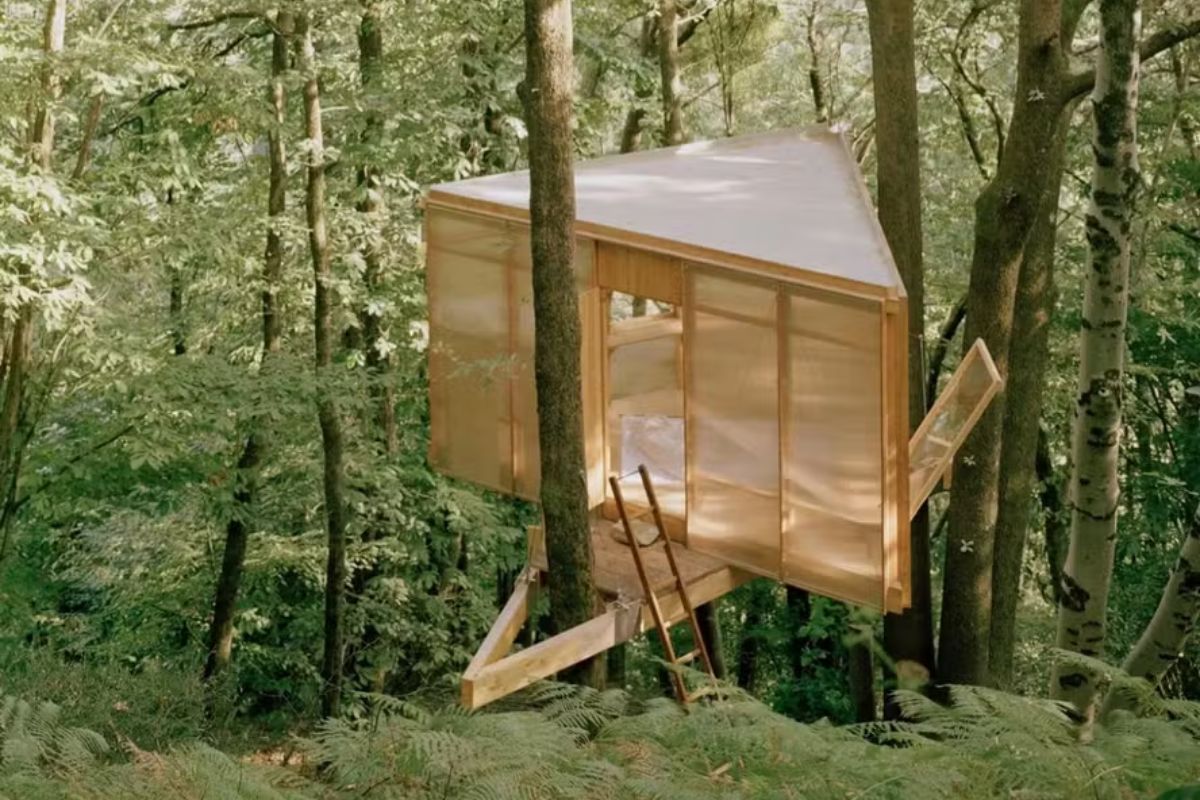
Installed about 150 meters from the main residence, the house was designed by Olin Petzold for an artist and climate activist who wanted isolation to write and rest; suspended between mature trees, the structure responds to legal restrictions, reduces impact on the soil, and prioritizes essential use of temporary occupancy.
The house was born from an objective demand: to create a temporary shelter, away from domestic routine, in a forested area in the Onsernone Valley, Switzerland. Designed by architect Olin Petzold for an artist and climate activist, the building adopts a compact scale and functional focus, without resorting to formal or programmatic excesses.
More than an aesthetic gesture, the solution arose from a concrete limitation of the land: it was not allowed to expand the existing building or execute new foundations. In this context, the structural response was to suspend the volume between three mature oaks, preserving the soil, the steep topography, and the continuous reading of the surrounding landscape.
A House Determined by Context, Not by Spectacle
The logic of the project starts from a principle uncommon in conventional residences: the final form of the house is a direct consequence of local rules and the terrain, not a desire for monumentality. The urban restriction, which prevented new bases on the ground, redefined the design process and led to an aerial, streamlined, and reversible implementation in terms of occupancy.
-
79-year-old woman challenges limits, visits 193 countries in the world after 56 years of planning and reveals the behind-the-scenes of a global journey that few have managed to accomplish.

-
These are the drivers who may stop paying tolls on highways in a project that promises to reduce costs for those who live from transportation in Brazil.

-
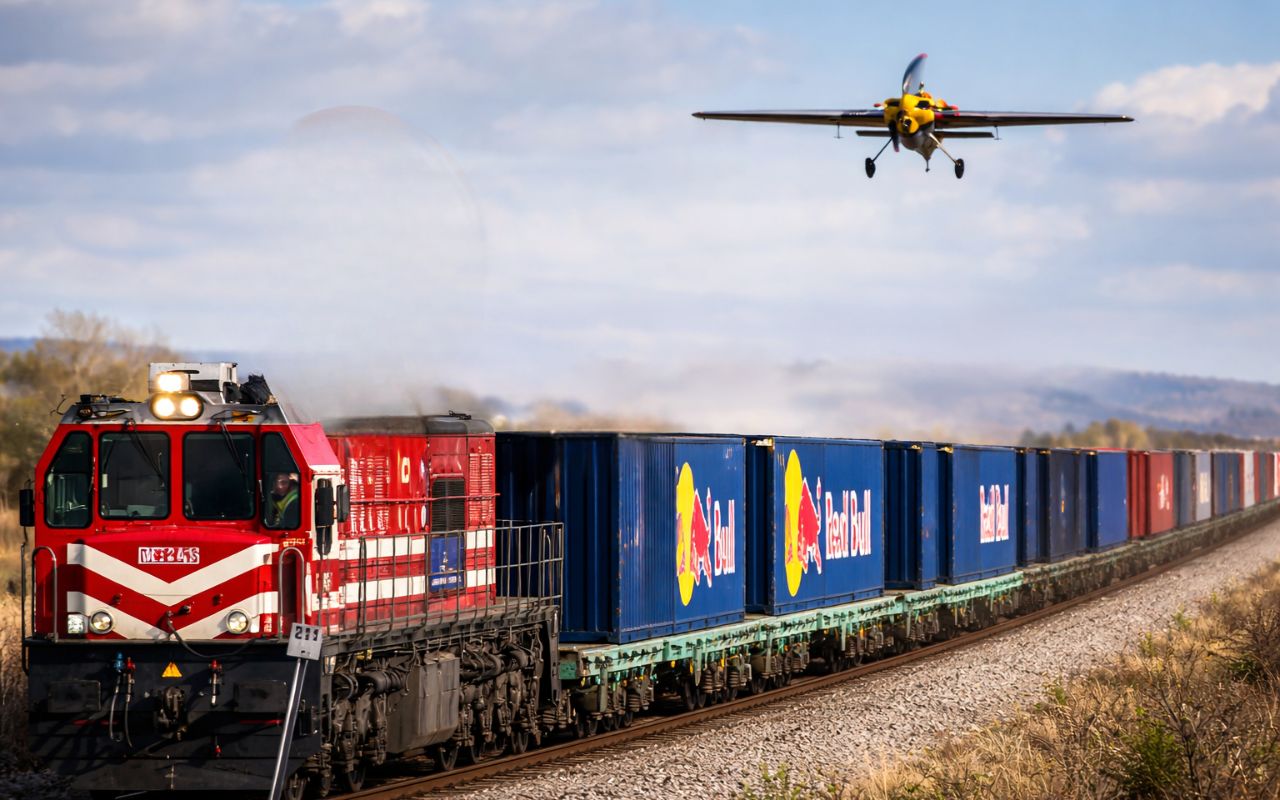
(Video): Italian pilot lands plane on moving train at 120 km/h and achieves unprecedented feat in aviation, even with a narrow runway and without direct visual contact.
-
It seems to have come out of a science fiction movie: A Brazilian city where it rains almost every day, recording over 4,000 mm per year, driven by climatic factors — a direct result of its strategic location in the Amazon.


This point helps to understand why the house, even visually striking, operates with discretion. Positioned in a densely wooded area, approximately 150 meters from the main residence, it functions as an independent refuge. The distance is not just physical; it organizes another routine of use, oriented towards reflection, writing, and rest, without interference from the central domestic space.
Implantation Between Three Oaks and Reading the Valley
The decision to suspend the volume between three mature trees is not symbolic; it is technical. The house comes to depend on a precise spatial triangulation, capable of stabilizing the structure on a sloping terrain, maintaining minimal contact with the ground. This arrangement reduces interventions on-site and avoids the traditional logic of earthworks associated with hillside construction.
The triangular geometry also guides the visual relationship with the surroundings. Instead of opening fronts on all sides, the volume is positioned to favor views of the valley and the slope, while minimizing visual contact with the main dwelling. The result is an experience of controlled isolation: the landscape enters forcefully, while the original domestic environment recedes.
Translucent Envelope, Wood, and Passive Environmental Performance
In the house’s enclosure, translucent polycarbonate serves both technical and perceptual functions. It allows filtered natural light to enter, softens lighting contrasts, and keeps the interior protected without completely blocking the view of the forest. The construction does not impose itself as an opaque object; it blends into the environment gradually.
The wood structure completes this system with lightness and constructive coherence. Throughout the seasons, the building’s behavior reinforces the passive strategy: in summer, the canopies reduce direct solar incidence; in winter, the greater passage of light through the enclosure helps warm the interior. Without promising miraculous performance, the project organizes simple resources to respond to the climate rationally.
Compact Interior: Work, Rest, and Essential Use of Space

Inside, the house maintains the same logic of containment. The environment integrates fixed bench and table, oriented towards reading and writing, making it clear that it is a space for focus, not for programmatic accumulation. Each element has a defined function, and circulation is designed to avoid wasting usable area in a necessarily small volume.
The most emblematic solution is in the floor: the bed is built-in and only appears when wooden panels are removed. This choice transforms the same section into different use surfaces throughout the day, without relying on excessive partitions or furniture. In practice, the house alternates between a quiet studio and a nightly shelter without compromising the continuity of the internal space.
Manual Construction Process and Reduced Territorial Impact
Another central aspect of the project lies in the execution method. The entire construction was designed to be assembled manually, without the use of heavy machinery. The pieces were transported on foot to the implantation point, altering not only the logistics but the very scale of intervention. When the construction site adapts to the place, and not the other way around, the territory experiences less disruption.
This choice aligns with the original purpose of the refuge: to occupy without solidifying an aggressive presence. The house does not require large technical access, does not force extensive reconfigurations of the land, and does not impose disproportionate infrastructure to the program. In summary, the construction process confirms the architectural proposal of a light, temporary presence integrated into the natural cycle of the forest.
Between Restriction and Invention: What This House Reveals
The work shows how normative and environmental limits can open more precise project pathways. Instead of treating restriction as a blockage, the project converts it into a decision-making criterion: where to support, how much to occupy, how to illuminate, how to preserve the topography, and why to reduce the repertoire of materials. The house functions as a technical response to concrete questions of the place.
It also highlights a shift in priority in small architecture: less emphasis on square footage and more attention to quality of use. For those seeking a space for creation and pause, the solution delivers isolation, controlled light, minimal infrastructure, and a continuous connection to the landscape. There is no promise of a universal model, but there is a consistent case for building with precision when the context demands containment.
Without foundations, suspended between three oaks, and designed for temporary use, this house transforms urban restrictions, steep terrain, and essential program into a coherent solution of light architecture. The project articulates structure, material, and routine with clarity, showing that streamlined decisions can generate high spatial performance without breaking the logic of the place.
If you had to choose a primary criterion for a house in a natural area to preserve the soil, ensure isolation, make better use of light, or minimize construction intervention, what would be your priority and why?






-

-

2 pessoas reagiram a isso.