





 Portuguese
  English
  Spanish
  3 min of reading
  1 comment


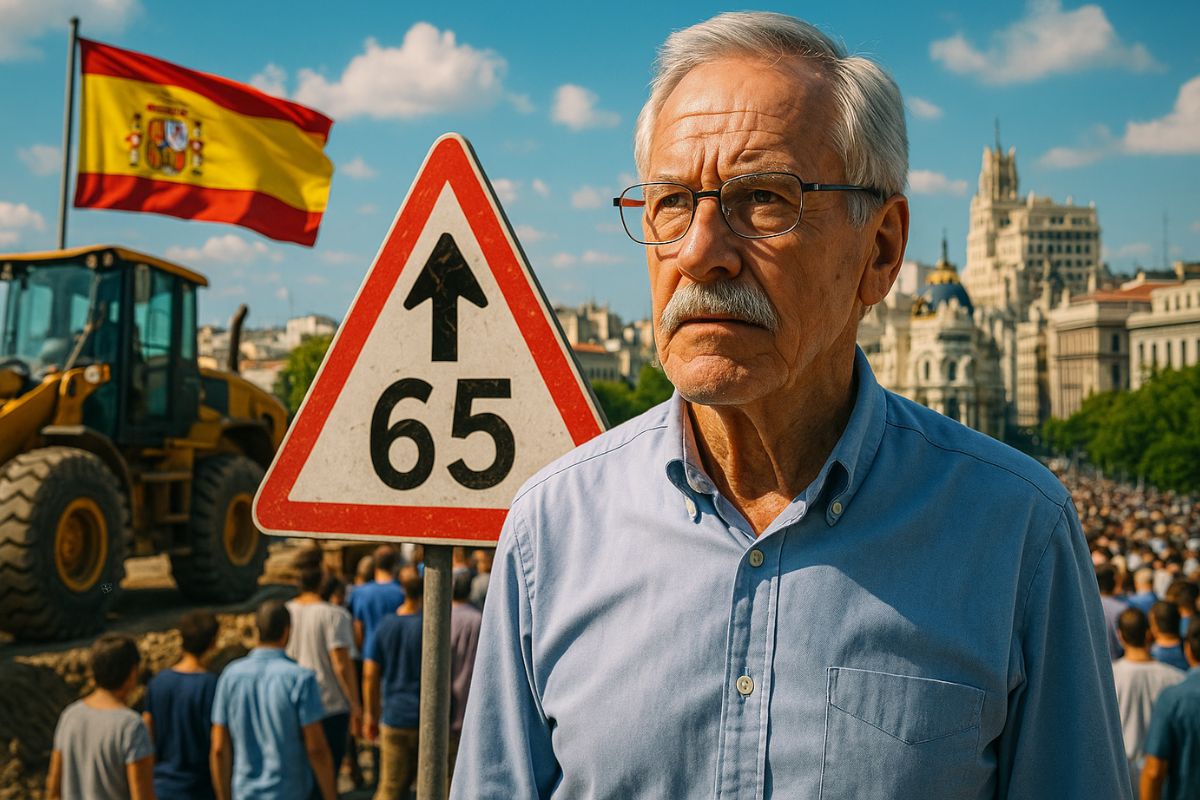


Not Enough Young People to Support the System, Spanish Government Wants to Show That Working After 67 Can Be Not Just Inevitable, But Also Beneficial to Maintain Pension Sustainability
Spain faces a structural dilemma: 5.3 million people are set to retire in the next decade, but only 1.8 million young people will enter the job market. This mismatch creates enormous pressure on the pension system and on companies that are already reporting difficulty attracting new talent, according to a study by the Adecco Foundation.
In this scenario, the government and social security entities advocate for the so-called “active retirement”, a model that allows those who reach the minimum age to continue working while receiving part of their pension. The idea is to convince the population that extending working life can be positive, both for fiscal balance and for individual well-being.
Active Retirement: How It Works in Practice
The concept of active retirement came into effect in Spain in April 2025, through Royal Decree-Law 11/2024.
-
While restoring a historic mansion from 1910, a brick structure with an old turbine that generated energy from the Rio do Testo emerged, along with a hidden door and a rare floor concealed under layers of wax.
-
Italian researchers have detected what appears to be a second Sphinx buried under the sands of Egypt, and satellite scans reveal a gigantic underground megastructure hidden beneath the Giza Plateau for over 3,000 years.

-
There are 4,223 drums and 1,343 metal boxes concreted with 50-centimeter walls that store the radioactive waste from Cesium-137 in the worst radiological accident in Brazil, just 23 kilometers from Goiânia, with environmental monitoring every three months.

-
Giant Roman treasure found at the bottom of Lake Neuchâtel in Switzerland reveals an advanced trade system, circulation of goods, and armed escort in the Roman Empire about two thousand years ago.


The rule eliminates the requirement of a full career of contributions to combine pension and work.
The longer the worker chooses to remain active, the higher the percentage applied to the future benefit.
The measure arose in response to increased life expectancy. Today, a Spaniard who retires at 67 can live, on average, almost 20 more years.
This longevity, combined with the accelerated aging of the population, puts pressure on public finances, making the search for alternatives urgent.
The Experts’ View
Organizations like Fedea (Foundation for Applied Economic Studies) argue that Spaniards have latent capacity to continue working at older ages without compromising health.
Compared to the 1970s, it is estimated that men could extend their careers by up to 8 years and women by up to 6 years.
For experts, the key is to transform the idea of working after 67 from a threat into an opportunity.
Improvements in health and living standards indicate that today’s elderly are not comparable to those of previous generations, and many would be fit to remain in the job market with quality.
Global Trend: Spain Is Not Alone
Spain follows a movement observed in countries like Japan, Germany, and China, where the aging population forces governments to reconsider the retirement age.
In Japan, more and more citizens continue working after 70, often not by choice, but by necessity.
The Spanish case, however, seeks a balance: offering the possibility to remain active as an incentive and not just as an imposition.
This includes combining pension benefits with additional remuneration, in order to ease the system and keep the qualified workforce for longer.
Work More, Live Better?
One of the government’s central arguments is that the health of the elderly has been improving in both objective indicators, such as life expectancy, and subjective ones, such as self-perception of well-being.
However, this improvement has not yet been reflected in greater participation of people over 65 in the job market.
For economists, extending working life can have positive effects not only on the sustainability of pensions but also on social integration and the quality of life for older individuals who remain active and productive.
The challenge is to find ways to make work schedules flexible and adapt working conditions to the new realities of advanced age.
Spain is trying to show that working after 67 is not just a fiscal necessity, but also a way to preserve the pension system and value the experience of the elderly.
But the discussion raises deep dilemmas about quality of life, social justice, and the right to rest after decades of contribution.
And you, what do you think? Should retirement be made flexible to allow people to choose whether they want to continue working? Or is extending working life just pushing the problem forward? Leave your opinion in the comments — we want to hear your views on the future of work and retirement.









Eu acho que devemos trabalhar, o trabalho ajuda na nossa saúde para não ficar sedentário continua com a responsabilidade e distrai, ficar em casa parado não é saudável tenho 70 anos trabalho em uma cafeteria e dou muito feliz interajo com colegas de trabalho e clientes acho incrível !