





 Portuguese
  English
  Spanish
  5 min of reading
  0 comments


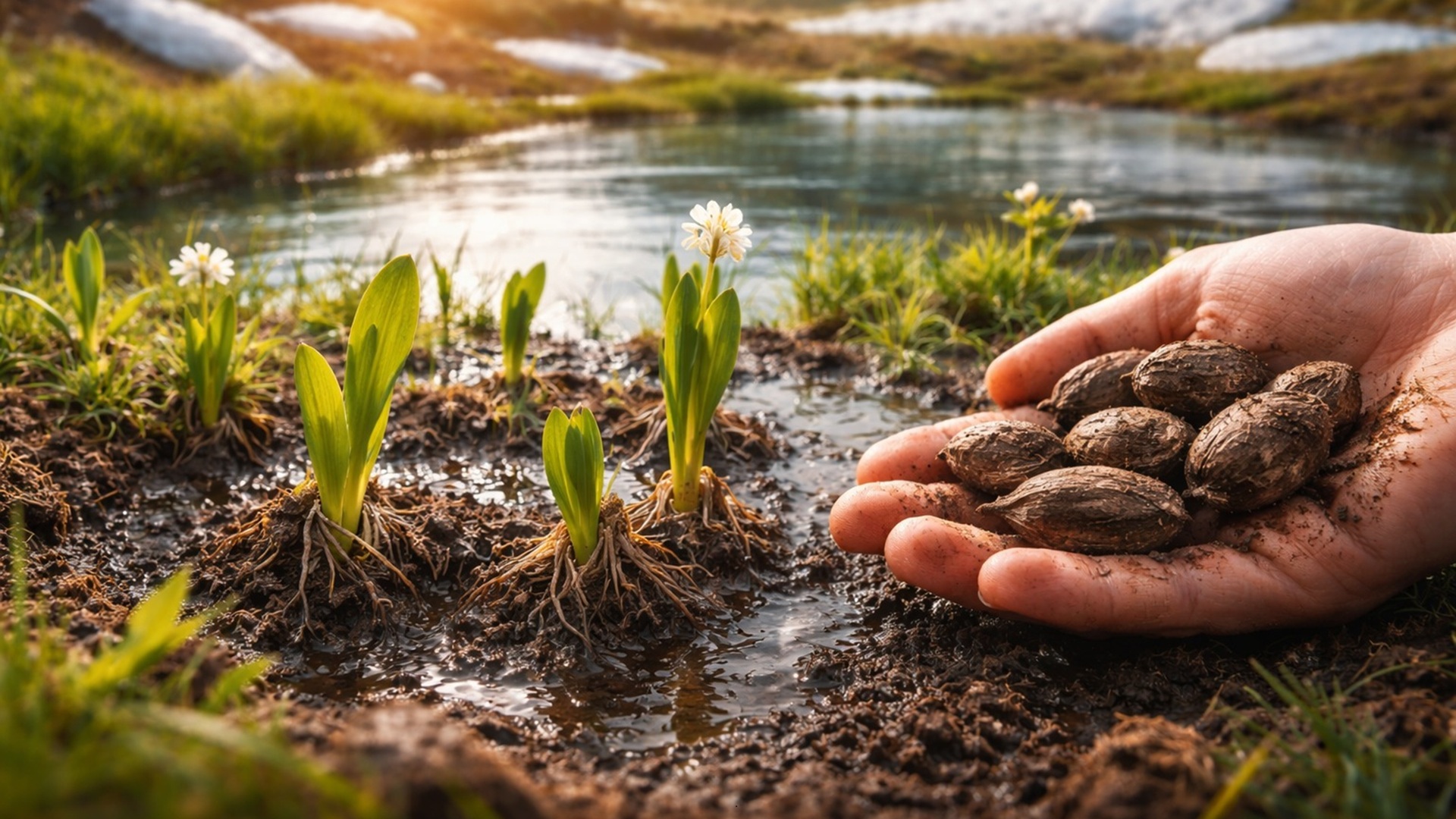
Preserved Seeds For About A Thousand Years In Lakes Formed At The End Of The Last Ice Age, Now Dry And Invisible In The English Landscape, Germinated In The Laboratory And Reveal The Potential To Restore Ancient Vegetable Species That Have Disappeared With Climate Change And Land Use Over The Centuries
The The Guardian showcased a restoration project led by researchers from University College London that is bringing back glacial era lakes in Norfolk, England, with low-cost excavations that reawaken ancient seeds, restore ecosystems, and recover dozens of vanished wetland species over two centuries of agricultural drainage.
Ghost Lakes Return To The Agricultural Land Of Norfolk
In a pasture in Norfolk, two circular scars of dark soil indicate where ancient lakes are being restored. The work, which may appear destructive at first glance, reverses the historical loss of wetland areas caused by drainage for cultivation over the past 200 years.
The two newly excavated lakes are the 25th and 26th restored by a team led by Professor Carl Sayer from the Geography Department at UCL. The Brecks region is known for its ancient lakes and “pingos,” formed by melting ice about 10,000 years ago.
-
With a cost per shot close to zero, the DragonFire laser could change naval warfare in 2027 and provide British ships with nearly unlimited defense against drones.

-
A British startup creates tires that generate electricity in electric vehicles when passing over potholes, speed bumps, and cracks.

-
Scientists have created robots made with living cells that have their own nervous system, swim on their own, explore the environment, and self-organize without any genetic engineering, and now they want to do the same with human cells.

-
Students create a solar-powered ambulance that operates without a plug, without fuel, and still keeps medical equipment running in remote areas.


According to Sayer, the initial appearance of the site is deceiving. Within a year, the restored lakes already show intense colonization by aquatic plants. In two years, the environment integrates into the landscape as if it had never been lost.
Ecological Results Equate To Intact Reserves
Surveys conducted by the team since 2022 show that 22 restored ghost lakes now host 136 species of wetland plants.
This number represents 70% of the flora found in over 400 lakes of Thompson Common, a nature reserve of international importance.
Thompson Common is owned by the Norfolk Wildlife Trust, which acquired part of the land where the restorations took place. The organization also financially supported the project through the Brecks Fen Edge and Rivers Landscape Partnership program of the National Lottery Heritage Fund.
Among the recovered species are rare plants that had disappeared from the original lakes, such as the varied-leaved water herb, now recorded in only one other location in Norfolk. These results reinforce the ecological equivalence between restored lakes and wetlands preserved since the ice age.
The Dark Layer That Serves As A Time Capsule
The central element of the method is a layer of dark sediment similar to peat, located at the bottom of the ancient lakes. This material was formed by centuries of decomposition of aquatic plants and remains rich in viable seeds.
According to Sayer, the sediment is dark, moist, fresh, and anoxic, meaning it lacks oxygen. These conditions preserved seeds for hundreds or even over a thousand years, creating a natural emergency recovery mechanism.
Restorer Hayley McMechan studies this seed bank for her doctorate. Samples of sediments from different ages are being monitored in tanks at the seed bank of the Royal Botanic Gardens, Kew, in Wakehurst, to evaluate germination rates.
The researchers consider it likely that seeds over 1,000 years old could still germinate. For McMechan, the process is neither reforestation nor conventional restoration, but a form of ecological resurrection based on ready systems, which only require the reintroduction of water.
Historical Mapping And Precision Excavation
The identification of the ghost lakes begins with the study of old maps conducted by Professor Helene Burningham, also from UCL. Many small lakes do not appear in formal cartographic records, but historical field names often provide clues.
Technologies such as Lidar are used to detect depressions in the terrain, while satellite imagery reveals persistent green circles in dry summers, indicating areas with higher residual moisture. On the ground, a drill confirms the presence of the original lakebed.
White fragments of aquatic snail shells help differentiate lacustrine sediment from agricultural soil. Then, trenches are opened to locate the center of the lake and determine its exact dimensions before full excavation.
The excavator creates gently sloping edges, avoiding artificial steps and being careful not to exceed the seed layer. Operator Dale Garnham performs precision work after the team identifies the correct level, ensuring that the biological bank remains intact.
Archaeological Findings And Interruption Of Modern Drainage
During excavations, volunteers find traces of historical human use of the wetlands. River snail shells from the Roman era, fragments of pottery, and charred flint from the late Neolithic were recovered from the sediment.
These findings indicate that the swamps were sites of continuous human activity. The only element considered undesirable by the team was the presence of old plastic drains installed during agricultural improvements in the 1980s.
Whenever a drain is found, the excavator follows it and destroys it. The goal is to prevent both runoff and artificial water intake, allowing the lake to fill only with clean rainwater, restoring its natural functioning.
Rapid Colonization Challenges Conventional Explanations
After natural filling, the lakes are quickly colonized by plants and animals. Some critics suggest that the species may have been introduced by waterfowl, but Sayer highlights the presence of rare plants absent in nearby areas.
In addition to the uniqueness of the species, the number of new plants appearing in a short time reinforces the origin from the ancient seed bank. For the researcher, the observed speed cannot be explained solely by dispersal via birds.
Even without hydrological connection to other bodies of water, the nine-spined stickleback quickly reappeared in some lakes. The team claims to not know of any biological mechanism that explains this return, leaving the phenomenon as a scientific mystery.
Reduced Cost And High Impact On Ecological Restoration
According to Sayer, the restoration of lakes provides a significant boost to biodiversity at a modest cost. Excavating a lake takes a full day and costs about £2,000, including rental of the excavator, truck, and qualified operator.
This amount is much lower than the cost of restoring prairies or ancient forests. For the researcher, the small ecological footprint of the intervention contrasts with the significant impact achieved in habitat recovery.
Private landowners are showing increasing interest in revitalizing ghost lakes and “zombie” lakes, but funding is still seen as the main obstacle. Sayer notes that large sums are invested in river restorations, despite the complexity of these projects.
In the team’s assessment, the method applied in Norfolk could be replicated in other regions of the country, reversing the historical loss of agricultural wetlands. For Sayer, this is the kind of ecological restoration that defines a career, even if some mystery remains to be solved.
This article was based on a report from The Guardian, which followed the restoration work of glacial lakes in Norfolk and interviewed the researchers and volunteers involved in the project.








-

-

5 pessoas reagiram a isso.