





 Portuguese
  English
  Spanish
  3 min of reading
  3 comments


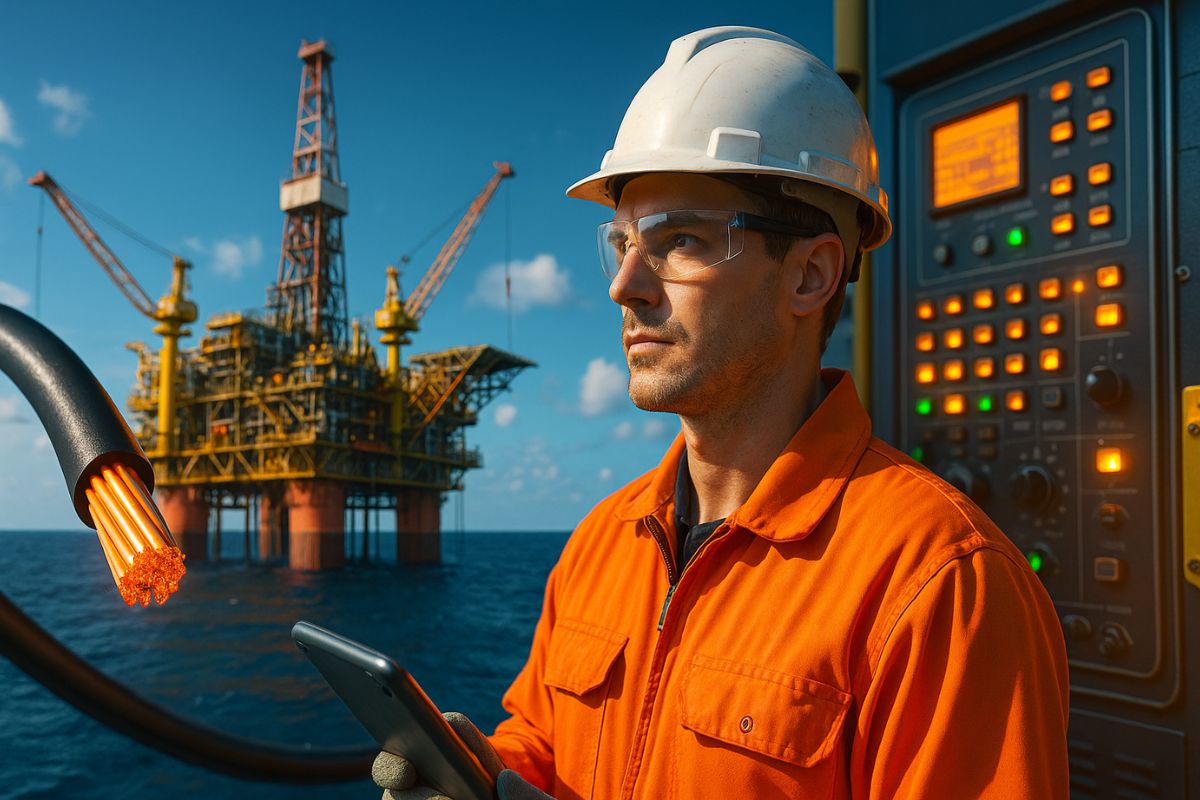


4 Technical Courses to Work on Oil Platforms. Technical Professions Such as Electrical Engineering, Mechanics, Industrial Automation, and CBSP Offer High Salaries and Access to the Offshore Sector
The technical courses to work on oil platforms are today one of the fastest ways to enter a well-paying and expanding market in Brazil. The offshore sector demands skilled labor, focusing on areas such as energy, maintenance, and safety, which guarantees high employability.
According to data from SENAI, MEC, and the Brazilian Navy, salaries for offshore technicians range between R$ 6,000 and R$ 12,000 per month, with hazard pay and boarding regime. In addition, the CBSP (Basic Safety Course for Platforms) is mandatory for any professional wishing to work at sea.
Electrical Technician
The electrical technician is responsible for generators, transformers, and electrical distribution systems. On oil platforms, he ensures the operation of the entire electrical network and industrial automation.
-
Federal Institute calls for EAD and free course with 200 spots in a 400-hour specialization.

-
Take a 100% free online course at “NASA” of Brazil: The Brazilian Space Agency opens registrations for 29 courses with national slots, in areas such as rockets, satellites, and propulsion, immediate online access, and free certification in 2026.
-
Sebrae will pay R$ 6,500 to those who take this course and work with rural innovation: there are 834 open positions, scholarships of up to R$ 6,500, and contracts of up to 12 months in various cities.
-
Take a course at the Federal Institute without spending a single real and from home: IFRS opens unlimited spots in online courses with certification.


This course has an average duration of 2 years, requires registration with CREA, and can be done at institutions such as SENAI and Federal Institutes. The average salary on platforms ranges from R$ 6,500 to R$ 8,500 per month, potentially exceeding R$ 10,000 with bonuses.
Strong Point: employability in various sectors beyond oil.
Weak Point: high risk of electrical accidents.
Mechanical Technician
The mechanical technician works with pumps, turbines, valves, and compressors. On platforms, he is essential to keep the equipment running 24 hours a day.
The training lasts about 2 years, also requires registration with CREA, and can be found in state technical schools, SENAI, and IFs. The offshore salary ranges between R$ 6,000 and R$ 7,800 per month, potentially reaching R$ 10,000.
Strong Point: traditional course with many opportunities in Brazil.
Weak Point: intense physical work in risky environments.
Industrial Automation Technician
The industrial automation technician works with sensors, PLCs, and control software, ensuring the integration of all oil extraction processes. It is one of the most valued professions due to its connection with Industry 4.0.
The training takes about 2 years, with a wide offer at SENAI and Federal Institutes. The average salary on platforms ranges between R$ 7,000 and R$ 8,500 per month, potentially exceeding R$ 11,000 in complex operations.
Strong Point: a future profession linked to digitalization.
Weak Point: requires constant updating on new technologies.
CBSP — Basic Safety Course for Platforms
The CBSP is not a technical course but a mandatory certification for any offshore worker. It teaches survival at sea, fire fighting, evacuation, and first aid. Without this certificate, boarding is not allowed.
The course lasts from 1 to 2 weeks, is offered by centers accredited by the Brazilian Navy, and costs on average R$ 1,000 to R$ 2,000. Although it does not determine salaries by itself, it is the mandatory passport for technicians wishing to work on oil platforms, enabling earnings of R$ 6,000 to R$ 12,000 per month.
Strong Point: quick and essential for working offshore.
Weak Point: does not guarantee employment, only allows boarding.
Is It Worth Investing in These Courses?
The technical courses to work on oil platforms represent a real opportunity for those seeking high salaries and quick entry into the market. By combining technical training in electrical engineering, mechanics, or industrial automation with the CBSP, the professional becomes highly competitive.
The demand remains strong in Brazil, especially in the regions of Macaé (RJ), Santos (SP), and Salvador (BA), which are strategic hubs of the industry. With the expansion of pre-salt, the trend is for even greater growth by 2030.
And you, do you believe that technical courses to work on oil platforms are the best entry point into the offshore sector? Do you know anyone who already works in this area? Leave your opinion in the comments and join the discussion.






Site ****, meu marido trabalha na Plataforma Jomaga e é a q melhor paga e o salário dele é R$4.700 já com os 30%.
Não se iludem gente
Mas, qual é a ária dele ?
Pois é, já foi o tempo da fartura, eu sendo técnico em eletrônica industrial, já ganhei um bom salário, hoje já era; tenho amigos inspetores em geral que já ganharam absurdos de dinheiro, hoje é só **** magra e se quiser trabalhar.