





 Portuguese
  English
  Spanish
  3 min of reading
  2 comments


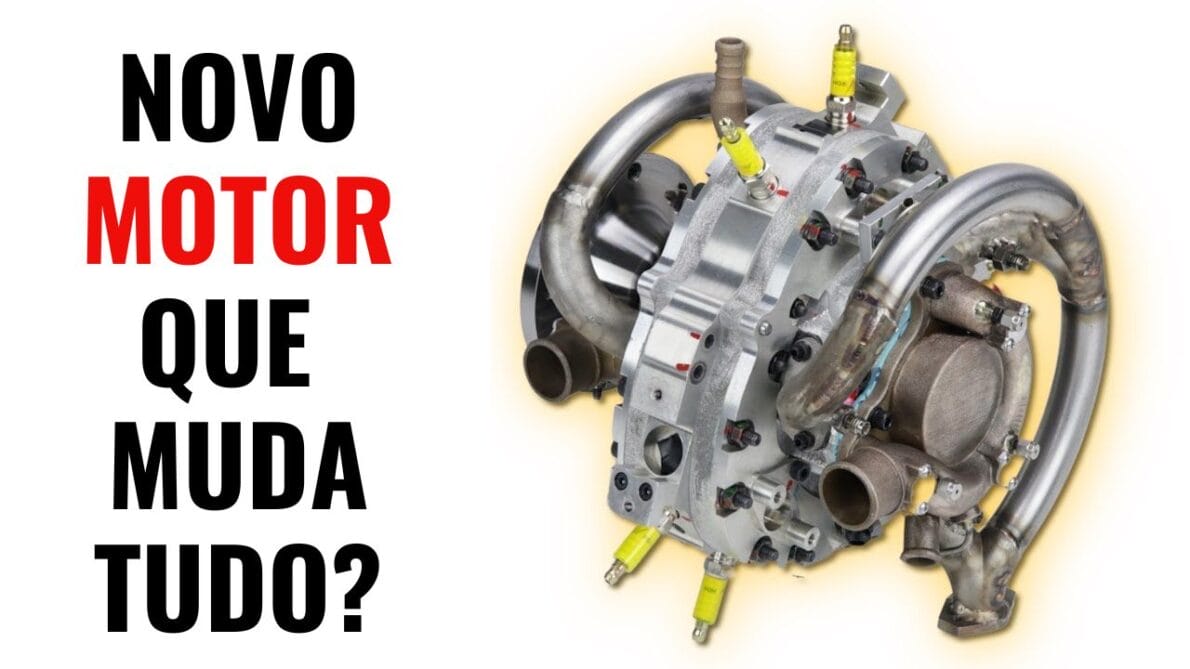


Rotary Liquid Piston Engine: An Engine That Changes Everything?
The rotary liquid piston engine is the latest innovation in the field of engines, promising to revolutionize the automotive industry. But does it really deliver on its promises? Let’s analyze in detail how this new engine works, its advantages, disadvantages, and its true potential to change everything.
First, let’s understand what the rotary liquid piston engine is. Despite the name, it does not use liquid pistons. This engine operates with an epitrochoidal rotor spinning inside a triangular housing, an approach opposite to the traditional Wankel engine, where the triangular rotor spins inside an epitrochoidal housing.
Better Understand the Rotary Liquid Piston Engine
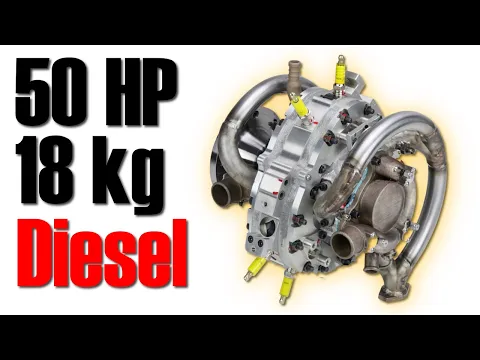

To better understand the rotary liquid piston engine, it is helpful to compare it with the conventional Wankel engine. In the Wankel engine, the rotor creates a vacuum as it spins, sucking in air and fuel through the intake ports. The rotor compresses the air-fuel mixture, which is then ignited by a spark plug, generating pressure and torque. The burned mixture is expelled through the exhaust ports.
-
OMODA & JAECOO grows in Europe in 2026 with an integrated strategy of sales, innovation, local production, and technological advancement in the United Kingdom, Italy, and Spain.

-
OMODA & JAECOO expands after-sales service in Brazil with competitive maintenance, a 7-year warranty, and high availability of parts for technological SUVs.

-
OMODA & JAECOO appoints Alessandra Souza as executive marketing director in Brazil and accelerates brand expansion with a focus on innovation, networking, and hybrid portfolio.

-
Jaecoo 7 with super hybrid SHS system exceeds 1,200 km of combined range with a 1.5 turbo engine, high-density battery, and intelligent energy management.


In the rotary liquid piston engine, air enters through the crankshaft, passes through the rotor, and fills a volume inside the housing. The rotor compresses the air-fuel mixture, which is ignited, generating torque. The exhaust gases are expelled through a cavity in the rotor.
Advantages
The rotary liquid piston engine overcomes some limitations of the traditional Wankel engine, such as compression ratio. The design allows for a higher compression ratio, enabling the use of compression ignition, as in diesel engines. This results in greater efficiency and viability for heavy fuels.
Another positive aspect is the implementation of the Atkinson cycle, which improves energy efficiency by having a longer combustion phase than compression phase. This reduces energy losses and improves the overall efficiency of the engine.
Disadvantages
Despite the advantages, the rotary liquid piston engine faces significant challenges. The sealing of the apexes, a classic problem of the Wankel engine, is still present. Although Liquid Piston, the company behind the engine, claims that the seals are now located in the housing rather than the rotor, this does not entirely eliminate the problem.
Lubrication is another challenge. The engine uses sealed bearings instead of oil-immersed bearings, which can compromise longevity. Furthermore, the estimated lifespan of the engine is only 1,000 hours, much lower than that of traditional internal combustion engines.
New Engine Has Potential in Specific Applications
The rotary liquid piston engine has potential in specific applications, such as generators and UAVs (drones). Its high power density and low weight are ideal for these applications. However, its limitations in torque, emissions, and durability hinder its adoption in daily use vehicles and other large-scale applications.
The rotary liquid piston engine is an interesting innovation and promises many improvements over traditional Wankel and piston engines. However, its significant limitations prevent mass adoption. Its future appears more promising in specific niches, such as military use and drones, where its advantages can be fully utilized.
Will this new engine really change everything? Only time and technological evolution will tell. For now, it remains a technical curiosity with potential in specific areas, but still far from a global revolution.










“ vida útil estimada do motor é de apenas 1.000 horas…” é descartável é ?!?
Eu sinceramente acho que pela empresa se chamar Liquid Piston, é que com as traduções do post original sobre este motor, a informação chegou a nós como “Motor de Pistão Líquido”. Até porque não faz nenhum um nome deste num motor que não é de pistão liquido kkkkkkkkkkkkk