





 Portuguese
  English
  Spanish
 4 min of reading
  0 comments


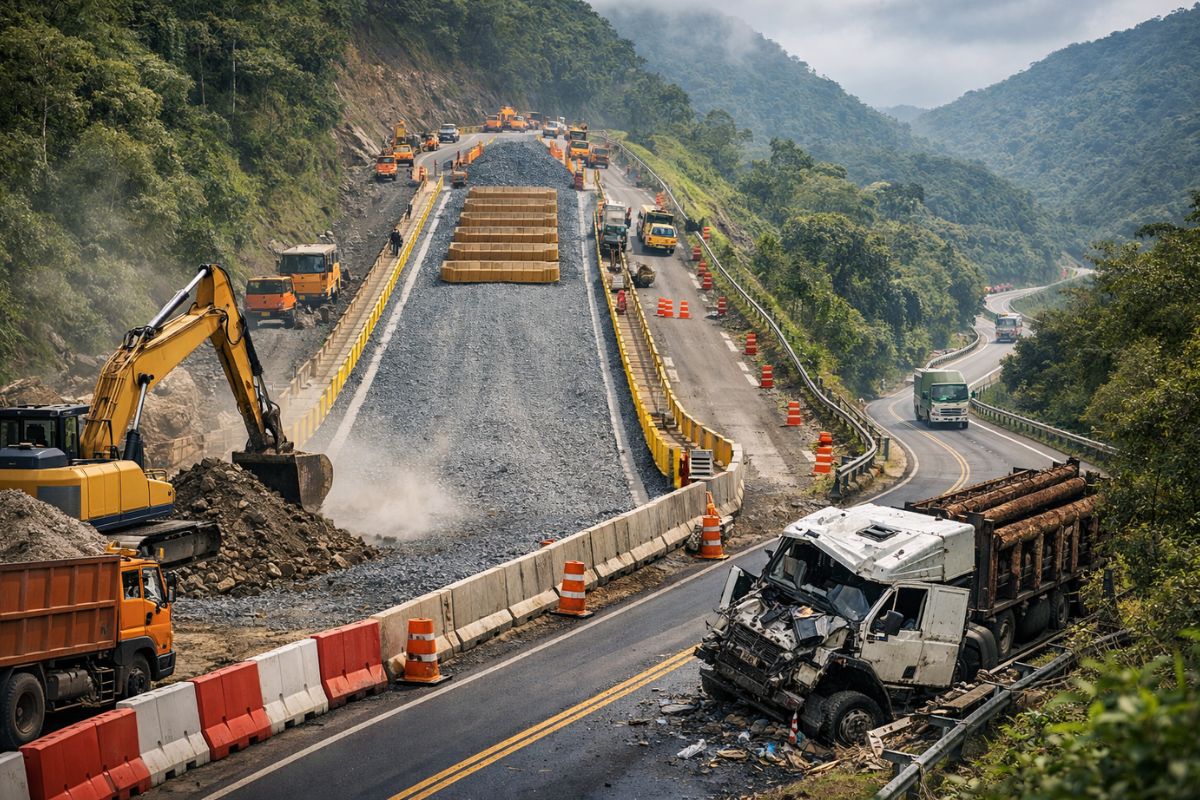
On SC-418, at Serra Dona Francisca, the first escape areas in Santa Catarina are advancing with 65% completion. SIE states that the schedule indicates delivery in June 2026. The investment is R$ 40 million in Estrada Boa, after an accident involving sulfuric acid in 2024 in Joinville.
On SC-418, Serra Dona Francisca has entered a phase of construction that changes the landscape and the debate around road safety in Northern Santa Catarina. The first escape areas in Santa Catarina are under construction at km 15.3 and 17.4 and have reached approximately 65% completion, according to the State Department of Infrastructure, SIE.
The official promise is to start operating in June 2026, in a stretch known for steep slopes and a history of accidents involving heavy vehicles. The underlying message of the work is simple: when a truck loses control, the mountain does not forgive, and the highway needs a final barrier before the worst.
Why Km 15.3 and 17.4 Became the Center of Decision
The two selected points, km 15.3 and km 17.4, are described as the most critical stretches of the mountain.
-
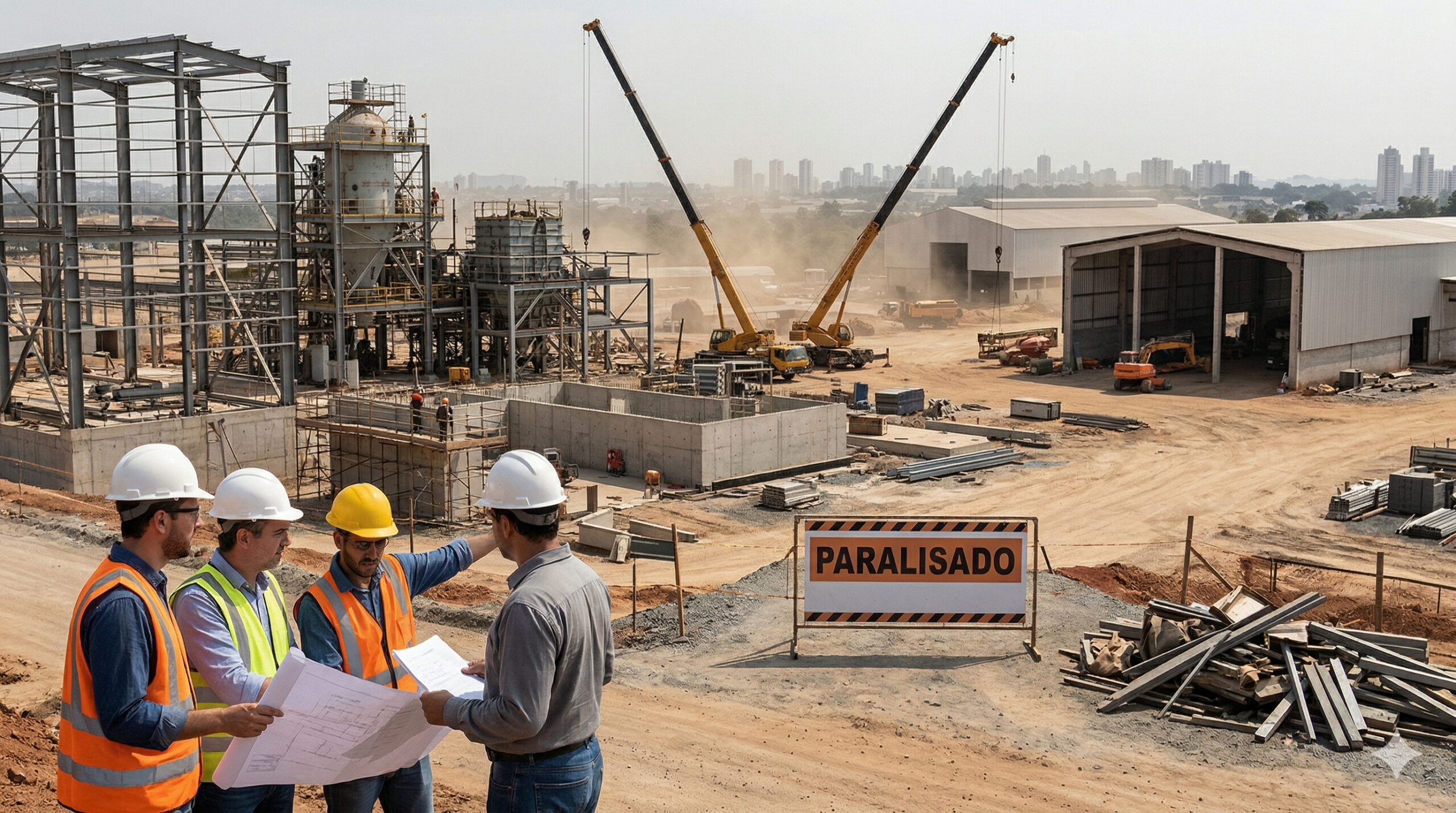
The lack of welders, electricians, and operators becomes a structural threat in 2025, with the construction industry and manufacturing already suffering from delays, cost pressures, and labor shortages in Brazil.
-
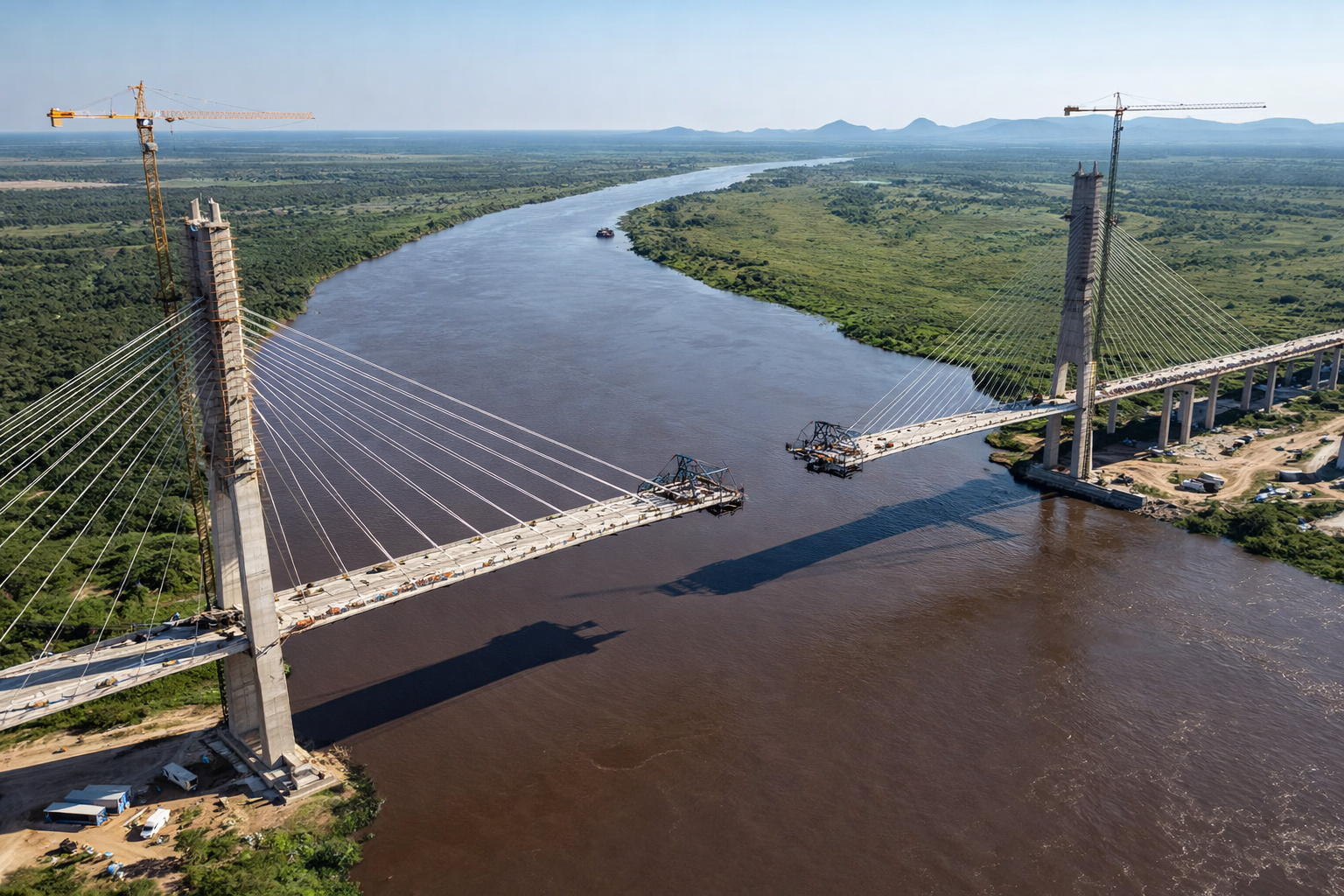
Brazil and Paraguay are just 46 meters away from a historic union on the bioceanic bridge that promises to revolutionize trade between the Atlantic and the Pacific.
-
With 55 km over the sea, a cost of US$ 20 billion, and enough steel to build 60 Eiffel Towers, China’s largest project has connected Hong Kong, Zhuhai, and Macau in a colossal bridge that defies the logic of engineering.

-
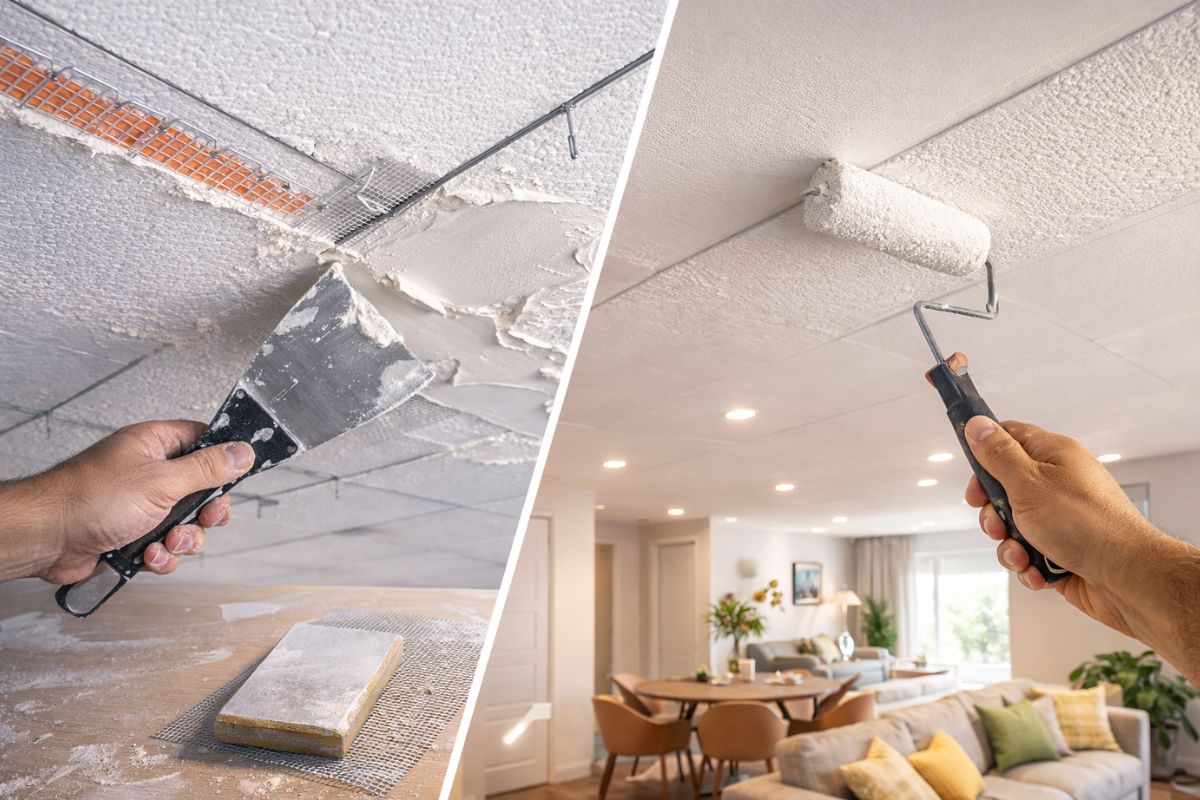
A trick with joint compound transforms a Styrofoam ceiling into a plaster-like ceiling: leveled panels, wires and mesh at the joints, sand, paint, and change the environment while spending little today.

The justification lies in the terrain’s layout, the steep slopes, and the volume of heavy traffic that typically crosses SC-418, where mechanical failures and driving errors have greater consequences.
The decision to install escape areas there does not come out of nowhere.
It is based on a longstanding demand that gained urgency after recent episodes involving trucks.
When the risk statistics become part of local routine, the solution must be physical, visible, and testable.
The Construction Site on SC-418 and the Stages That Explain the 65%
With 65% of the work completed, teams are focused on three fronts considered essential for progress: anchoring the slopes, paving, and leveling the widening of lanes.
Anchoring, in construction terms, is the stabilization of the slope, an effort to secure the hillside to reduce the risk of landslides and keep the stretch safe during and after the intervention.
Earthmoving and widening serve as structural bases to accommodate the device, as well as to adjust the stretch’s geometry to receive signage and access.
Paving, in turn, is the finishing touch that needs to relate to real-world operation, because an escape area is not just an improved shoulder; it is a system that needs to function under stress.
The Investment of R$ 40 Million and What 2024 Brought to the Table
The package involves an investment of R$ 40 million and is included in the Estrada Boa Program.
The number, by itself, does not explain the urgency but helps to frame the political and technical decision to treat the stretch as an infrastructure priority, not just routine highway maintenance.
The pressure increased after the accident on January 29, 2024, when a truck spilled sulfuric acid at Serra Dona Francisca in Joinville.
The product reached the Seco and Cubatão rivers and compromised the water supply of the largest city in the state.
It was an episode that exposed that the risk on the mountain is not just collision; it involves environmental impact and an urban domino effect.
How an Escape Area Works and Why It Is Not a “Miracle”
The regional reference cited to understand the mechanism is outside Santa Catarina, on BR-376, in Guaratuba, Paraná, where such devices already exist.
The operational logic is to install the escape area at the roadside, with adequate signage, so that a vehicle out of control has a clear and quick entry path.
The heart of the system consists of containment boxes made of special high-energy absorption material.
This material is designed to ensure the safe deceleration of the vehicle, reducing the chance of serious harm to the occupants.
In practice, it is an “emergency brake” engineering that replaces the panic of the descent with a containment corridor designed to absorb the impact.
June 2026 as a Landmark and What Changes in the Daily Life of the Mountain
SIE claims that work is progressing on schedule and that delivery should occur in June 2026.
If this deadline holds true, SC-418 will have a resource that currently does not exist in the mountain, a device designed specifically for the scenario of a truck descending without braking capacity or losing control.
This does not eliminate the structural risk of a mountain with steep slopes, nor does it replace oversight, maintenance, and responsible driving.
What changes is the last step before disaster.
The difference between a serious accident and a controlled stop, in some cases, can be a matter of seconds and a space designed for that.
On SC-418, Serra Dona Francisca became a construction site because the highway began to be treated as a critical point of safety and collective impact.
Escape areas at km 15.3 and 17.4, with 65% completion and expected to operate in June 2026, place Santa Catarina at a level that was previously more associated with highways with a similar history, such as BR-376.
Now I want a concrete answer from someone who knows mountain roads. Have you ever passed through SC-418 at Dona Francisca on a day with heavy trucks, and what was the most tense situation you saw there, brakes catching fire, traffic jam, reckless overtaking, or wet road on the descent?









Seja o primeiro a reagir!