





 Portuguese
  English
  Spanish
  6 min of reading
  4 comments


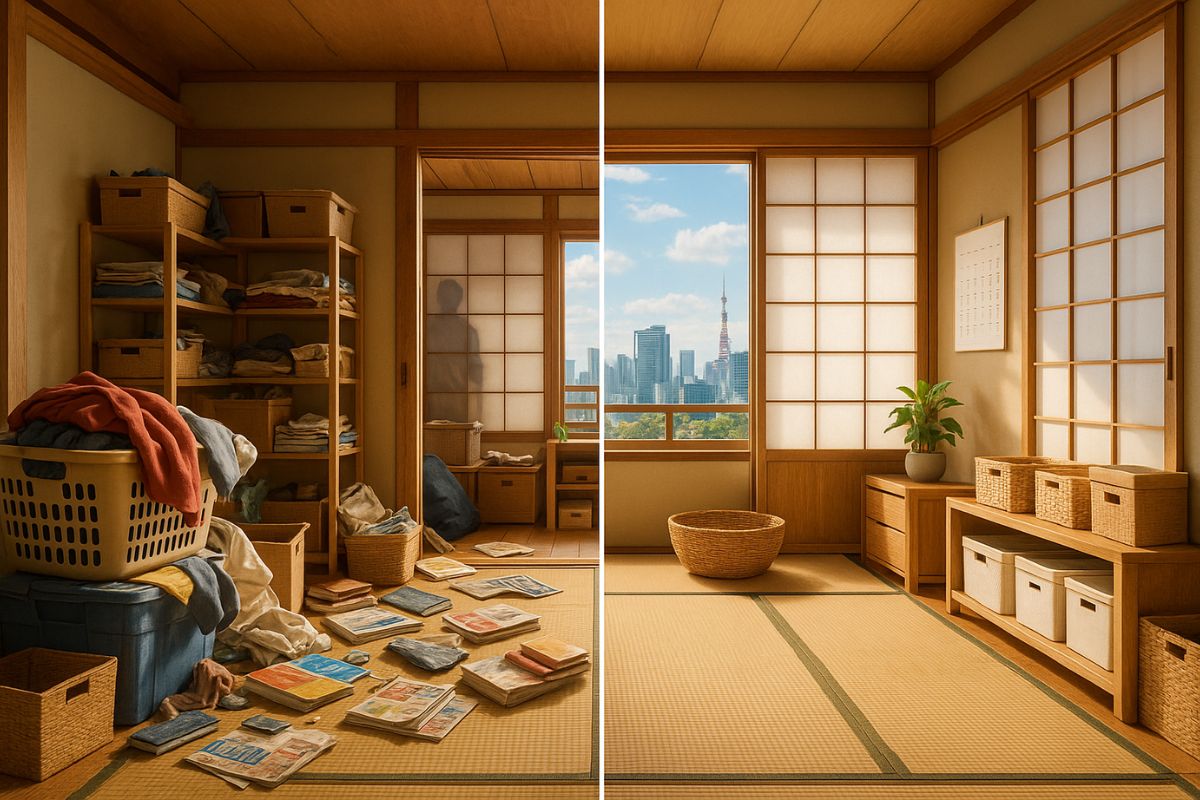


Japanese Habits Applied to Daily Life Transform the Home into an Automatic System of Order, with Fewer Things, More Visual Clarity, and a Routine That Weighs Less Throughout the Week
The idea of having an organized home forever seems unreal to those who live extinguishing fires between piled dishes, stacks of clothes, and items without a defined place. However, Japanese organizational habits show that the key is not in “tidying everything at once,” but in designing the home as a system, where each daily gesture reinforces order instead of creating new mess. In this model, the home works in favor of the routine, not against it.
Inspired by Japanese minimalism, this set of practices combines aesthetics, functionality, and intention. Instead of combating chaos after it establishes, Japanese habits address the root of the problem, reducing the volume of objects, shortening decisions, and making it simpler to put things away than to leave something out of place. The result is an environment with less visual clutter, less accumulated guilt, and a continuous sense of lightness.
1. A Fixed Address for Every Daily Use Object

The first of the Japanese habits is to treat each object as if it were a resident of the home, with a fixed address and a round trip route.
-
NASA published a photo taken from space of a mountain range in the interior of Goiás, and the whole world wanted to know what it was: beneath it lies the largest hot water spring on the planet, with temperatures reaching 70 degrees in the middle of the Cerrado.

-
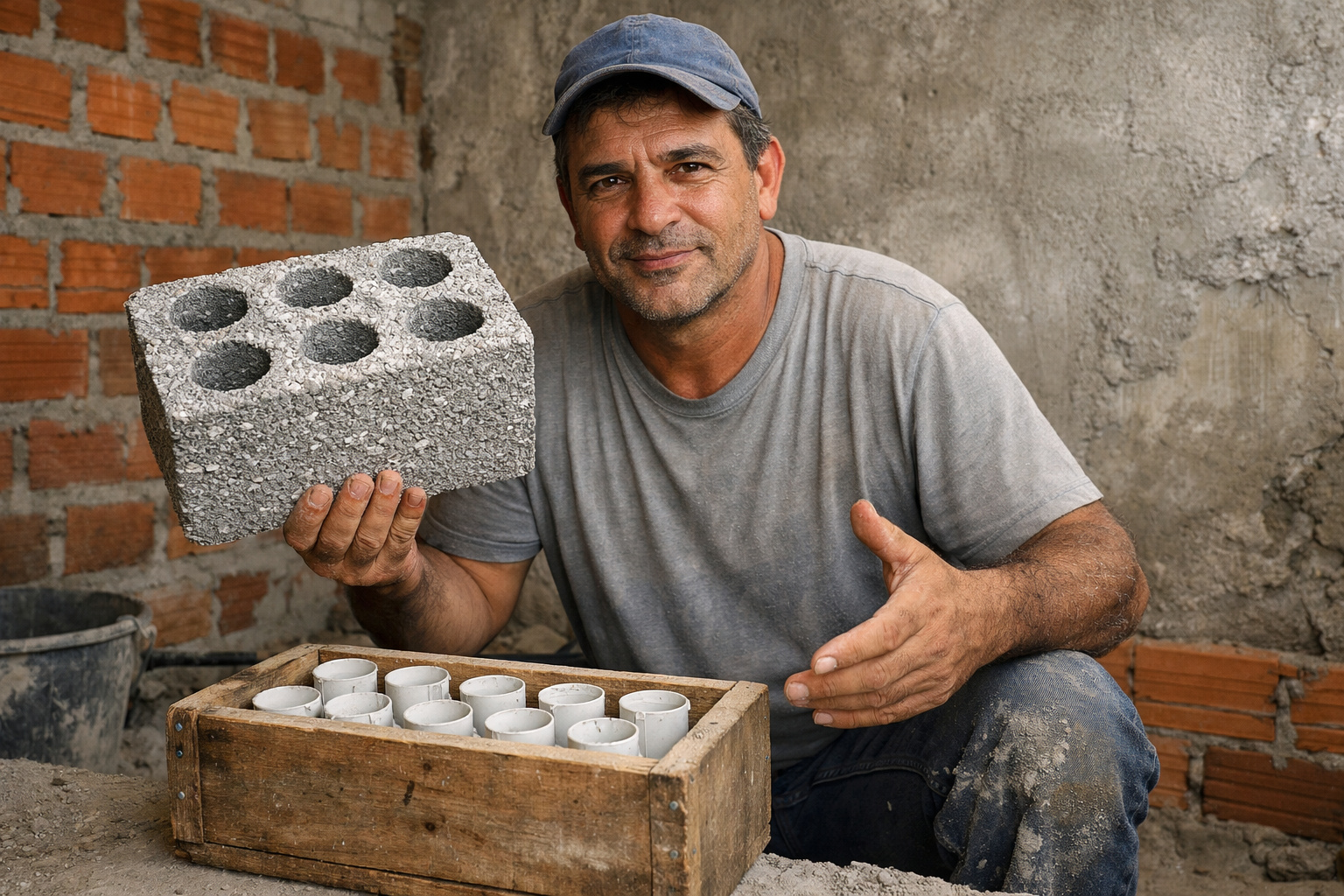
A thermal block costing only R$ 0.40 catches attention by reducing heat by up to 80% using recycled styrofoam, a common kitchen ingredient, and a manual technique capable of producing 50 blocks from a single bag of cement.
-
The item in the house that consumes the most water is not in the kitchen; it is in the smallest room of the house and can account for up to 30% of the expenditure on its own.

-
While Argentina relies on the USA to provide communications, data transmission, and electronic warfare for the F-16, Brazil is accelerating with the Gripen and integrating the Link-BR2, a national technology that strengthens air defense.


Without a clear place for keys, wallet, backpack, or headphones, the mess is only a matter of time.
The logic is simple: the more obvious the place for each item, the less mental energy is spent to put it away.
Trays at the entrance for incoming and outgoing items, a visible hook for the backpack, a small basket for mail and documents in transit create a clear “road network” within the home.
When the “return point” is defined, putting something in place ceases to be a decision and becomes a reflex.
The home remains organized while life happens, rather than just after sporadic major cleanings.
2. One-Minute Rule: Microtasks That Never Become a Mountain

Another pillar of Japanese habits for organization is to immediately resolve any task that takes less than a minute.
Folding the sofa blanket, putting away the book just read, wiping the bathroom sink after use, or throwing away a package in the correct trash are typical examples.
Accumulation doesn’t arise from major events, but from small postponed decisions. When these microtasks are delayed, they form an invisible mountain that occupies mental and visual space.
The one-minute rule acts as a filter: things that can be done now don’t go back to the queue.
The practical effect is clear: the home ceases to oscillate between “tidy” and “chaotic” and remains in a stable state of order, with continuous and almost automatic small adjustments.
3. Fewer Things, More Clarity: Organization by Category, Not by Room
Instead of organizing the home by room, Japanese habits prioritize organization by category: clothes, books, papers, utensils, electronics.
This allows one to see the actual volume of each group of items and make more consistent decisions about what makes sense to keep.
When everything from the same category is gathered, the excess becomes evident. Collections of mugs, piles of cables, duplicate clothes, and books that will never be read appear with uncomfortable but productive clarity.
The goal is not to have little, but to have enough, with a clear purpose.
From there, sorting gains criteria: keeping what is used and appreciated, releasing duplicates and non-functional items, finding responsible destinations for what leaves (donation, recycling, sale).
Fewer items mean fewer decisions, fewer things to clean, store, and manage. The home breathes, and the routine becomes lighter.
4. Five-Minute Daily Routine for Maintaining Order
Instead of exhaustive deep cleanings, Japanese habits bet on a streamlined maintenance routine: just five minutes a day, focusing on a specific point.
Examples of weekly distribution include:
Monday, kitchen surfaces;
Tuesday, bathroom sink and mirror;
Wednesday, dusting the living room;
Thursday, sweeping the floor in high-traffic areas;
Friday, workspace;
Weekend, general adjustments.
With a basic kit always at hand in each area (cloth, multi-purpose spray, small brush), the effort to start is reduced, and cleaning becomes an act of care, not a burden.
The heavy work disappears because there is rarely enough accumulation to become a problem.
5. Clear Use Zones: Function and Beauty Aligned
In the Japanese model, space “educates” behavior. Therefore, one of the most important Japanese habits is to define clear use zones: work area, reading area, meals area, rest area.
Mixing functions without criteria increases visual noise and the feeling of disorder.
Multifunctional environments are possible but need simple visual boundaries. A dining table can transform into a workspace if there is a tray to store a laptop, notebook, and accessories as soon as the workday ends.
A guest room can become an office with a foldable bed and a wardrobe that “hides” the keyboard, mouse, and documents.
When each zone has a clear function, the home ceases to be a large generic space and becomes a set of intentional environments, which reduces the habit of leaving objects anywhere and facilitates maintaining order.
6. Ten-Minute Nighttime Ritual: Kindness to the “Future Me”
Another central point of Japanese habits is the short nighttime ritual, lasting about 10 minutes, dedicated to preparing for the next day.
It’s not about tidying everything, but aligning the essentials: organized kitchen, clear countertop, dishes sorted, clothes for the next day separated, backpack or bag ready, home entrance without clutter.
This small block of time changes the morning experience. The day starts with less noise, less improvisation, and less rush, which reduces stress and prevents the home from starting to become disorganized within the first hours.
In practice, it’s like writing a silent note to yourself: “I’ve already prepared the ground, you just need to walk.” This continuity softens the routine and reinforces the feeling that the home cooperates with the resident.
7. Respect and Gratitude for Objects to Break the Cycle of Accumulation
Finally, there is a more subtle aspect of Japanese habits that directly impacts organization: the silent respect for objects.
The logic is straightforward: when one shows appreciation and cares better, things last longer, break less, and create less mess and disposal.
When putting away a coat, think mentally “thank you for keeping me warm”; when closing a laptop, acknowledge the day’s work; when donating something, admit that the object has fulfilled its role and can move on.
This attitude increases awareness about consumption, reduces purchases due to anxiety, and makes the criteria for entering new items much more stringent.
The home ceases to be a repository of impulses and becomes a place for only what makes sense. Less unnecessary entry means less future disorder.
Overall, these seven Japanese habits show that a home organized forever does not depend on perfectionism, but on intelligent systems, consistent micro-gestures, and a new type of relationship with objects.
Instead of “finding time to tidy up,” you redesign the routine so that life itself, in motion, maintains order.
And you, which of these Japanese habits do you feel would make the most difference in your home if you started applying it today: the fixed address for each object, the one-minute rule, or the ten-minute nighttime ritual?









Excellent. To break the cycle of hoarding and place things in a designated place. Rather, all habits of the Japanese to make the home clear, tidy and visually appealing are worth adopting.
Thank you for this post which is so practical and easy to follow. I am amazed by the profound insight behind each of the simple steps. I have already started applying rule 1&2! Way more to go …but I’m confident by the end of the week I’d be relieved of much clutter.👏👏 Thank you once again for this valuable post
The Japanese have the most cluttered houses imaginable. Junk and platic everywhere. The bare “tea room” esthetic doesn’t exist. Neither does any Architectural Digest type room in the west if there are no servants to keep things in order.