





 Portuguese
  English
  Spanish
  2 min of reading
  0 comments


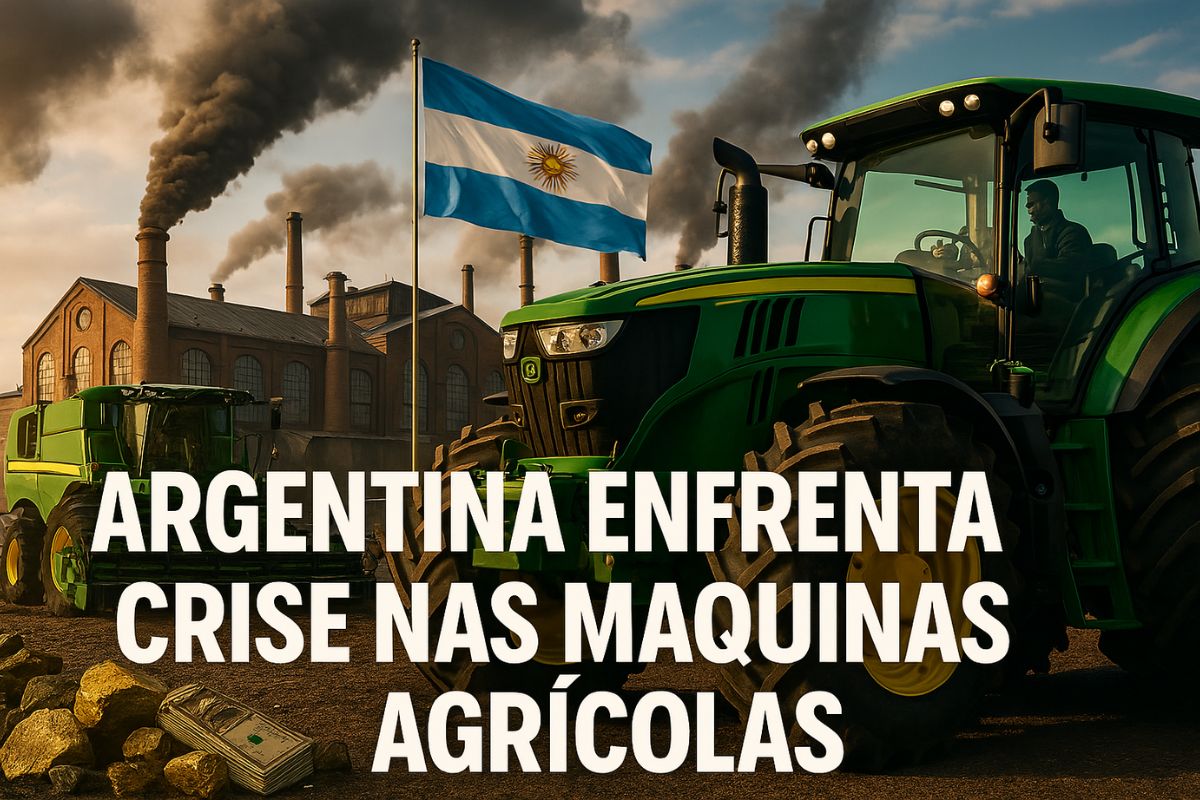
Manufacturers In Argentina Experience The Worst Start To The Year Since The Pandemic, Pressured By Imports From Brazil And China. Government Eased Barriers, And The Sector Is Already Talking About “Last Chance” To React.
The alarm has sounded in the Argentine industrial sector: agricultural machinery production plummeted at the beginning of 2025, and manufacturers resemble those watching the last train leaving the station. With a drop of up to 17% in sales, an increase in imports of tractors and harvesters, and an apathetic domestic market, Argentina is facing a crisis in a sector that was once a symbol of innovation in the country’s agribusiness.
Meanwhile, the government is opening the gates to foreign products, mainly from Brazil and China, generating tension and fear that many domestic factories may not withstand the pressure.
An Unexpected Crisis
In practice, the scenario is concerning. In January alone, 38 harvesters were sold in the country — a 17.4% decrease compared to December 2024. The number is considered one of the worst in the last decade, according to data from Acara (Association of Automotive Dealers of the Argentine Republic).
-
With over 1 million bottles per year and 1.2 million vines, winter wines are advancing and gaining a strategic laboratory worth R$ 3.4 million in the Midwest.

-
Elderly individuals aged 65 or older who have never contributed to the INSS can receive R$ 1,621 per month in 2026 without having paid any contributions in their lifetime: learn how the benefit works that already supports nearly 7 million Brazilians.

-
The gaucho city reduced the number of Bolsa Família beneficiaries by almost 40% in just a year and a half with active outreach that connects each registered person directly to job vacancies in Bento Gonçalves in Rio Grande do Sul.
-
The bluest city in Brazil has just gained a new floating bridge for the free crossing between the island and the mainland, connecting residents and visitors to the historic center of São Francisco do Sul every day of the week.


Enrique Bertini, president of the Chamber of Manufacturers of Agricultural Machinery (Cafma), was direct: “We are selling less than half of what would be considered a good year. And our factories have enormous idle capacity.” The statement echoes the sense of urgency among business owners in the sector, who now see the need for adaptation as a matter of survival.
The problem, however, is not just internal. The government’s opening to imports of machinery — a measure that theoretically lowers costs for rural producers — is allowing products with much more competitive prices, coming from markets with greater scale and tax incentives.
Impacts And Reactions Of The Argentine Industry
Local factories, which once dominated the supply of tractors and sprayers in the Argentine market, are now losing ground even in the most traditional agricultural regions. Brazilian and Chinese companies are gaining traction with ready-to-deliver equipment, more affordable prices, and, in some cases, even subsidies.
Cafma has already urged the government to reconsider current import policies and encourage domestic production. But, for now, the movement seems to be going in the opposite direction.
Even so, some believe in a less disastrous 2025. The reactivation of rural credit, combined with possible incentive policies, could provide a temporary boost to local manufacturers. Additionally, Argentine companies are investing in precision technologies and embedded connectivity as strategic advantages to face the competition.







-

Uma pessoa reagiu a isso.