





 Portuguese
  English
  Spanish
  6 min of reading
  0 comments


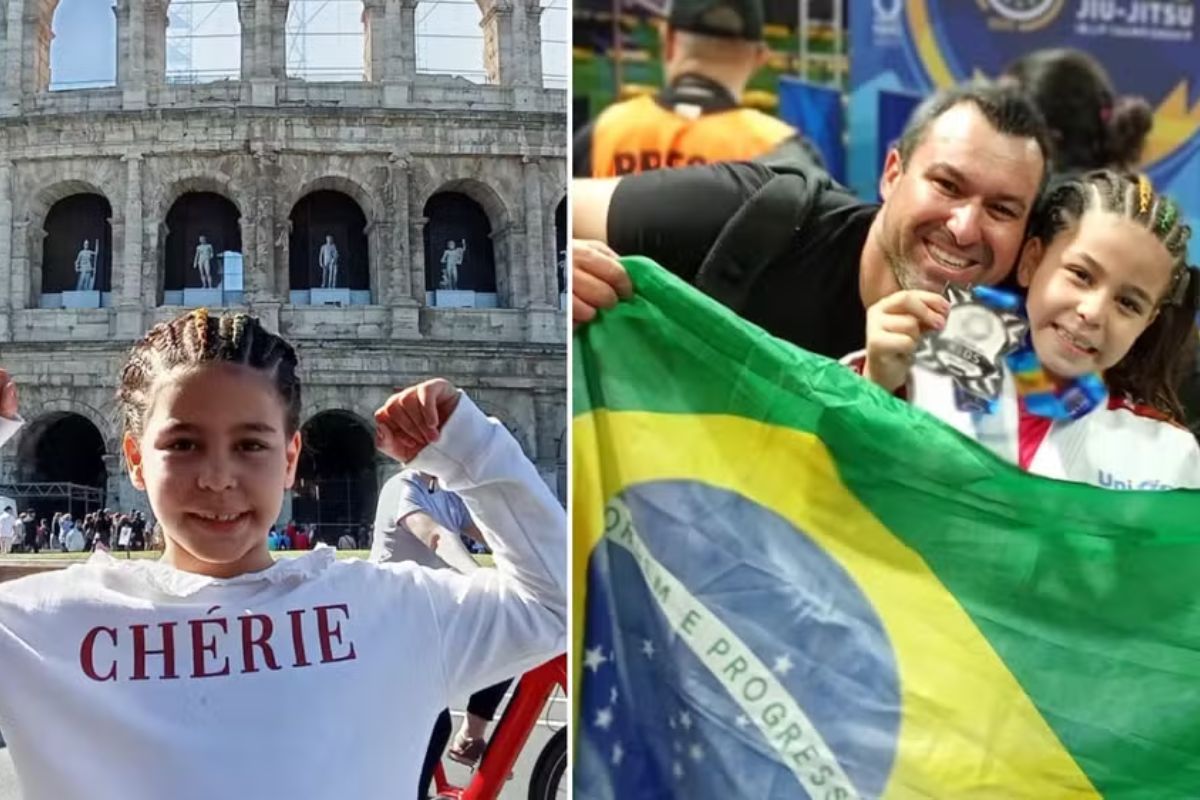
Gabriele Valentina, Tina from Ourinhos, is a world champion in Jiu-Jitsu at 9 years old, vice-champion in Europe and Pan America. But while she accumulates medals, her family sells sweets at the traffic light and relies on the help of recyclable waste collectors to fund trips to international championships.
The story of someone becoming a world champion at 9 years old rarely starts with glamour. In the case of Gabriele Valentina, Tina, it began in the corner of a Jiu-Jitsu gym in Ourinhos, in the interior of São Paulo, where she took her first steps while her father trained. The girl who played on the mat while her father’s group fought ended up getting a gi and, shortly after, stepping onto the podium. At 4 years old, she competed in her first competition. By 9, she is already a world champion in the gray middle heavyweight category, a title won in November 2025 at the World Jiu-Jitsu Championship in Abu Dhabi, United Arab Emirates.
What makes Tina’s journey even more impressive is the contrast between her achievements and her family’s financial reality. To fund trips to international championships, her parents sell canjica and sweets at the traffic light, hold raffles, and rely on the help of the Recicla Ourinhos cooperative, which brings together 90 families of recyclable waste collectors. The next goal is the European championship in Dublin, Ireland, on April 13 and 14. Last year, Tina won the European vice-championship in Rome. Now, as a world champion, she aims for gold in the gray heavyweight category.
How a child from Ourinhos became a world champion in Jiu-Jitsu
The influence of her father was the starting point. Tina grew up in the gym, observing techniques, imitating movements, and absorbing the discipline of the sport even before she understood what it meant to compete. “My first steps were on the mat,” says the world champion. “Since my father was already training Jiu-Jitsu, I started to enjoy it.” Her father bought her first gi when he realized that his daughter was not just playing but reproducing positions and moves with a naturalness that caught the attention of other practitioners.
-
Measuring 13 meters in length, weighing 82 tons, and installed 19 meters below the surface, the Aquarius is the only operational underwater laboratory in the world, allowing scientists to live for days on the ocean floor surrounded by reefs in Florida.

-
China has erected a colossal scientific observatory at an altitude of over 4,400 meters, designed to operate with thousands of detectors, track jets from black holes, and investigate the origin of the most energetic cosmic rays in the Universe.

-
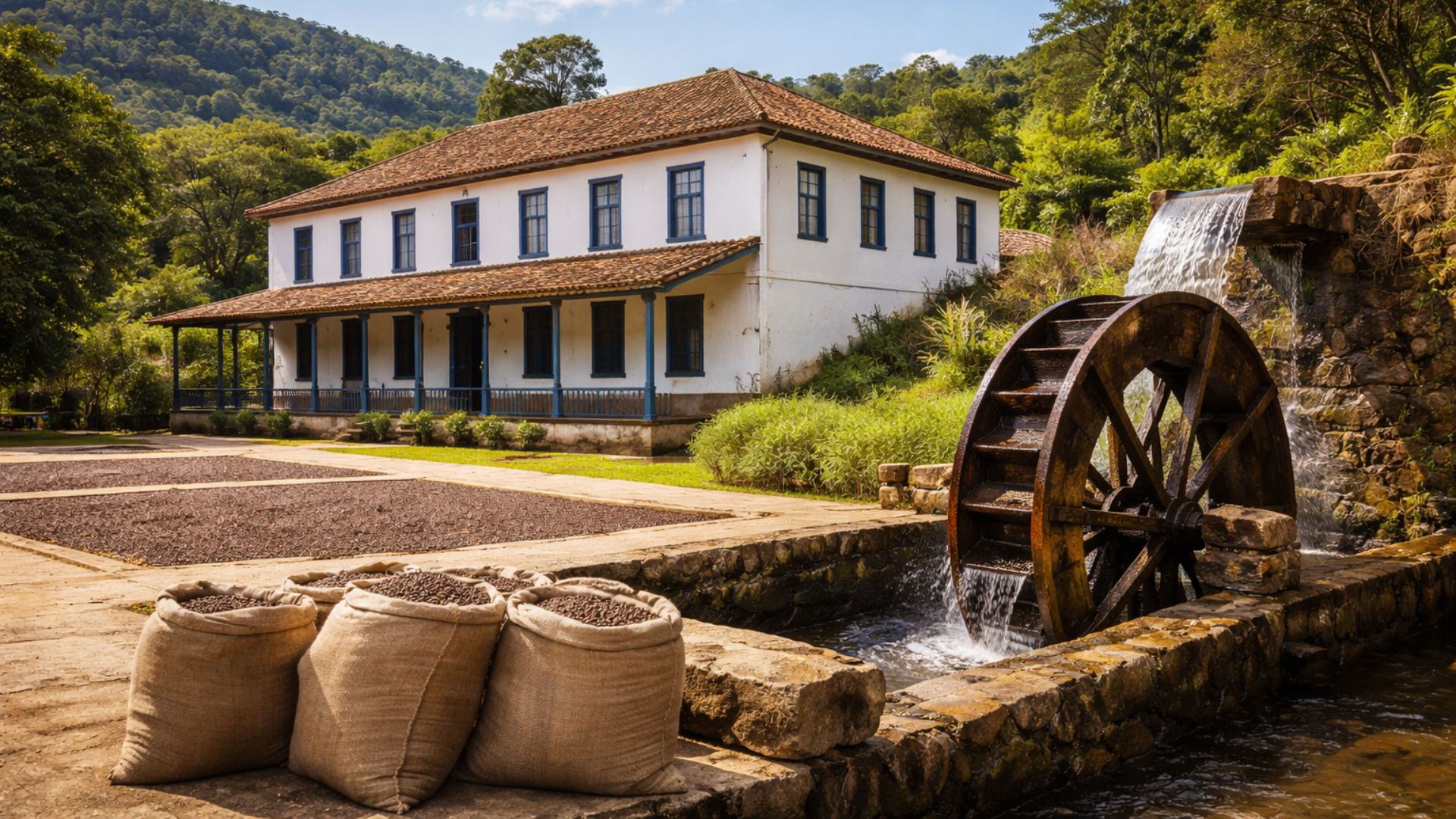
A Brazilian inherits a farm with a century-old mansion and 150 years of coffee tradition in Minas Gerais, restores the main house with water-powered machines, creates a new chalet, and transforms the historic property into a space that blends memory, nature, and culture.
-
How hatch covers weighing up to 45 tons seal the largest container ships on the planet and support giant stacks of cargo in open water.

The evolution was rapid. From the podiums in regional competitions in the interior of São Paulo, Tina quickly moved on to national tournaments and then international ones. Her sweet demeanor may confuse those who don’t know her, but on the mat, the girl shows the focus of a professional athlete. Her coach describes her as “very explosive” and “a show,” a combination of refined technique and competitive intensity that surprises larger and more experienced opponents. At 9 years old, the world champion already has dozens of medals and three prominent international titles.
The title of world champion in Abu Dhabi and what it represented
According to the channel Jornalismo TV Cultura, the biggest title of Tina’s career came in November 2025, when she traveled to Abu Dhabi to compete in the World Jiu-Jitsu Championship. In the gray middle heavyweight category, the girl from Ourinhos climbed to the highest spot on the podium and returned home as a world champion, an achievement that placed her name among the most promising talents in national sports. “It was amazing. I won first place,” Tina summarizes with the simplicity of someone who is still 9 years old.
The trip to Abu Dhabi was made possible thanks to a mobilization that involved the family, the Ourinhos community, and the cooperative of recyclable waste collectors that supports the athlete. The cost of airfare, accommodation, food, and registration fees for a competition in the Middle East is prohibitive for a family that relies on sales at the traffic light. Each title Tina wins is, at the same time, a sports victory and a demonstration that Brazilian talent survives despite the lack of structure, not because of it.
The routine of a world champion who still needs to play
In the daily life of the 9-year-old world champion, 24 hours seem too little. Tina balances school, intensive training, and, like any child, the need to play. The athlete herself assures that “there is plenty of time to play,” but the routine requires an organization that many adults would struggle to maintain. Training is daily, now focused on preparing for the European championship in Dublin, with an emphasis on specific techniques for the gray heavyweight category.
Having her own sensei at home, in this case, her father, is an advantage that accelerated Tina’s development as a fighter. The constant exposure to the sport created an early but healthy competitive mindset: the girl handles the pressure of competitions naturally. “I get a bit of a cold stomach,” she admits about the moments before stepping onto the mat. “But when I get there, everything goes well.” It’s the confidence of someone who has already proven she can win on the most important stages in the world.
The real cost of being a world champion in a country that does not support grassroots sports
While Tina fights on the mat, her family mobilizes outside of it to keep the athlete competing. The financial reality of a world champion who sells canjica at the traffic light is the most honest portrait of Brazilian grassroots sports. Her parents hold raffles, sell sweets at the traffic light, organize beauty days with the Recicla Ourinhos cooperative, and seek sponsors among acquaintances and local merchants. Each international trip requires a full fundraising campaign.
The Recicla Ourinhos cooperative, which brings together 90 families of recyclable waste collectors, has become one of the family’s main partners. “We have already held raffles together, sold canjica, and organized beauty days. We try to find other sponsors,” explains Tina’s mother. The community support is genuine, but it does not replace what should exist: a public policy to support grassroots athletes who demonstrate exceptional talent. A world champion should not need raffles to travel to the next championship.
What to expect from Tina in the coming months and years


The next stop for the world champion is Dublin, Ireland, where she will compete in the European championship on April 13 and 14. Last year, Tina won the European vice-championship in Rome, and now, as a world champion, the goal is clear: gold. The change of category, from gray middle heavyweight to gray heavyweight, adds an extra challenge, but the technical team and the athlete herself show confidence in the outcome.
In addition to the European championship, Tina is already a Pan American vice-champion, which shows that her results are not isolated but part of a consistent high-performance trajectory. For a 9-year-old girl who started playing in the corner of the mat, the future in Jiu-Jitsu looks as promising as the trips she needs to make to compete are uncertain. The world champion from Ourinhos is living proof that Brazilian talent can emerge from anywhere. What is lacking is for support to reach the same place.
A 9-year-old girl from Ourinhos is a world champion in Jiu-Jitsu, but her family sells canjica at the traffic light to fund her trips. Do you think Brazil should have a support program for young athletes with proven results? Do you know similar stories? Leave a comment.





Seja o primeiro a reagir!