





 English
  Francês
  Alemão
  Italiano
  Japonês
  Norueguês
  Portuguese
  Spanish
  2 min of reading


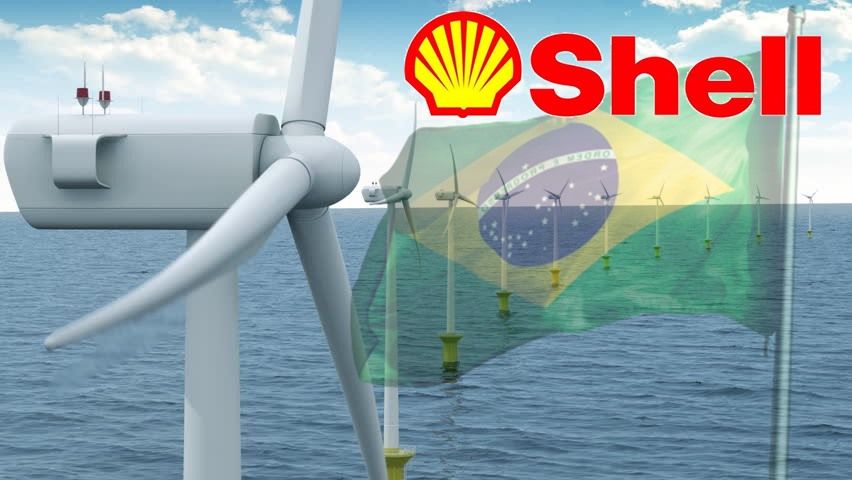
Shell Will Soon Enter Brazil’s Offshore Wind Energy Market, Said Country Manager André Araujo in a Webinar.
André Araujo, President of Shell Brazil, on the Offshore Wind Energy Market Yesterday (02): “At this moment, we are focusing on creating a group in the solar energy market, but I am in direct contact with our offshore wind group and we have discussed the fact that Brazil cannot be left out of this journey. So it’s just a matter of time,” said Araújo during a webinar organized by the Brazil-England Chamber of Commerce this Wednesday.
Shell is already investing in offshore wind energy outside of Latin America, mainly in the United States and the North Sea. In Brazil, however, the company has focused on oil and gas exploration and production, with over 32 contracts, 21 of which as operator, in the Campos, Santos, Barreirinhas, Espírito Santo, and Potiguar basins.

Precursor for Offshore Wind Energy Projects
Brazil is expected to become the first country in Latin America to Attract Investments in Offshore Wind Energy. Several oil companies, including Shell, with offshore activities in the country are eyeing the market. Last month, Norway’s Equinor initiated an environmental licensing process with the regulator Ibama to develop a 4GW offshore wind project in the state of Rio de Janeiro. Total and Enauta stated last year that they are interested in similar projects.
-
Chinese giant worth nearly R$ 4 billion that manufactures cables for electric cars, solar energy, and robotics wants to open a factory in SC.
-
Many employers do not know, but the law guarantees domestic workers a 25% increase in salary during trips, 50% for overtime, 20% for night shifts, and 17 additional benefits that can lead to labor lawsuits if not paid.

-
Gasoline prices soar and the question arises: is ethanol more advantageous? The 70% rule reveals the limit with gasoline.

-
The government has made a decision and is starting a test with more ethanol in gasoline, anticipating a mixture of up to 35%, diesel with 25% biodiesel, and a study to assess the impacts on engines.


A study by the Energy Research Company (EPE) showed that Brazil has the potential for 7 TW in its exclusive economic zones, if it could develop all of that. Of the total, 700 MW could be in shallow waters with winds of 7 to 7.5 m/s. The studies also highlight the possibility of integration between the oil and gas industry and the offshore wind segment, which could allow suppliers to serve both industries.
Brazil’s onshore wind energy capacity has grown significantly. In 2010, it was 928 MW and now exceeds 16 GW with 637 parks and 7,738 turbines. The capacity will increase to 24.2 GW by 2024, considering only the projects already contracted through government energy auctions and contracts in the free energy market.








Seja o primeiro a reagir!