





 Portuguese
  English
  Spanish
  4 min of reading
  0 comments


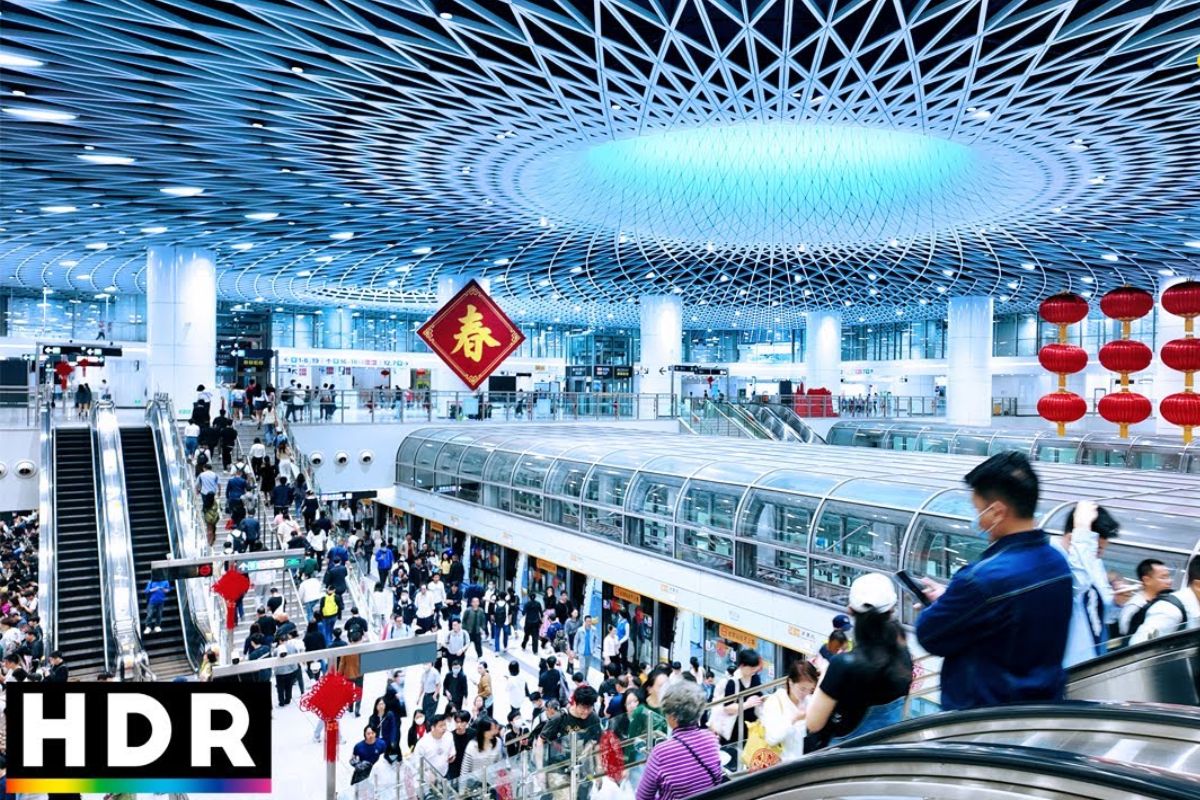
With 17 Integrated Lines, Digital Ticket via QR Code, and Monumental Stations That Resemble Airport Terminals, Shenzhen Shows How Chinese Urban Infrastructure Combines Automation, Design, and Efficiency, Designing a City That Seems to Anticipate the Future on a Real-Scale.
The subway system in Shenzhen is one of the most concrete expressions of what it means to live in China’s urban future. The stations, designed with airport aesthetics and total digital control, operate almost without human intervention, providing a public transport experience that combines technology, fluidity, and a science fiction look.
In operation since the early 2000s and constantly expanding, the subway in Shenzhen currently has 17 lines and integrates the entirety of the metropolis. Boarding is done through QR code payment on mobile phones, while the flow is guided by automated panels and presence sensors. Everything happens at a silent pace, with precision of seconds and an environmental control that keeps the temperature constant.
An Airport Experience Underground
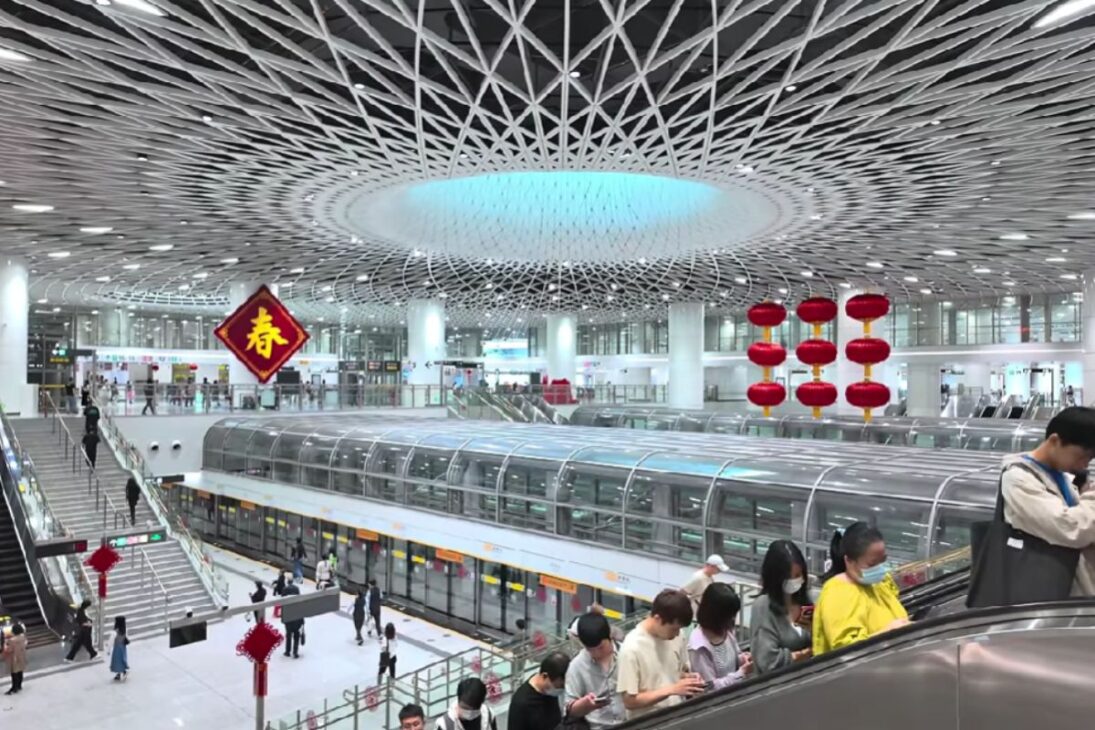
Upon entering the central stations, visitors feel as if they are in an international terminal.
-
iPhone in 2026: the technological innovations that go beyond cameras and processors

-
The longest public work in history began in Antiquity, spanned empires, was attempted by Nero, and was only completed 2,500 years later, turning the Corinth Canal into one of the most incredible stories of world engineering.

-
The USA invaded Brazil to create a city: founded after the war, the municipality of 250,000 inhabitants is the safest in São Paulo.
-
With a length of 399.9 meters and a capacity for over 24,346 containers, the MSC Irina becomes the largest ship in the world and revolutionizes global maritime transport.

Glazed walls, natural lighting through large skylights, and bilingual signage reinforce the city’s global identity.
The “Eye of Shenzhen”, as one of the iconic structures is called, stands out for its monumental circular shape and the light that passes through the ceiling, creating an almost cinematic atmosphere.
Tickets range between 0.2 and 1 dollar, an amount that, when converted, represents a symbolic cost given the scale of the system.
The cleanliness and visual order are notable: passengers board from the sides and disembark from the center, in a flow designed to avoid crossings and maintain constant movement, even during peak hours.
The Architecture of Efficiency
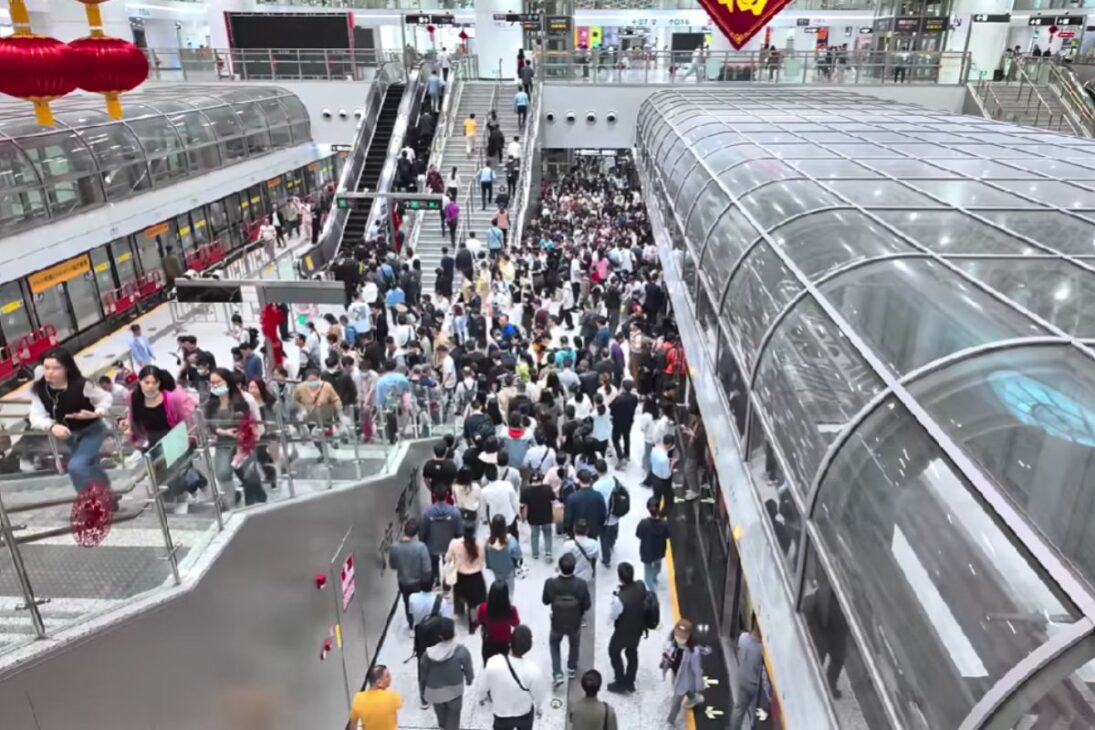
Each station is an example of the integration of civil engineering and urban design.
The extensive use of polished concrete, metal, and glass creates spacious environments, with controlled acoustics and thermal comfort.
The automation of the system allows for autonomous trains, monitored by control centers that coordinate speed, door openings, and intervals in real-time.
The visual logic also follows ergonomic principles. Routes are marked by colors, numbers, and icons, which facilitates reading even for those who do not master the language.
The Shenzhen subway has become a technical reference model for other Chinese cities seeking to expand high-density transport systems without losing the human character of the experience.
Youth, Mobility, and Urban Rhythm
The average age of the population in Shenzhen is one of the lowest in China, and this is reflected in the daily landscape.
Shared bicycles and scooters complete the short journeys between stations and offices at a cost of about 0.2 dollars per hour.
The mass use of mobility apps has transformed sidewalks into extensions of the subway, creating a continuous mesh between public transport and micro-mobility.
Even during peak hours, the flow remains orderly.
Queues are respected, the automatic doors are synchronized, and the predominant sound is that of electric motors.
The result is a high-performance urban routine that reinforces Shenzhen’s image as the technological showcase of mainland China, where innovation and urban planning go hand in hand.
The Design That Shapes the City’s Identity
The architecture of the stations goes beyond practical function: it is part of the futuristic imagery of the metropolis.
Open spaces, suspended volumes, and natural light compose the scenery that has become a visual symbol of a city focused on technological experimentation.
The subway is just one of the elements of this aesthetic; Shenzhen is also marked by skyscrapers with fluid shapes and LED-lit bridges, which complete the feeling of being in a sculpture-like city.
In each station, the ambiance reinforces the idea of connectivity and fluidity.
There are no visual interruptions or apparent physical barriers, and everything is guided by algorithms that optimize human circulation.
Shenzhen, in fact, operates as a metropolis in automatic mode, but with an aesthetic that celebrates the coexistence of machine and city.
The subway in Shenzhen is more than a means of transportation: it is an urban manifesto about the future.
With autonomous trains, immersive architecture, and total digital integration, the city demonstrates how technology can redefine daily life without losing the human dimension.
Do you think Brazilian cities could adopt something similar to the Shenzhen model, with complete automation and large-scale digital tickets?






-

Uma pessoa reagiu a isso.