





 Portuguese
  English
  Spanish
  3 min of reading
  1 comment


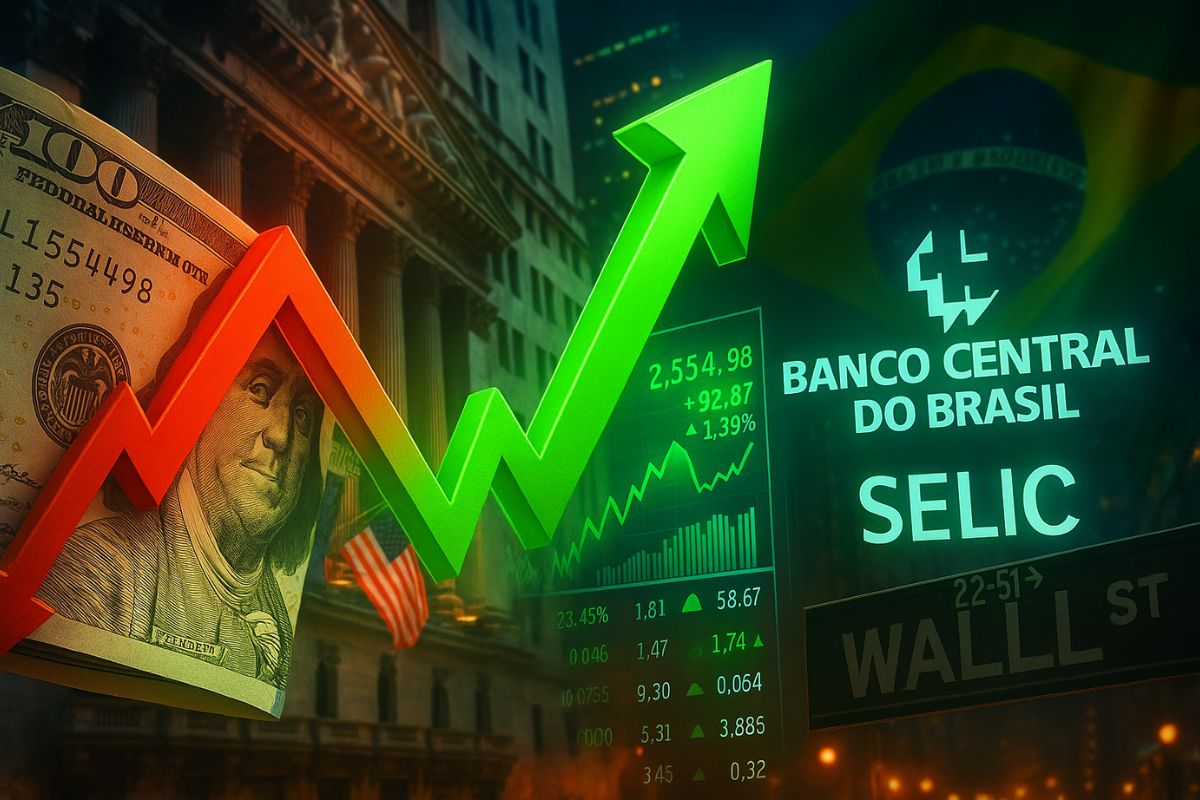


The Jackson Hole Symposium in September 2025 Opened the Door for the First Rate Cut in the USA Since 2020, with Immediate Impact on the Dollar, Global Stock Markets, and Brazilian Monetary Policy.
The Jackson Hole symposium, held in September 2025, sent the strongest signal in five years that the Federal Reserve (Fed), the central bank of the United States, may begin a cycle of rate cuts as early as September. The impact was immediate: the dollar dropped more than 1% against the real, stock markets surged, and investors began to project greater room for the Central Bank of Brazil to accelerate the reduction of the Selic.
According to an analysis by InvestTalk, this movement reflects not only the external scenario but also the perception that the American economy is showing signs of weakness. For Brazil, it means relief from exchange rate pressure and the chance to reduce the cost of credit more rapidly.
What Powell Said and Why It Matters
At the meeting, Fed Chairman Jerome Powell acknowledged that the USA faces the risk of economic stagnation with inflation above the target, but made it clear that the institution can cut rates as early as September. If confirmed, it will be the first cut since 2020.
-
Larger than entire cities in Brazil: BYD is building a 4.6 km² complex in Bahia with a capacity for 600,000 vehicles per year, but the discovery of 163 workers in conditions analogous to slavery has shaken the entire project.

-
With an investment of R$ 612 million, a capacity to process 1.2 million liters of milk per day, Piracanjuba inaugurates a mega cheese factory that increases national production, reduces dependence on imports, and repositions Brazil on the global dairy map.

-
Brazilian city gains industrial hub for 85 companies that is equivalent to 55 football fields.

-
Peugeot and Citroën factory in Argentina cuts production by half and opens a layoff program for more than 2,000 employees after Brazil drastically reduced purchases of Argentine vehicles.


The announcement moved markets because it signals a change in direction: from years of aggressive rate hikes to a stimulative policy. When the USA cuts rates, investors tend to seek emerging markets, increasing the influx of dollars into markets like Brazil.
Reaction of Global Markets and Brazil
The response was immediate. The S&P 500, Dow Jones, and Nasdaq closed significantly higher, while stock markets in Europe, Japan, and Brazil followed suit. On the B3, the Ibovespa index rose over 2% in a single trading session.
In the currency market, the real was one of the biggest beneficiaries: the dollar fell more than 1% against the Brazilian currency, reflecting the migration of foreign investors to local assets. Since around 50% of trading on the Brazilian stock exchange comes from foreigners, any change in the USA directly impacts prices here.
What This Means for the Selic
With the dollar’s decline and improved risk perception, the Brazilian Central Bank gains more room to reduce the Selic. This is because the appreciation of the real helps to contain inflation, paving the way for bolder cuts in the basic interest rate.
Experts believe that the Fed’s decision could bring forward the drop in the Selic in 2025, stimulating credit, consumption, and investment in the country. However, there is caution: internal inflation and control of public accounts will still be determinants for the pace of this reduction.
The Political Factor That Increases Uncertainty
Despite the relief, there are risks on the horizon. Former President Donald Trump is pressuring Powell for quicker cuts and has announced the dismissal of a Fed director, alleging fraud in mortgages. This type of political intervention casts doubt on the independence of the American central bank, a pillar of global economic stability.
For Brazil, this means that the scenario can change rapidly if the USA adopts more political than technical decisions, which would bring volatility to exchange rates, stock markets, and interest rates.
The signal of a rate cut in the USA is a turning point for the global economy and may accelerate the cycle of reducing the Selic in Brazil. Lower dollar, rising stock market, and cheaper credit are the immediate effects. But the future will depend on the solidity of American monetary policy and Brazil’s ability to maintain its public accounts under control.
Do you believe that the Central Bank should accelerate cuts in the Selic in light of this scenario, or is it better to maintain caution to avoid renewed inflationary pressure? Leave your opinion in the comments — we want to hear from those who feel the effects of this in their daily lives.







Não acredito com esse Galipolo, ladeado com banqueiros, está subserviente a mesma política do Campos neto parece até um discípulo dele. Nao está atrelado ao governo nem com o povo brasileiro.