





 Portuguese
  English
  Spanish
  3 min of reading
  8 comments


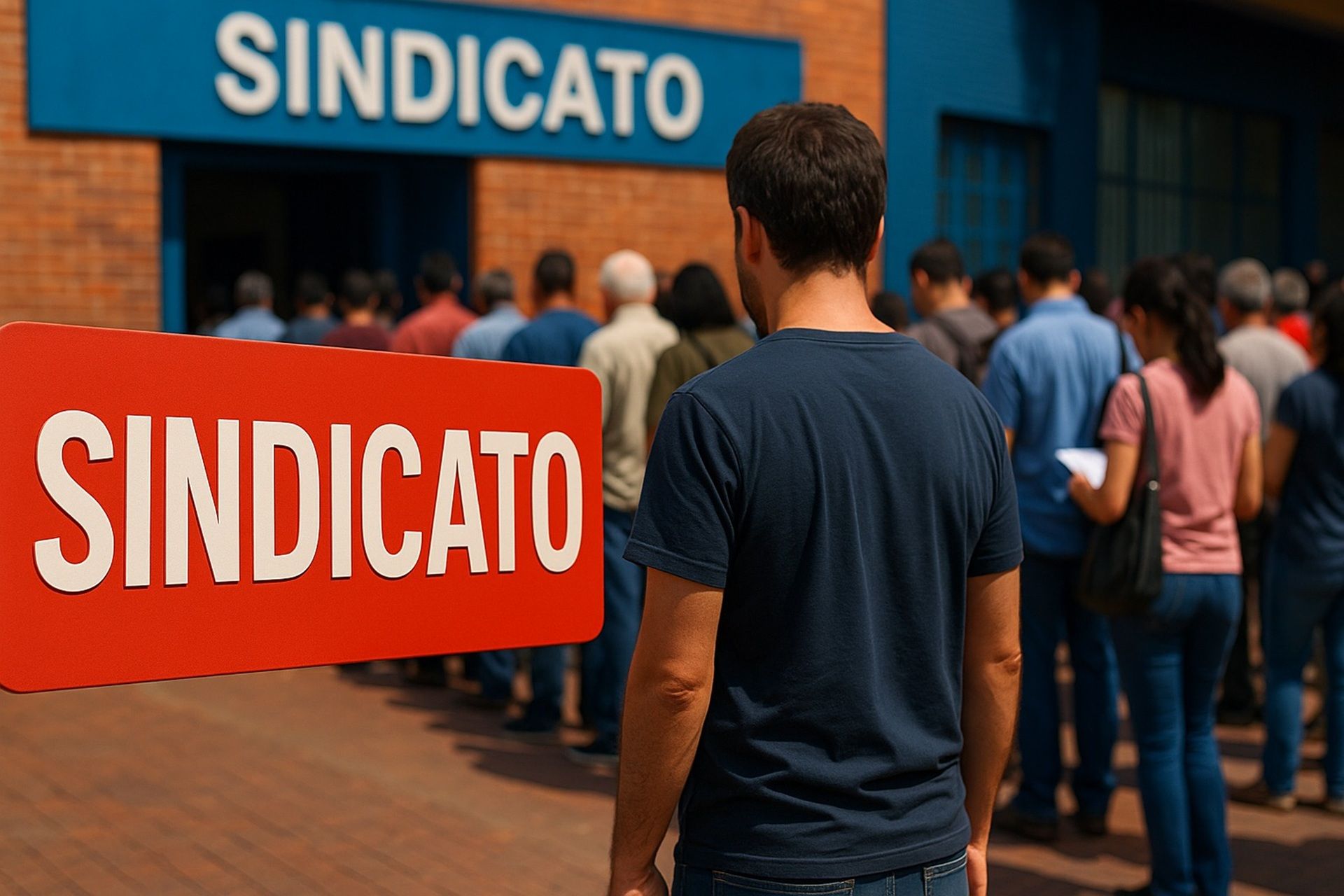


Workers Face Lines, Requirement for Written Letter and In-Person Processes to Cancel Assistance Contribution in Unions in São Paulo, Despite an Approved Project in the Chamber Foreseeing Digital Mechanisms That Still Depend on the Senate.
The assistance contribution deducted from payroll continues to be the main source of income for unions, generating resistance from the category to facilitate cancellations requested by workers. The process requires physical presence, free time, and facing long lines.
The report recorded the situation at the metalworkers’ union in Osasco and the surrounding area in Greater São Paulo, where people waited in the sun, rain, or cold to submit the request for exclusion of the fee. Many workers stated that the procedure could be digital.
Even living in a context with ample technological tools, cancellation still depends on personal travel to the union’s headquarters. The requirement includes the presentation of documents and the preparation of a handwritten letter to formalize the request.
-
The noise law will no longer be in effect at 10 PM starting in June with a new rule valid during the 2026 World Cup.

-
The Chamber opens a debate on driver’s licenses at 16 years old as part of a reform that includes around 270 proposals to change the Brazilian Traffic Code and may redesign rules for licensing, enforcement, and circulation in the country.

-
The new Civil Code could revolutionize marriages in Brazil with “express divorce” and changes that could exclude spouses from inheritance.
-
Banco do Brasil sues famous influencer for million-dollar debt and intensifies debate on delinquency, risks of seizure, and direct impact on Gkay’s credibility.


The result of this prolonged and exhausting process is that many give up before completing the request. Thus, the fee continues to be deducted automatically for years, even when the worker does not wish to make the payment.
Consequences for Those Who Cannot Cancel
According to testimonies presented in the report by Jornal da Band, some workers give up because they cannot miss work.
Others face vacation periods and end up not showing up, which keeps the charge active. This set of difficulties increases the revenue of the entities.
Specialists interviewed state that the solution would be to allow online cancellation, using an app, email, or even video calls. However, the adoption of these means is still far from the current reality.
The recurring justification is that the rules defined in assemblies between unions and employers have legal precedence since the labor reform of 2017. This includes how the worker must communicate that they no longer wish to pay the contribution.
Project Approved in the Chamber Does Not Fully Solve
The Chamber approved a bill that creates mechanisms for simple and digital cancellation, but the proposal still needs to be analyzed by the Senate. Despite the progress, specialists emphasize that the measure does not fully resolve the issue.
This happens because the collective agreement can determine how the cancellation should be carried out. Since these decisions have a high legal force, unions consider themselves protected by the agreement formalized between representatives of workers and companies.
The understanding is that there will only be effective change when there is direct interest from the unions or when popular pressure increases to the point of demanding a less bureaucratic process.

Context About the Loss of Union Strength
Unions once had great power, fueled by giant companies with thousands of workers from the same professional category. However, this scenario has changed in recent years.
The industry has lost the weight it had in previous decades, while the service sector has grown significantly. In addition, decentralized negotiation and labor reform have distanced many people from the union environment.
With fewer members and less revenue, union leaders seek alternatives to keep their finances active. According to the report, some end up adopting practices deemed inappropriate to preserve revenue.
Social Pressure May Determine Next Steps
Experts interviewed assert that real transformation will depend on the mobilization of workers, who need to clearly express their dissatisfaction with the current model. Only with significant social pressure should unions reconsider practices deemed outdated.
Despite the visibility brought by the project approved in the Chamber, there is still no forecast for when the Senate will vote on the proposal. In the meantime, in-person lines and manual requirements continue to be the reality for those wishing to cancel the assistance contribution.
The information presented in this article is exclusively sourced from content published by Jornal da Band.










Ta faltando todos se unirem,e chegarmos e destruir tudo.Nao tá resolvendo de boa,vamos a moda do povão
Hoje existem sindicatos só para receberem a contribuição dos trabalhadores. Veja bem: nada oferecem, não tem atendimento a saúde, educação , aprimoramento técnico. Então ficam falando que representam trabalhadores, porém pouco fazem. Veja bem oferecem descontos que qualquer um consegue nessas empresas, idem remédios, idem escolas e planos de saúde.
São uma unidade fechada, não sabemos o que a diretoria recebe e o que fazem, transparência não existe. A fiscalização do min. Do trabalho e só para empresas nunca para sindicatos. O auxílio jurídico e uma piada, acordos e acordos.
Então trabalhar para sustentar diretores nunca. São hipócritas e fazem de tudo para continuar mamando nos salários dos trabalhadores.
Houve um tempo em que o sindicato fazia valer a força que tinha, esse tempo acabou, as indústrias passaram a desvalorizar financeiramente seus funcionários, ou seja, diminuir benefícios e reduzir salários além de exigir mais resultados, e isso já tem mais de uma década, e o sindicato que se diz defensor dos direitos do trabalhador não conseguiu fazer o seu papel. Hoje nossa realidade é outra, só perdemos nesses últimos anos, então porque devemos continuar contribuindo com uma entidade sem força? Super apóio esse projeto para facilitar o direito do cidadão de se opor ao desconto (lembrando que poucos são os direitos do cidadão brasileiro), isso quando ele não estiver disposto a perder mais uma fatia da sua remuneração que já é pequena diante de tantos impostos pagos.