





 Portuguese
  English
  Spanish
  5 min of reading
  0 comments


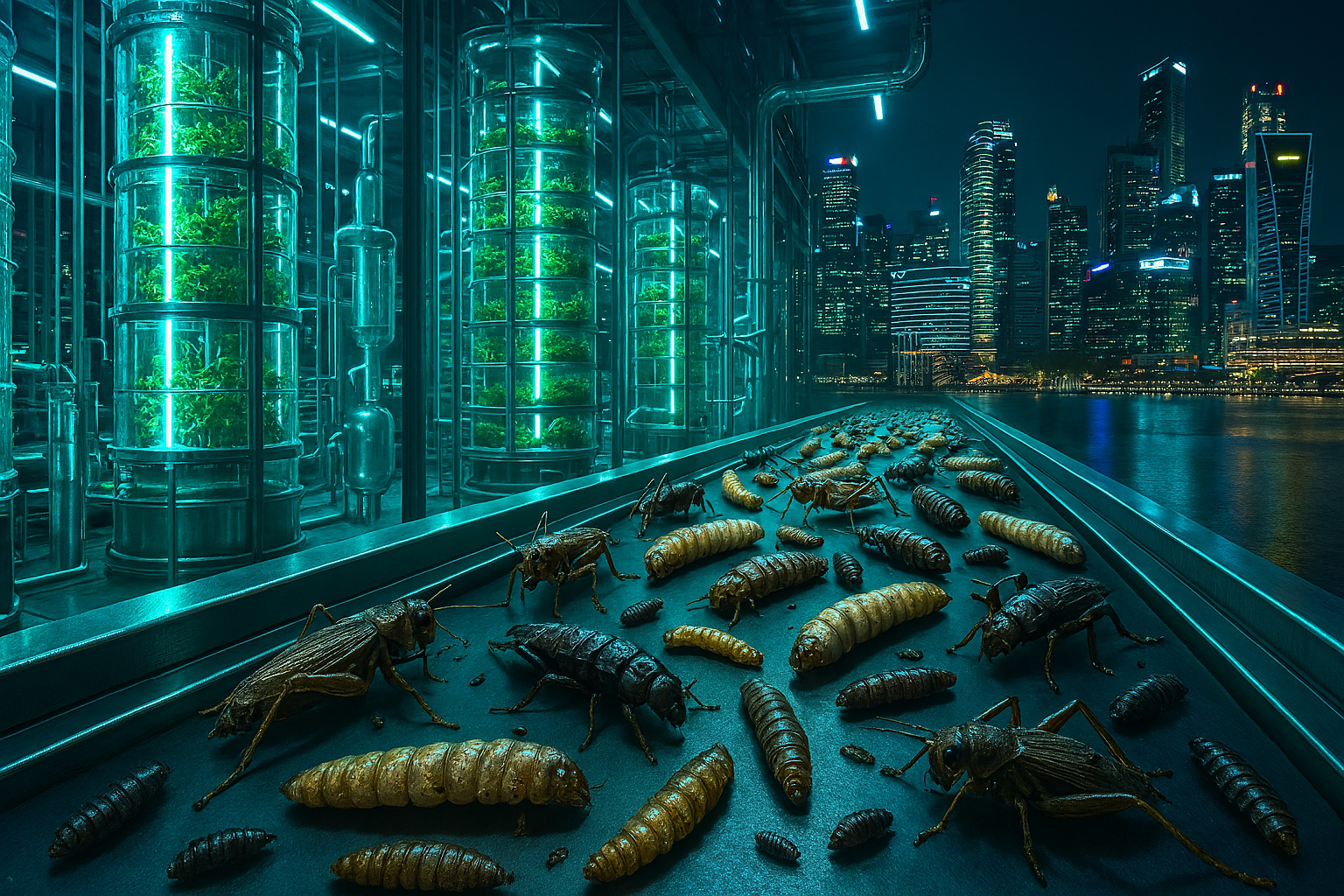
After Allowing Insects for Human Consumption, Singapore Transforms Alternative Protein into State Policy, Boosts Foodtechs and Redesigns Asian Food Security.
In the financial heart of Southeast Asia, where every square meter is worth millions and every state decision is made under extreme scrutiny, Singapore took a step that few countries have dared to take so directly: officially allowed insects for human consumption within its strict health regulations. Instead of treating alternative protein as a culinary curiosity or experimental niche, the country integrated insects into its strategic planning for food security, industrial innovation, and nutritional sovereignty.
The decision did not arise from a trend. It was born from a structural problem that has accompanied Singapore since its founding: the country imports more than 90% of everything it eats. In a world marked by trade wars, logistical crises, and climate shocks, relying on the outside for food has ceased to be merely an economic risk. It has become a geopolitical risk.
The Turning Point that Transformed Insects into State Food Policy
The allowance of insects for human consumption was led by the Singapore Food Agency, an agency known for maintaining one of the most stringent regulatory systems on the planet. No product enters Singapore’s food market without adhering to protocols involving complete traceability, toxicological studies, sanitary standardization, and absolute control of the production environment.
-
Brazil surprises China with new agro offensive: first shipments of DDGS and poultry by-product meal arrive in the Asian country, expanding billion-dollar exports.

-
War in the Middle East threatens this year’s harvest and wallets: Brazil depends on the Strait of Hormuz for 35% of nitrogen fertilizers, exports up to 23% of corn to Iran, and freight, diesel, and prices are skyrocketing today.
-
Geometric cranberry bogs in Wisconsin flood entire fields and turn red during harvest, creating an agricultural mosaic so intense and out of the ordinary that it transforms wetlands in the United States into one of the most stunning landscapes ever seen from space.
-
At 96 years old, the last survivor of a colony of Japanese immigrants who arrived in the Amazon in 1929 saw his community create an agricultural method that transforms destroyed pastures into forests that produce food year-round and attract researchers from around the world.
In this scenario, insects were only authorized after scientific evidence of food safety, genetic control of the species, closed-environment farming, and detailed allergenic risk analysis. What seemed unthinkable just a few years prior became part of the official category of novel food in the country.
From that moment, insects ceased to be seen as exotic alternatives and began to be treated as strategic food infrastructure, on the same level as advanced plant proteins, precision fermentation, and lab-cultivated meat.
Why One of the Wealthiest Countries in the World Invests in Something So Unlikely
Singapore has no significant agricultural space, lacks abundant water resources, and experiences one of the highest urban densities on the planet. Producing traditional meat within its own territory is economically unviable. Every kilogram of beef, chicken, or fish depends on a long, expensive, and vulnerable logistical chain.
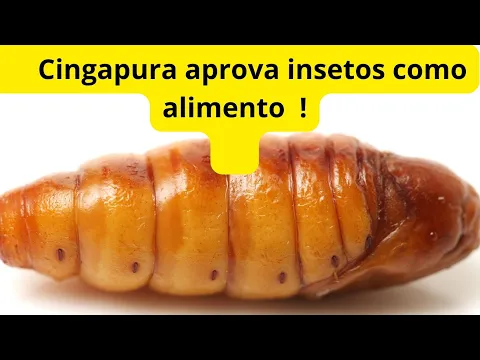

Insects tap directly into the weak point of this system. They can be produced indoors in vertical warehouses in urban areas, with minimal water consumption, extremely high feed conversion, and production cycles of just a few weeks. In terms of efficiency, they are one of the most rational ways to generate animal protein in the 21st century.
By investing in insects, Singapore is not just breaking a cultural taboo. It is reconfiguring its own food survival logic.
The Silent Gear that Feeds the Foodtech Ecosystem
The allowance of insects has immediately opened the space for the explosion of startups, research centers, and food biotechnology companies. Singapore had already been positioning itself as a global hub for foodtech, but the incorporation of alternative protein has given real scale to this movement.
Today, the country hosts cellular fermentation laboratories, cultivated meat startups, high-density plant protein centers, and pilot factories for insect processing. The state acts as a direct facilitator between universities, venture capital, and industry, creating an ecosystem where food is treated as a strategic technology.
The insect does not reach the final consumer as a visible animal on the plate. It appears diluted in protein bars, enriched pasta, shakes, supplements, and functional foods targeted at health, physical performance, and longevity. Adoption happens quietly, almost invisibly, but structurally.
The Nutritional Value that Supports the Paradigm Shift
From a biochemical perspective, Singapore’s decision is anything but symbolic. The approved insects have protein contents ranging from 55% to 75%, with high concentrations of iron, zinc, vitamin B12, and essential amino acids. Nutritionally, they compete directly with red meat and high-cost concentrated proteins.
For a country that is aging rapidly and heavily invests in preventive medicine, functional nutrition, and active longevity, insect protein ceases to be just food. It becomes a public health policy instrument.
Insects, Cultivated Meat and Fermentation: The Triad of New Food Sovereignty
Singapore is not betting on a single solution. The country has structured its food strategy around three technological pillars: insects, cultivated meat, and precision fermentation. By diversifying its protein matrix, the country drastically reduces its dependence on global grain chains, ocean fishing, and traditional livestock farming.
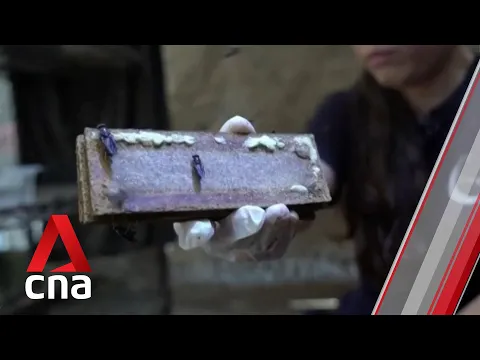
Each of these fronts acts as insurance against different types of crises. Together, they build an unprecedented food shield for a nation that has always been at the mercy of international trade for food.
The Global Influence of FAO Guidelines on the Asian Turnaround
Singapore’s advancement directly engages with the FAO recommendations, which since the 2010s have pointed to insects as a concrete solution for global food security, reducing pressure on oceans, decreasing livestock emissions, and utilizing organic waste.
The difference lies in the pace. While many countries view these guidelines as a distant horizon, Singapore has rapidly turned them into operational public policy.
The Food of the Future is Born in the Laboratory, Not in the Field
Singapore’s movement symbolizes a silent civilizational shift. For millennia, humanity produced its protein from the land, pasture, and sea. Now, for the first time on a real scale, protein is being generated in controlled environments, governed by sensors, robots, bioengineering, and artificial intelligence.
In this context, the insect shifts from being a symbol of scarcity to becoming a symbol of extreme efficiency of life transformed into a productive system.
The Invisible Economic Impact that is Already Forming
Although the volumes are still modest compared to traditional meat, the added value of alternative protein in Singapore is extremely high. The market is geared towards export, nutraceutical industry, hospital sector, premium functional food, and high-tech gastronomic tourism.
This creates high margins, attracts international capital, and positions the country as Asia’s showcase for future food.
The Normalization of the Unthinkable in One of the Most Rigorously Societies in the World
If insect protein has been institutionally accepted in one of the most stringent countries on the planet, the logic is straightforward: the global cultural taboo is crumbling from within, pushed by economic, climatic, and logistical factors far stronger than any emotional resistance.
The consumer may not realize it, but the protein of the future is already being ingested in capsules, shakes, and energy bars.
The message is not gastronomic. It is geopolitical. In an unstable world, those who dominate their own sources of protein will also dominate their ability to withstand crises. Singapore understood this before most.
By making insects a state policy, the country is not just innovating in food. It is redesigning the foundations of food sovereignty in the 21st century.








-

-

-

-

10 pessoas reagiram a isso.