





 Portuguese
  English
  Spanish
  4 min of reading
  0 comments


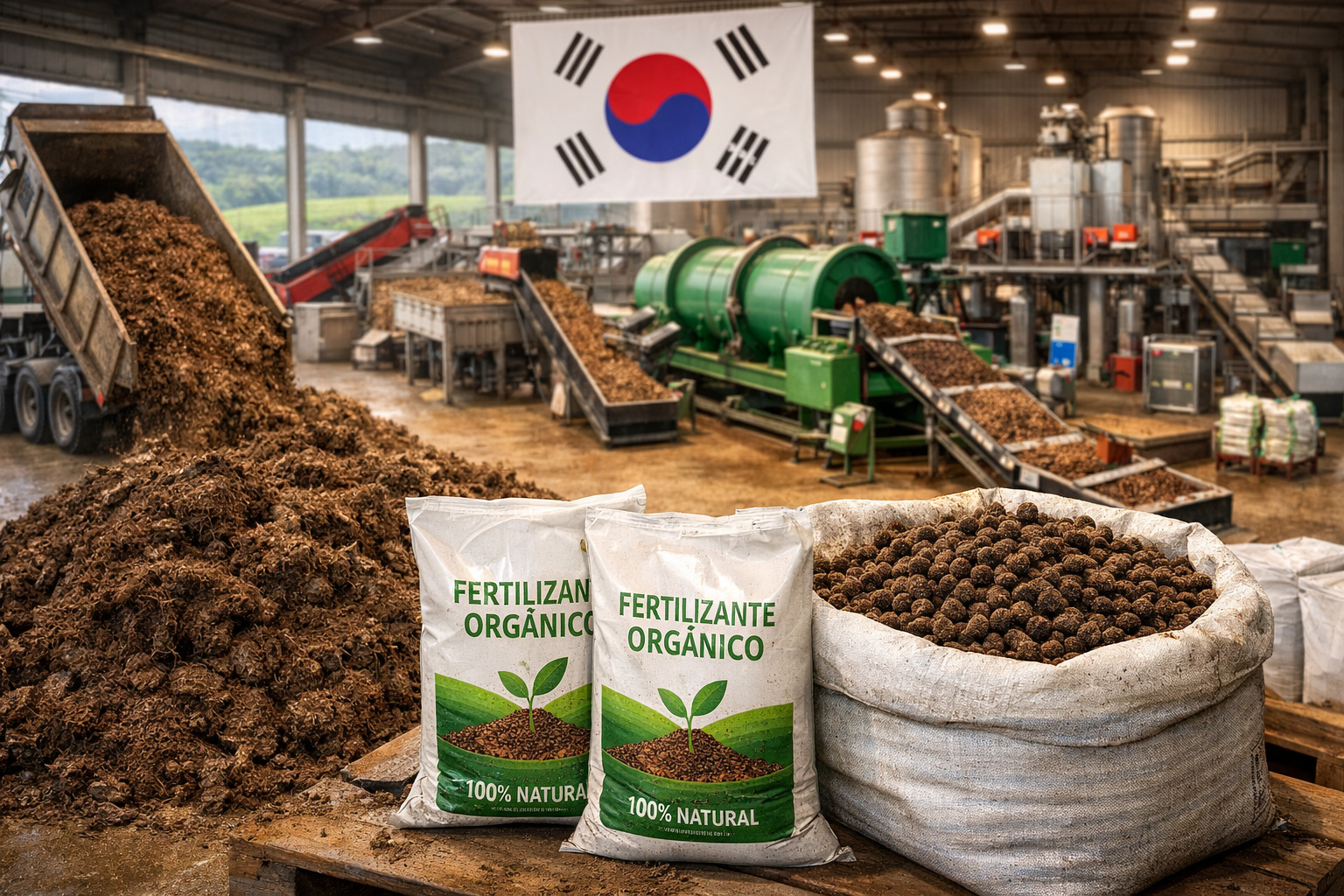
A factory transforms cattle manure into organic fertilizer on a large scale, with automated technology and very positive environmental impact
The production of organic fertilizer from cattle manure already reaches 250 tons per day in a factory located in Gyeongju, South Korea. The process draws attention for its high level of automation and its ability to turn waste into a commercially valuable product.
In addition to reducing environmental impacts, this large-scale production strengthens sustainable agriculture and also supplies international markets. The model demonstrates how the use of technology can enhance efficiency and reduce dependence on chemical fertilizers.
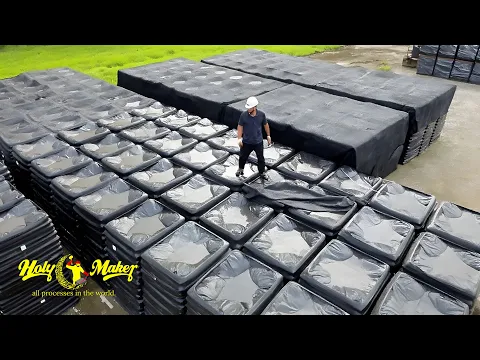

The factory process begins with weighing and removal of impurities in cattle manure
The operation begins with the arrival of trucks loaded with cattle manure. The material goes through a precise weighing system, ensuring total control of the raw material that enters the production line.
-
A small town with 800 inhabitants in the interior of the United States is giving away free land, with water, electricity, and paved streets, and even offers a cash allowance for families with children, all to attract residents and escape the depopulation threatening rural villages.

-
At about 9 meters deep in the sea of Sicily, divers recovered a 2,500-year-old marble horse attributed to the colossal Temple of Zeus in Agrigento, a piece that, if confirmed, would be the largest archaeological discovery in the region in a century.
-
22-carat gold may be hidden in household items treated as scrap, while Swiss scientists use whey to recover the precious metal and pave the way for new sustainable urban mining.

-
With a gigantic arch of 106 meters and the largest stadium swing in the world, the Moses Mabhida Stadium accommodates up to 54,000 people, offers a panoramic tour with views of the Indian Ocean, and has become an architectural symbol of South Africa by combining soccer, tourism, and extreme attractions at the top of its monumental structure.



Next, the unwanted waste separation stage occurs. At this point, items such as stones, wood, and sand are removed, which can compromise the quality of the fertilizer. The process uses equipment that elevates the material, allowing heavier debris to be efficiently separated.
This initial care is essential to ensure a purer and safer final product for agricultural use.
Grinding, molding, and storage stages ensure product standardization
After cleaning, the manure proceeds to the grinding phase, where the material is crushed to facilitate the subsequent stages. This process improves uniformity and prepares the product for granule formation.
Subsequently, the fertilizer goes through three molding stages, which define the final shape of the product. This standardization facilitates transportation, storage, and application in the soil.
After molding, the material is sent to storage tanks, where it remains until it moves on to the final sorting and packaging phase.
The automated line of the factory allows continuous production of 250 tons per day
The entire factory operates with a 100 percent automated system, from the entry of raw materials to the final packaging. This reduces the need for labor and increases process efficiency.
Automation allows for a constant production pace, reaching 250 tons daily of organic fertilizer. This volume demonstrates the industrial capacity of the plant and the potential to meet large agricultural demands.
The structure follows a common model in South Korea, which invests in factories with integrated processes, including composting, grinding, screening, and granulation.
Organic fertilizer improves soil and reduces environmental impact
The fertilizer produced by the factory from cattle manure offers various benefits for agriculture. It increases the organic matter in the soil, improves water retention, and stimulates the activity of beneficial microorganisms.

Another important point is the gradual release of nutrients such as nitrogen, phosphorus, and potassium, which prevents damage to plants and reduces aquifer contamination.
This type of production also prevents improper waste disposal, turning an environmental problem into a sustainable solution.
Production in South Korea supplies internal market and exports
South Korea has been increasing investments in organic and biological fertilizers, using agricultural and animal-origin waste as raw materials. This model strengthens the circular economy and reduces environmental impacts.
The information was released by Reuters, an international news agency, which highlighted the export of fertilizer to Asian countries, such as Vietnam.
Reuters, the international news agency, also pointed out that large-scale production integrates South Korea into the regional sustainable agriculture market.
Technology and sustainability drive the future of agriculture
The use of cattle manure in fertilizer production shows how technology can transform waste into valuable resources. The combination of industrial automation and sustainability enhances efficiency and reduces costs.
With large-scale production, the agricultural sector gains a more balanced alternative, with lower environmental impact and greater utilization of natural resources.
This model is likely to grow and may inspire other regions to invest in similar solutions.
If you think this type of technology can transform agriculture in Brazil, leave your opinion in the comments and share this article with others interested in the topic.




Be the first to react!