





 Portuguese
  English
  Spanish
  6 min of reading
  0 comments


Airoll System Combined Inflatable Tires and Tracks to Create Amphibious Vehicles Capable of Crossing Swamps, Snow, and Water, an Experimental Military Concept Developed in the 20th Century.
For decades, military engineers faced an apparently simple problem, but extremely difficult to solve: how to create vehicles capable of crossing any type of terrain without getting stuck. Tanks with tracks have excellent traction in mud, snow, or sand, but tend to be slow on hard surfaces. On the other hand, vehicles with wheels are fast and efficient on roads but struggle on extremely soft terrain.
It was precisely from this attempt to combine the best of both worlds that the Airoll concept emerged, an experimental mobility system that utilized inflatable tires connected as if they were a continuous track. The idea was simple yet ingenious: to create a vehicle that could roll like a car when the ground was firm, but act like a tank when facing soft soil or difficult inclines. This concept resulted in some of the most curious prototypes in 20th-century military engineering.
How the Airoll System Works
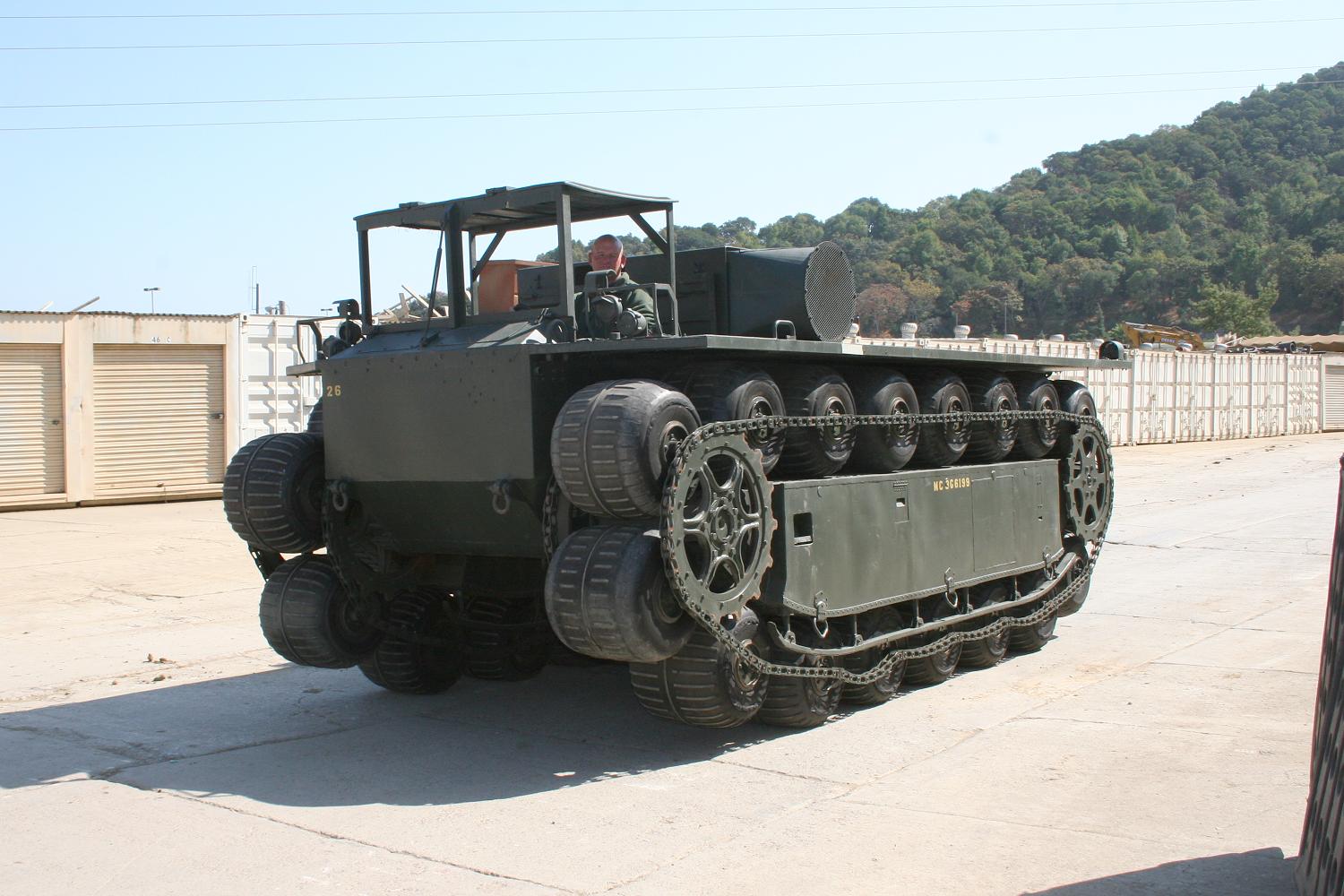
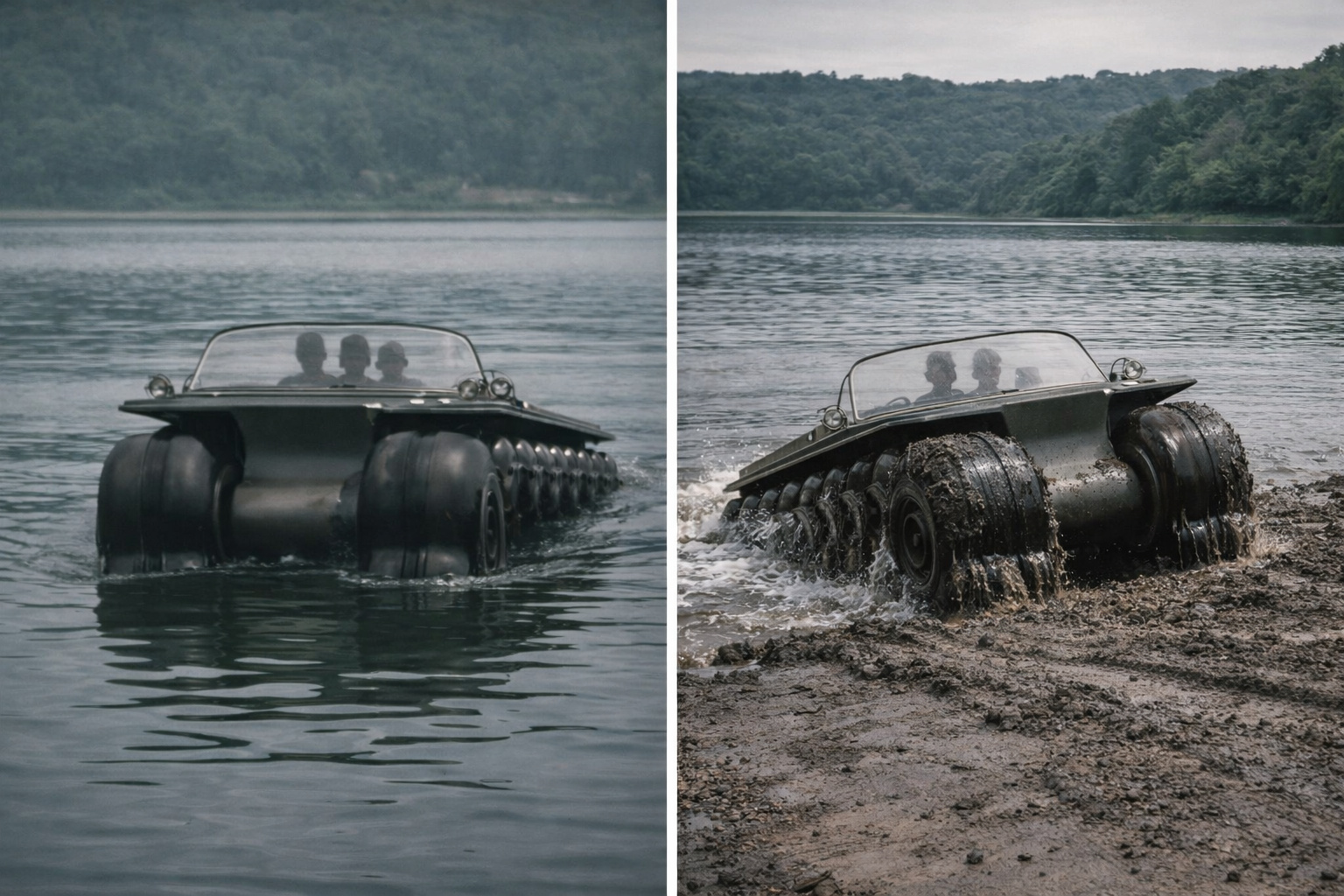
The operating principle of the Airoll combines two different modes of movement. Instead of traditional metal tracks used in tanks, the system employs several inflatable tires positioned side by side and connected by chains or movable structures, forming a kind of “wheel track.” This arrangement allows the vehicle to operate in two ways.
-
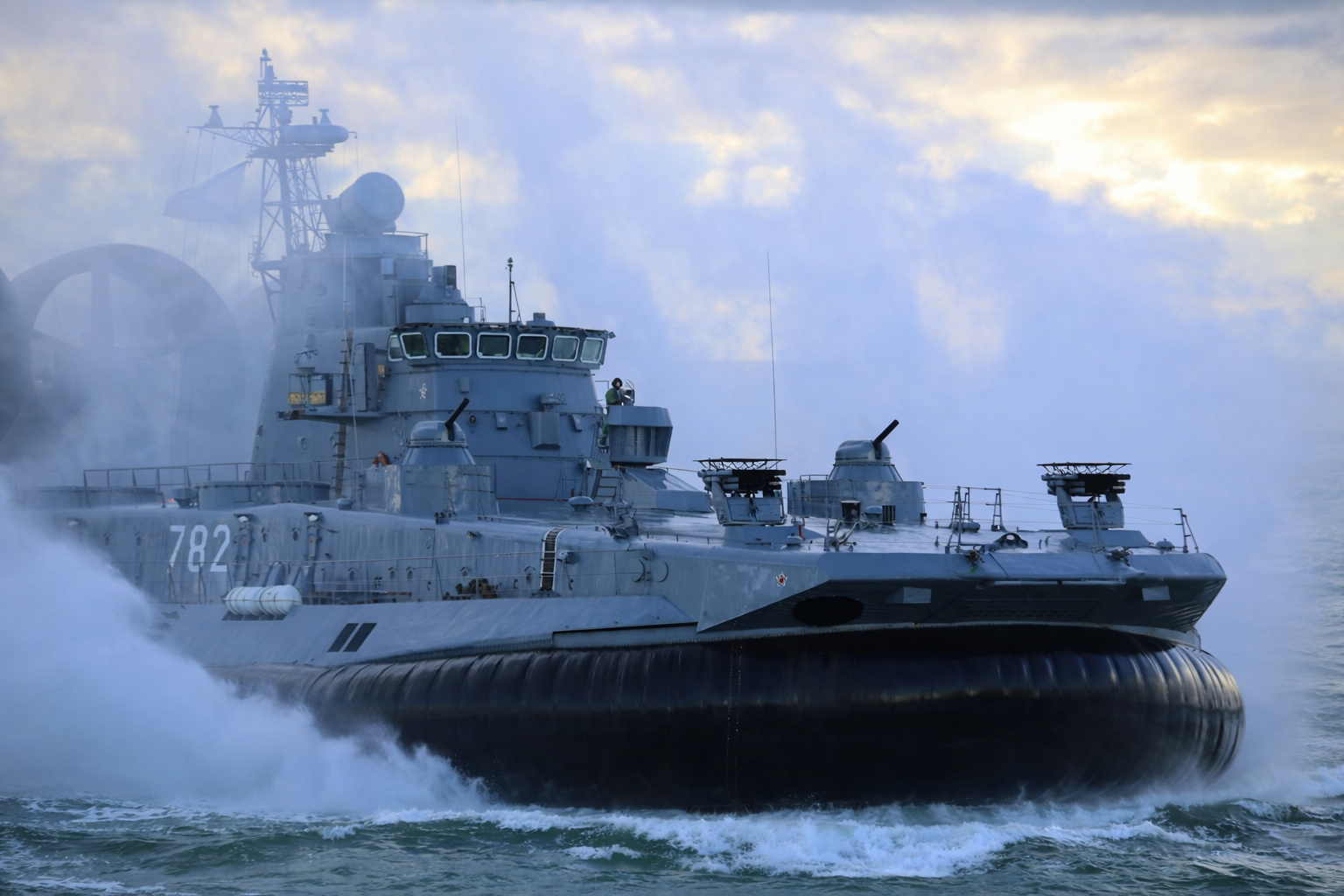
Classified as a “amphibious monster” weighing 555 tons, 57 meters long, and featuring three propellers with a diameter of 5.5 meters, the Zubr is the largest military hovercraft ever built, capable of transporting 3 tanks or 500 soldiers at speeds exceeding 100 km/h over water, ice, and sand, and China has resumed production of it to project power in the South China Sea.
-
The U.S. Army receives the first Black Hawk helicopter that can fly without pilots, be controlled by a tablet, and even land on its own during high-risk missions.

-
With 11,000 tons and sensors capable of hunting submarines at long distances, the Type 055 has become one of the most feared floating arsenals of the Chinese navy.

-
With over 15,000 tons, radars capable of tracking hundreds of targets simultaneously, and more than 120 missiles ready for launch in seconds, modern destroyers cease to be escorts and begin to dominate the naval battlefield.

- Mode 1 — Rolling Action: When the vehicle is on relatively firm ground, the tires rotate normally, functioning like wheels. This allows the vehicle to move faster and with less resistance. In this mode, the system combines wheel rotation with track movement, enhancing efficiency on hard surfaces.
- Mode 2 — Traditional Track Action: When the vehicle enters mud, sand, or very soft terrain, the tires stop spinning freely and become support for the track. Thus, the vehicle moves in the same way as a traditional tank, distributing its weight over a much larger area and reducing the risk of getting stuck.
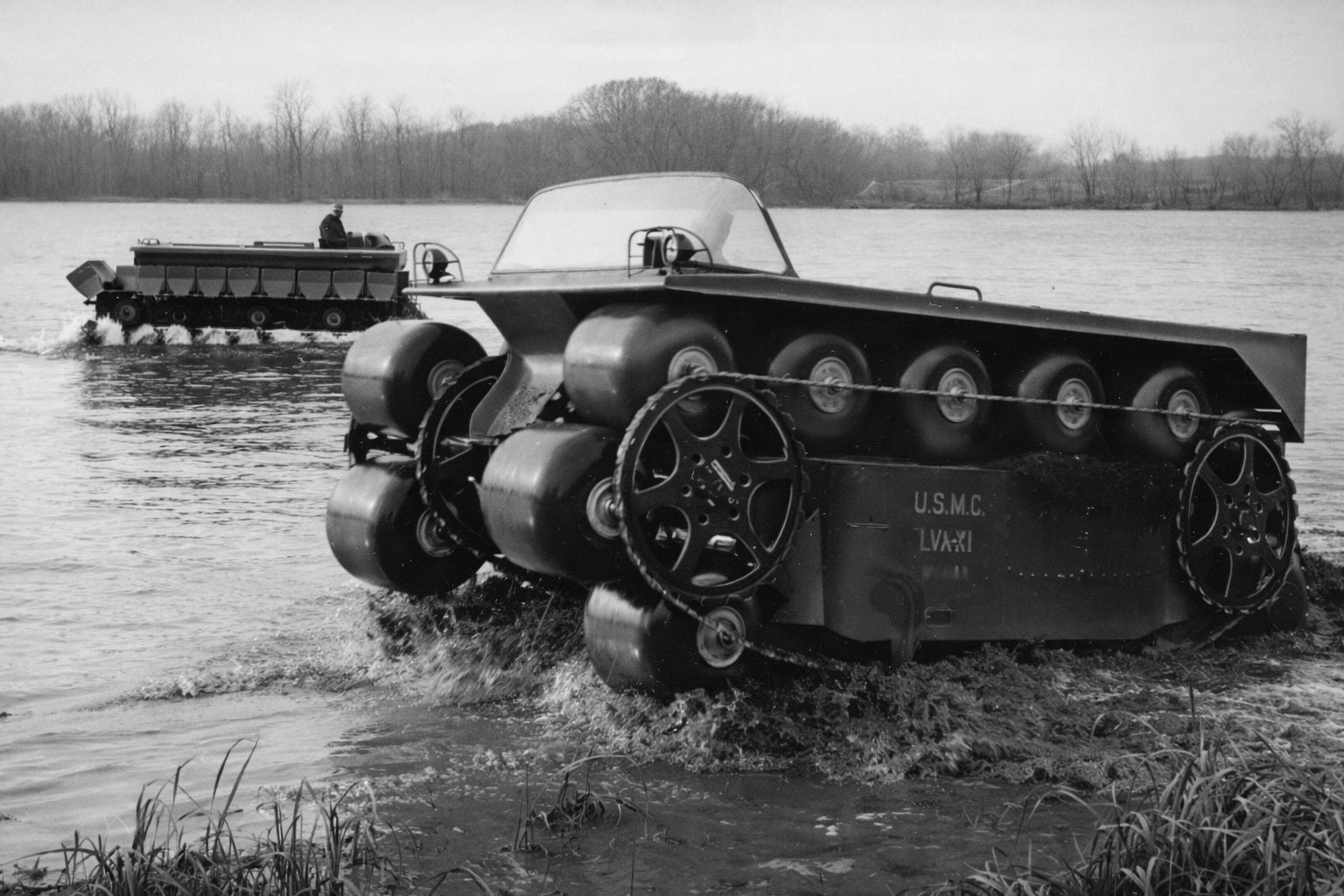
This combination allows the Airoll to cross swamps and extremely soft soils, climb steep inclines, and traverse rivers or flooded areas, all while maintaining a reasonable speed on solid ground.
Origin of the Idea: A Concept Born in the 18th Century
Although the most famous prototypes emerged only in the 20th century, the idea behind the Airoll is much older. The first records of a similar system appear in 1713, when the French inventor M. D’Hermand presented a concept for a vehicle with connected rollers that circulated continuously under the cargo platform.
At the time, the proposal was merely theoretical. For more than two centuries, the concept remained practically forgotten until new military needs arose in the post-World War II period.
Military Interest During the Cold War
Starting in the 1950s, the United States Army began studying technologies capable of improving vehicle mobility in extreme terrains. This interest particularly increased with the emergence of conflicts in regions with jungles, swamps, water-saturated soils, or areas of deep snow.
In this context, the Airoll concept regained attention. Patents filed in the 1950s described amphibious vehicles equipped with rollers or tires connected in a track-like manner, capable of traversing terrains where conventional vehicles simply could not operate. These studies led to the development of the first real prototypes.
The First Airoll Vehicles Tested by the Military
In the early 1960s, companies and military laboratories began constructing experimental vehicles based on the Airoll concept. One of the first prototypes was developed by the Borg-Warner Corporation in partnership with the United States Army. This vehicle had:
- 16 tires on each side forming the track
- Engine of approximately 185 horsepower
- Weight between 8 and 9 tons
The tests were conducted on different types of soil, including:
- Deep mud
- Snow
- Sand
- Paved surfaces
The results showed that the concept indeed had an extraordinary capacity for off-road mobility.
The XM759: The Vehicle That Almost Went into Production
One of the most advanced projects based on the Airoll system was the XM759 Marginal Terrain Vehicle, developed in the mid-1960s. This vehicle aimed to serve as logistical transport in extreme terrains, especially in environments similar to those found in the Vietnam War. Among the requirements defined by the military were:
- Transporting up to 14 soldiers
- Carrying 1.3 tons of cargo
- Reaching 25 mph (40 km/h) on land
- Navigating at about 7 mph (11 km/h) in water
- Climbing inclines of up to 60% grade
Additionally, the vehicle could be transported by military aircraft such as the C-130, allowing for rapid deployment to combat zones. Despite the promising results, the project was ultimately canceled in the early 1970s.
The Soviet Project ZIL-PKU-1
The Airoll concept was not only explored by the United States. During the Cold War, engineers in the Soviet Union also developed similar prototypes. One example was the ZIL-PKU-1, created by the design office of the manufacturer ZiL in 1965.
This amphibious vehicle utilized inflatable tires combined with continuous tracks to create a platform capable of crossing extremely difficult terrains. Its features included:
- Cargo capacity of around 1.5 tons
- Speed of approximately 18 km/h
- Operational range of about 50 to 60 km
Like the American models, the Soviet project never entered large-scale production.
The Great Advantages of Airoll Technology
Even though it was experimental, the Airoll system presented several interesting technical advantages. Among the most important were:
- Low Ground Pressure: The inflatable tires distributed the vehicle’s weight over a much larger area than conventional wheels, drastically reducing the risk of getting stuck.
- Natural Amphibious Capability: As the tires were filled with air, they provided buoyancy, allowing the vehicle to navigate without the need for additional structures.
- Extreme Traction: The combination of wheels and tracks offered excellent grip on uneven surfaces.
- Mobility Capability: Like tanks, Airoll vehicles could almost turn on their own axis, reversing the direction of the tracks.
The Problems That Prevented Mass Adoption
Despite the advantages, the technology also had several issues. Among the main ones were the high wear of components, the risk of tire punctures in combat, the tendency for vegetation or debris to get stuck in the tracks, and the relatively low speed compared to conventional vehicles.
These factors ultimately limited military interest in the technology. With the advancement of new types of suspension and more efficient off-road tires, the Airoll concept lost ground.
One of the Most Curious Experiments in Military Engineering
Today, few of these vehicles have survived. Some historical prototypes can be seen in military museums, such as the Marine Corps Mechanized Museum in California, where one of the Airoll models is still preserved. Although it was never adopted on a large scale, the concept continues to be remembered as one of the most interesting experiments in mobility engineering.
It demonstrated that the combination of seemingly incompatible technologies — wheels and tracks — can produce entirely new solutions to old mobility problems in extreme terrains.
And although Airoll vehicles never became common on the battlefield, they remain a testament to how the search for vehicles capable of traversing any terrain led engineers to create some of the most unusual machines ever tested in military history.







Seja o primeiro a reagir!